



1. A Nation’s Hope and Heartbreak: Bukele’s Bold Proposal
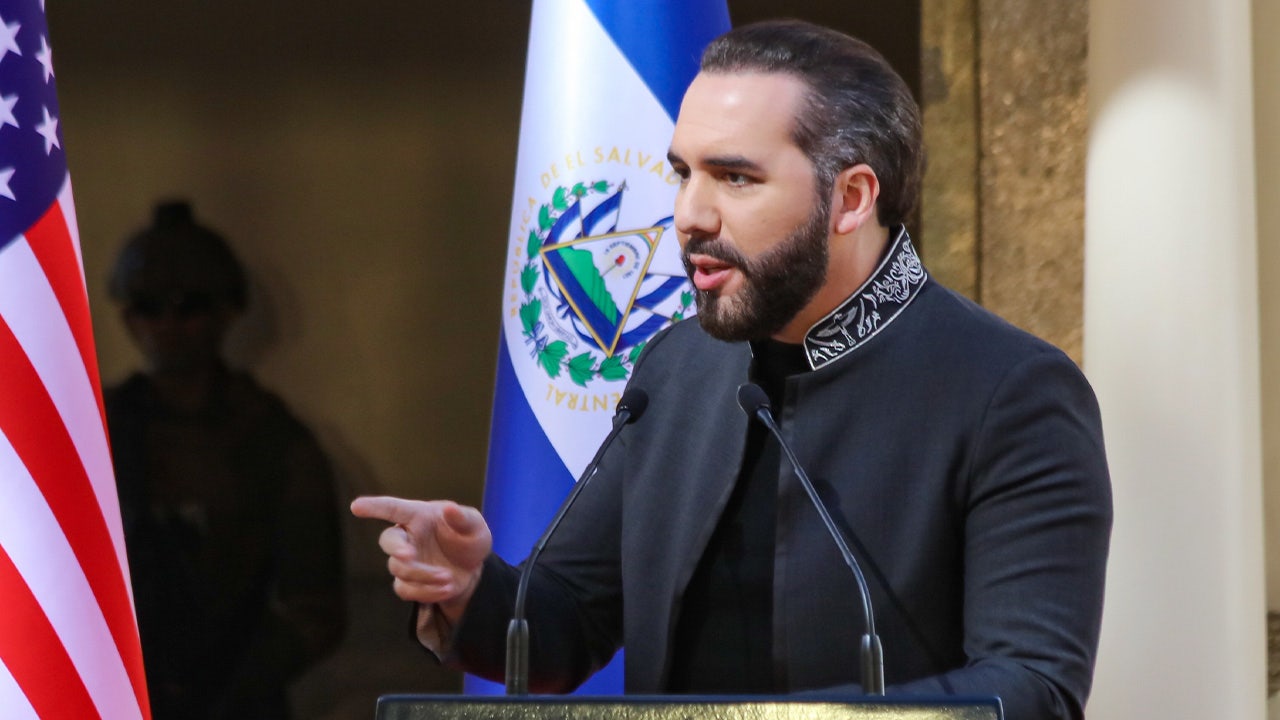
In the quiet after the storm of a four-and-a-half-year crackdown that swept more than 90,000 people into El Salvador’s already overcrowded prisons, President Nayib Bukele stood before the nation on a Tuesday night and offered something that sounded almost like mercy: a plan to conditionally release up to half of those detained under the state of emergency that has defined his presidency. For countless families across this small, scarred country, the announcement cracked open a door of possibility—a grandmother who has not seen her teenage grandson since soldiers kicked down his door, a mother who has spent years begging for a fair trial that never came, a young man who was a lookout for a gang not because he believed in violence but because he was terrified and poor. Bukele’s words were deliberately broad: “There are many people who have indeed committed crimes, but their crime was collaborating with gangs. They deserve to be in jail, but we come from a country where collaborating with gangs wasn’t so unusual, and if we were to arrest everyone who collaborated with gangs, we would have to arrest 20% of the population.” With that admission, the president acknowledged what human rights groups have screamed for years: that the dragnet caught not just killers and extortionists, but also lookouts, messengers, and even those who paid protection money out of fear. The plan would focus on those deemed “collaborators,” a term so vague it could cover anyone who ever served as a lookout, passed a message, or paid a bribe to stay alive. But Bukele offered no details—no list of offenses that qualify, no timeline, no process for family petitions. He simply said authorities would analyze cases and determine who could go home under monitoring. For a population that has learned to live with both the relief of safer streets and the terror of arbitrary power, the announcement felt like a tightrope walk between hope and suspicion.
2. The State of Emergency: Safety at a Price
To understand why this moment matters so deeply, one must remember what El Salvador was living through in March 2022, when the state of emergency was declared. More than sixty bodies lay in the streets in a single day, victims of the brutal war between MS-13 and Barrio 18, gangs that had turned entire neighborhoods into armed camps, extorting shopkeepers, raping girls, and recruiting boys as young as ten. The country was bleeding onto the pavement, and Bukele responded with an iron fist: emergency powers, military patrols, and mass arrests. At first, the measure was intended to last thirty days. It has been renewed every month since, transforming a short-term crisis response into a permanent feature of Salvadoran life. The results, by any raw metric, have been staggering. Homicides plummeted from 104 per 100,000 residents in 2015—before Bukele took office—to just 1.3 per 100,000 in 2025. Tourist brochures now feature the same beaches where families once feared to gather, and international investors look at the country with new interest. Bukele has built a colossal prison—the Terrorism Confinement Center, designed to hold 40,000 inmates—and has packed it with young men in matching white uniforms, their heads shaved, their bodies bending in rows behind razor wire. The nation feels safer. But that safety has come at a staggering cost. The emergency decimated the constitutional protections that separate a democracy from a dictatorship: the right to be told why you are being detained, the right to see a lawyer, the right to have visitors. Police can arrest anyone, anywhere, without evidence, and detainees often spend months in the dark before being moved to overcrowded holding cells. Families have been left in a state of chronic anxiety, not knowing whether their loved one is alive, sick, or simply lost in a system that processes people like cargo. Bukele insists this was the price of peace. But for thousands, the price was paid in the coin of stolen years.
3. Who Is “Collaborator”? The Human Face of a Vague Label
The president’s plan to release “collaborators” is a fragile balm for a nation’s collective trauma. According to government statistics, half of the 90,000-plus detainees could be eligible for conditional release—meaning, potentially, more than 45,000 people. But the numbers hide the human ambiguity behind the label. Who is a collaborator? In a world where gangs control every bus route, every market stall, every schoolyard, collaboration is often the only choice for survival. A teenager who watches a street corner and shouts a warning when police approach, because the gang threatened to kill his mother if he refused. A shopkeeper who pays a weekly extortion fee, because the alternative is a burning store and a broken jaw. A wife who lets a gang member hide a gun in her house, because her children are in his grip. These are people who did not pull triggers, who did not sell drugs, who did not order killings—but who are nonetheless tarred with the broad brush of complicity. Bukele’s proposal acknowledges this moral complexity: “There are many people who have indeed committed crimes, but their crime was collaborating with gangs.” Yet he also warns that the release will be monitored, without specifying how. Will they wear GPS ankle bracelets? Will they report to a local police station weekly? Will they be subject to curfews and check-in calls? The uncertainty is both a hope and a weapon. For those who have spent years in prison without trial, the promise of release is an incomplete amends. Bertha Deleón, a Salvadoran lawyer now living in exile, put it plainly: “The victims of arbitrary detentions don’t just deserve to recover their freedom, but they also deserve to be compensated for the harms caused by the State of El Salvador: the physical and mental harm that imprisonment causes, family suffering, loss of work or studies, reputational damage, among others.” Her words strike at the core of any justice system: release is not restitution. A man who loses five years of his youth, who misses the birth of his child, who watches his parents bury his name in shame, cannot simply walk out the prison gate and resume his life. The damage is permanent, the reassembly of a shattered identity a lifelong task.
4. The Wounds That Do Not Heal: Voices of the Accused
Across the country, human rights organizations have collected more than 6,000 formal complaints of arbitrary detention since the emergency began. They have documented the deaths of at least 575 people in government custody—men who never made it to a courtroom, who died from heart attacks, starvation, or the brutal conditions of overcrowded holding cells. These are not abstract statistics; they are fathers, brothers, sons, and husbands. Imagine the anguish of a 22-year-old barber who is ripped from his shop on a Saturday morning, simply because a neighbor pointed a finger. He spends four years in a cell with sixty other men, sleeping on a floor stained with sewage, never seeing the paperwork that would justify his imprisonment. Then one day, a guard tells him he is being released because he is a “collaborator,” not a criminal. He returns home to find his wife has moved on, his shop has closed, his reputation is ruined—everyone assumes he was a gang member. That is the human cost of the emergency, a cost that cannot be measured in homicide rates. Another case: a 38-year-old mother of three who was jailed after being caught paying a man known to be an extortion collector. She did it because her son was sick and the gang promised to help with medicine. In prison, she was separated from her baby, lost her job, and was beaten by guards. Now, Bukele says she may be released “with monitoring.” But what kind of life can she rebuild? Her children have grown without her, her neighbors still whisper, her bank account is empty. And she will never receive an apology, much less compensation. The plan, if it ever reaches implementation, will be a partial step at best—and a source of hope that can also be crushed if the promises evaporate into political grandstanding. Deleón’s call for compensation is a plea for a fuller justice that recognizes the state itself committed harm.
5. Bukele’s Defiance: Security Versus Liberty
President Bukele has little patience for his critics. When national and international human rights groups denounce the abuses, he dismisses them elitists who have never lived under gang terror. “Take the side of the victims of gang violence,” he retorts, implying that those who criticize the crackdown are sympathizing with criminals. His logic is straightforward: before the emergency, El Salvador was a graveyard; now it is a tourist destination. And indeed, the violent death rate has fallen by over 98% since the peak. He acknowledges, in a rare moment of introspection, that his goal is to eventually end the state of emergency—but only when the country is safe enough. He defends the detention of suspected gang members as necessary: the gangs had built a parallel state, and Bukele’s government had to burn it to the ground. But the president’s language about “collaborators” betrays a realization that the war may have been won, but the peace is not yet just. He says “collaborating with gangs wasn’t so unusual” in the past—a statement that normalizes the very coercion that drove people to cooperate. Yet he offers no process to distinguish between a hardcore member and a terrified bystander beyond vague promises of case-by-case analysis. Human rights lawyers worry that the “monitoring” will be another form of control—perhaps a permanent scarlet letter, a way to keep a population in a state of low-level surveillance even after release. Bukele’s response is classic strongman politics: he positions himself as the only one who can give freedom back, making gratitude the only appropriate emotion. For those who were wrongly imprisoned, the release is a gift from a king, not a right from a state. And that asymmetry of power is exactly what the exiled lawyer Deleón puts her finger on—the imbalance between a government that can take years without accountability and a citizen who is supposed to be grateful for being let go. The plan, if measured by Bukele’s standards, is a concession; if measured by justice, it is a first step on a road that should lead to reparations, rehabilitation, and a full accounting.
6. The Road Ahead: A Fragile Hope in a Scarred Land
As El Salvador stands at this crossroad, the promise of mass release hangs like a half-answered prayer. For the 45,000 potential beneficiaries, it is the chance to breathe again—to feel the sun on their faces, to hold their children, to begin the long climb back from the abyss. But it is not the end of the story. The country must confront the deeper questions that states of emergency always leave in their wake: What is the moral balance between security and freedom? When does a war on crime become a war on its own citizens? Can a society that has learned to accept arbitrary power ever fully return to the rule of law? Bukele’s popularity at home remains high—his approval ratings are the envy of any leader—yet the international community watches with a wary eye, funding programs to improve prison conditions while quietly urging an end to the emergency. The release plan might be his way of threading that needle: to show the world he can be merciful, while still retaining the power to monitor those he releases. But mercy without justice is a fragile gift. The families of the disappeared in other Latin American nations know this pattern: a dictatorship that shows a small token of leniency to ease international pressure, while leaving the underlying authoritarian structures untouched. The people who will walk out of the gates will become symbols—either of a president who ultimately listened, or of a system that only gives back what it should never have taken. The road ahead for El Salvador is not just about freeing prisoners; it is about rebuilding trust, healing trauma, and creating a society where no one has to collaborate with a gang out of fear. Bukele’s plan is a start, but a start is not a conclusion. For now, families check their phones, scan the news, and wait—hope and dread tangled together—for the names of those who may finally come home. In a country that has seen too much blood, too much salt, and too many prayers unanswered, the announcement was a brief, tentative light in a long, dark tunnel. Whether it will widen into full day or vanish into the shadows remains a question only time—and the president—will answer.