


Here is a humanized summary of the article, written as six paragraphs.
—
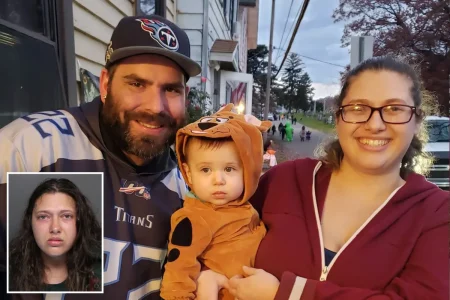
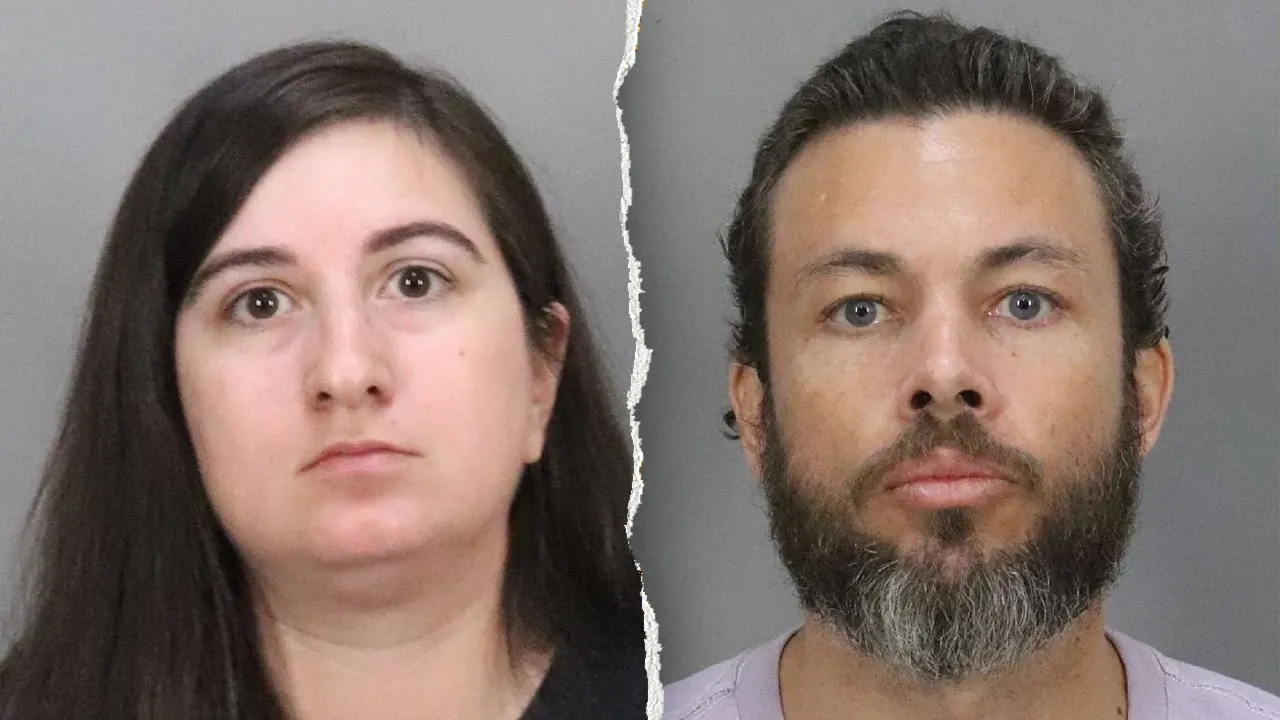
There are stories that should never have to be written, and this is one of them. Aurora Williams was only 8 years old, a little girl from San Jose, California, whose life ended not in a single cruel moment but in a slow, avoidable collapse of the adults who were supposed to protect her. She died in May after a severe asthma attack, but according to prosecutors, the help she needed came far too late. Her mother, Gabrielle Hanson, 32, and her stepfather, Jacob Randolph, 39, have been charged with felony child neglect, accused of allowing Aurora and her six siblings to grow up in a home that was not merely messy but dangerously squalid. The Santa Clara County District Attorney’s Office describes a house overrun with cockroaches, mold, and pet feces, conditions that the couple allegedly knew about for years. More than that, the charges say, medical professionals and social workers repeatedly warned them about the risks to the children. But the warnings did not change anything. Aurora’s death was ruled a homicide, with medical neglect cited as a significant contributing factor, and now a family is left shattered—and a community is left to wonder how a child could slip through so many hands.
The warning signs were there long before Aurora’s final medical emergency. In February 2025, more than a year before her death, Aurora was taken to an emergency room by a relative because of asthma symptoms, wheezing, and difficulty breathing. What hospital staff saw that day was deeply troubling. A bug fell from her shoe. A cockroach was seen crawling on her. Aurora herself, seemingly used to the horror, told the staff: “Oh yeah, bugs just crawl on me.” That single sentence is one of those details that stays with you—an 8-year-old so accustomed to living with an infestation that she no longer recognized it as a crisis. But the signs did not stop there. According to prosecutors, Aurora smelled like cat urine, appeared seriously underweight and pale, and told hospital staff that she was hungry and had not eaten. This was not a one-time lapse. It was a pattern of neglect, persistent and obvious enough that professionals documented it. Yet somehow, the little girl was returned to the same environment, and the adults responsible were again entrusted with her care. For any parent or caregiver, reading this is almost unbearable: here was a child who needed someone to step in, and the system, despite multiple contacts, did not save her in time.
When the worst finally happened, the response from Aurora’s own household was insufficient and delayed. On May 13, San Jose police and firefighters were dispatched to the family’s home for a medical emergency involving a child. The details around that call are still emerging, but prosecutors say the couple waited eight hours before seeking medical help as Aurora struggled with serious medical distress. Eight hours is an eternity when a child cannot breathe. Eight hours is the difference between a chance at life and an irreversible tragedy. Aurora was rushed to medical care, but it was already too late. She was declared dead four days later. The medical examiner determined that she died from a lack of oxygen to the brain, caused by severe asthma and an acute lung injury related to a viral infection. In other words, this was a manageable disease—chronic asthma is not a death sentence—but in Aurora’s case, it became a deadly one because of the world she was forced to live in. The medical examiner also identified medical neglect as a major factor in her death, and the ruling was homicide. That ruling is a formal acknowledgment of what so many people must have felt: Aurora did not have to die. She should not have died. And the adults around her had every reason to know that.
As investigators dug deeper, they found a pattern of neglect that stretched back years. Prosecutors said Aurora and her siblings had been living in “squalid and dangerous conditions” since at least 2019. That means for the majority of Aurora’s young life, her lungs were likely under constant assault from environmental triggers in her own home. Asthma, after all, is not just a medical condition; it is deeply affected by the air a child breathes, the cleanliness of her surroundings, and the consistent administration of medication. In Aurora’s case, the very tools meant to keep her alive were not properly maintained. Investigators discovered that her prescribed inhaler was missing during two separate searches of the home. A dirty inhaler spacer was found without its rubber seal, which is designed to prevent medication from leaking out. Perhaps most hauntingly, a respiratory mask found in the home contained cockroaches. This is not just neglect; it is an active failure to provide even the most basic support for a child with a life-threatening condition. These are the small, everyday objects—spacers, masks, inhalers—that most families take for granted when managing asthma. For Aurora, these items had been so neglected that they became part of the filth surrounding her, rather than the lifeline they were meant to be.
The legal consequences have now begun to unfold, but the anger and grief behind them remain raw. Santa Clara County District Attorney Jeff Rosen did not hold back when speaking about the case. “Another child is needlessly dead in this county, and once again our prosecutors will do everything in our legal power to hold the people who did this responsible,” he said. But he also acknowledged that prosecution alone is not enough. “Prosecuting people after this kind of tragedy is necessary—and not enough,” Rosen continued. “There are serious questions about how this child and her siblings lived in this dangerous squalor for so long. In the name of this lost child and the others, this community deserves honest answers and real changes.” His words speak to a broader, uncomfortable truth: Aurora’s death did not happen in isolation. It happened after multiple opportunities for intervention, after repeated warnings, and in a home that social workers had already been involved with. While the mother and stepfather now face felony child neglect charges, the investigation also led to additional charges against Aurora’s maternal uncle, Jonathan Hanson, 44. He is accused of two counts of child molestation and one count of possessing explicit videos of the alleged victim, who was between 11 and 15 years old at the time of the offenses. Gabrielle Hanson, the alleged victim’s stepmother, was also charged with knowing about the abuse and failing to intervene. The pain of this family is layered and deep, and the criminal cases against them are only beginning.
All three defendants were arraigned on Tuesday, and the decisions from the courtroom have added another layer of frustration for those following the case. Gabrielle Hanson and Jacob Randolph were released under supervised own recognizance over prosecutors’ objections, meaning they will remain out of custody while the case proceeds. Jonathan Hanson, on the other hand, was ordered held without bail. The next court appearance is scheduled for Nov. 20 at the Hall of Justice in San Jose. But no court date will bring Aurora back. No conviction can erase the image of an 8-year-old girl saying, without emotion, that bugs just crawl on her. We are left with questions that authorities and the public will be asking for a long time: How did this go on for so long? Why weren’t the children removed after the hospital visit? What does it say about us—about our child welfare systems, our schools, our neighbors, our medical providers—that we allow a child to suffer in silence until it is too late? Aurora was not just a case number or a police report. She was a child who deserved clean air, warm meals, and parents who would have moved heaven and earth to help her breathe. Instead, she got a dirty mask with bugs inside it. She got eight hours of waiting. She got a home that stole her health, and eventually, her life. Her death should be a wake-up call, not just for prosecutors and courts, but for every person and institution that has the power to intervene. We owe Aurora and other children like her an honest reckoning. They deserve to be seen, believed, and saved—before it is too late.