


Paragraph 1:
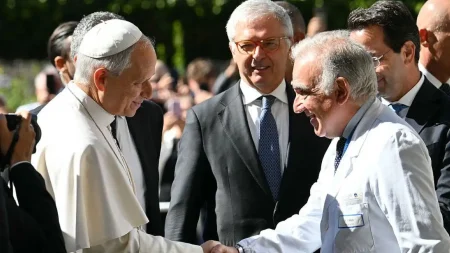
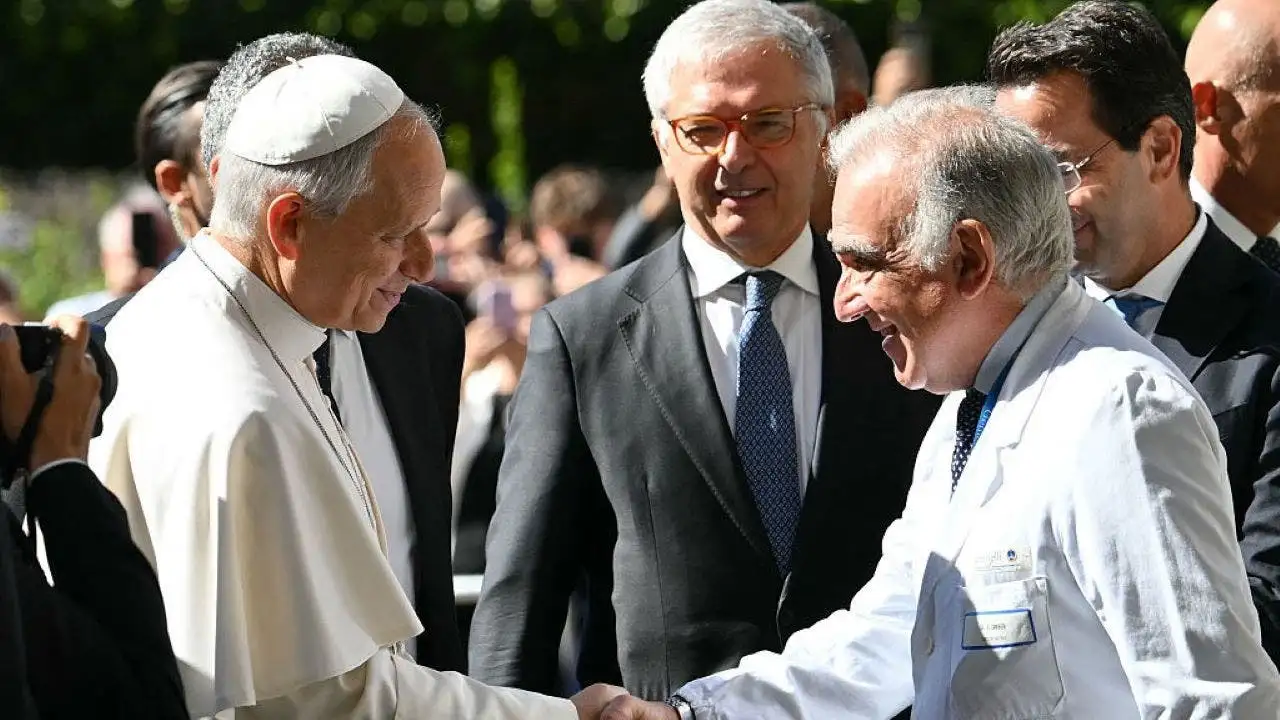
In a moment that quietly moved the Catholic world and beyond, the Vatican announced on Tuesday that Pope Leo XIV had undergone surgery at Agostino Gemelli University Hospital in Rome to remove a small nodule from his lung. For the faithful, the news arrived like a gentle but sudden tremor—a reminder that even the most spiritual of leaders walk in human fragility. The 71-year-old pontiff entered the operating room with the steady trust of a man who had placed himself in the hands of both his doctors and his Creator. The procedure, which involved thoracic surgery to remove the lower lobe of his right lung, was described by the Holy See Press Office as successful, with no complications reported. It was a moment of relief for millions who had spent hours in prayer, waiting for word from the hospital’s tenth floor. The pope spent approximately three hours in the operating room, though the surgery itself lasted about ninety minutes. That extra time, the Vatican indicated, was related to careful monitoring and preparation, not to any crisis. When he awoke, he did so normally, and after a brief period of observation in a recovery area, he returned to his modest hospital room. For those who had gathered outside the hospital, holding candles and rosaries, the news of his awakening felt like a answered prayer, a small but profound sign of hope. The Gemelli hospital, often referred to as the pope’s hospital because of its long history of caring for pontiffs, became once again a place of vigil, of quiet anxiety, and ultimately, of gratitude.
Paragraph 2:
The medical details of the operation were shared with characteristic precision by Dr. Luigi Carbone and Professor Stefano Margaritora, the medical team responsible for the pope’s care. Their statement confirmed that the nodule was found to be lung adenocarcinoma, a form of lung cancer, through a tissue examination conducted during the operation. This diagnosis was consistent with what preoperative tests had suggested, though the final confirmation could only come from the pathology itself. The phrase “lung adenocarcinoma” fell like a heavy stone into the hearts of listeners, yet the medical team was careful to frame the situation in its full context: the nodule had been discovered at an early stage, it was well situated, and the surgery to remove it had been successful. The lower lobe of the right lung was removed using a video-assisted technique, a minimally invasive approach that allows for a faster recovery and less postoperative pain than traditional open surgery. This detail mattered to those following the news, because it suggested that the pope’s recovery might be smoother than otherwise expected. Still, the seriousness of any cancer diagnosis cannot be softened by technique alone. The Vatican’s statement did not speculate on prognosis or future treatment, leaving room for the pope’s body to heal and for doctors to determine next steps in the coming weeks. In the immediate aftermath, the focus was on rest, on the careful management of pain, and on the gradual return of strength. The pope’s age—71—was noted, as was his generally robust health, but the procedure itself had gone exactly as planned. For now, the room on the tenth floor became a quiet sanctuary, a place where a world leader could breathe, literally and figuratively, one careful breath at a time.
Paragraph 3:
The news of the surgery had come with surprising speed, and in a way, with surprising openness. Just a day earlier, on Monday, Pope Leo had stood in St. Peter’s Square and addressed the crowd during his Angelus message. With a calm and measured voice, he told them about the small lump in his lung. He did not hide behind vague words or diplomatic euphemisms. He said that doctors had found a small lump, that it had been identified at a very early stage, and that it was well situated. He explained that the doctors considered it appropriate to intervene, and that following their advice, he had decided to have surgery to remove it. Then he thanked the people for their spiritual closeness and asked for their prayers. That moment—standing before the faithful, speaking of his own body and its vulnerability—was deeply humanizing. Popes are often seen as figures almost above ordinary life, but in that address, Pope Leo XIV became simply a man facing a difficult moment, asking for the companionship of others. The fact that he chose to announce his surgery before it happened, rather than after, spoke to his belief in transparency and his understanding that the faithful would want to walk with him. It also came as a surprise to many, because the American-born pontiff had no previously known health problems. He had always seemed to move through the world with energy and purpose, a man who carried the burdens of the Church with visible vitality. He was known for maintaining an active lifestyle, playing tennis and swimming at the papal summer retreat in Castel Gandolfo. To see him suddenly in a hospital gown, even in the mind’s eye, was a jarring image for those who had grown accustomed to his vigorous public presence.
Paragraph 4:
In the hours following the announcement, an outpouring of support began to flow from every corner of the globe. Archbishop Ronald Hicks of New York offered a particularly heartfelt message, saying that the Holy Father was “in our prayers.” He spoke of the gratitude that so many felt upon learning that the surgery had been successful, and he pointed to the broader community of believers who were holding the pope in their hearts. “I know that I join with people from all corners of this archdiocese, across the country, and around the world in keeping the Holy Father in our prayers,” he said. His words captured a truth that transcended geography: the pope belongs to everyone, and when he suffers, millions suffer with him. In parishes from Rome to Manila, from Nairobi to Buenos Aires, priests led special prayers for the pontiff’s recovery. In hospital corridors, nurses and doctors paused to think of their own patients while hearing news of the pope’s surgery. It was a moment of shared vulnerability, a reminder that illness does not respect rank or title. For many, praying for the pope was not a distant act but a deeply personal one, because they too had faced surgeries, cancer diagnoses, and long nights in hospital rooms. They knew the uncertainty that follows a diagnosis, the weight of waiting for pathology reports, the slow and often painful process of healing. And so their prayers were not abstract; they were filled with the memory of their own fears and hopes. The pope, in his simple request for spiritual closeness, had invited them into his journey, and they responded with remarkable tenderness.
Paragraph 5:
As the pope begins his recovery, attention naturally turns to the future, particularly to the major international trip that had been scheduled to begin on November 6. The planned journey through Uruguay, Argentina, and Peru was seen as a significant moment in his papacy, a chance to connect with the people of South America and to bring his message of hope and renewal to a region that holds a large share of the world’s Catholics. It remains unclear whether the surgery and the necessary recovery period will affect those travel plans. Some Vatican watchers speculated that the trip might be shortened, postponed, or perhaps even led by a different senior church official, though no official decision has been announced. Leo XIV is known for his determination and his desire to be close to the people, and it would not be surprising if he pushed himself to recover quickly and to honor his commitments. Yet doctors will likely advise caution, reminding him that the body needs time to heal after such a procedure, regardless of the strength of one’s spirit. The next few weeks will be a quiet period of observation, rest, and gradual rehabilitation. The pope will need to breathe deeply, to rebuild his stamina, and to listen to the wisdom of his medical team. In the meantime, the Vatican will continue to function, and the pope will continue to lead from his hospital room as much as possible, receiving updates, reviewing documents, and offering his prayers. The image of a pope governing from a hospital bed is not new, but it is always poignant, a reminder that even the most powerful spiritual leader remains subject to the rhythms of the human body.
Paragraph 6:
In the midst of his personal trial, Pope Leo XIV did not forget the suffering of others. During his Sunday remarks before the surgery, he renewed his appeal for peace in war-torn Ukraine, warning that the conflict continues to create suffering far beyond its borders, especially in the poorest countries, where many people depend on exports of cereals and grains. His words were a reminder that his own pain had not made him blind to the pain of others; rather, it seemed to deepen his empathy. A man facing surgery at a Roman hospital could still think of families in Kyiv huddled in shelters, of children in Africa and the Middle East facing hunger because of disrupted grain supplies. This is the heart of what it means to be a pastor, and Leo XIV has consistently shown that he understands this calling. His surgery, his recovery, his moments of weakness—all of these become part of his ministry. When he prays now, he prays as someone who has shared in the fragility of life. When he speaks of peace, he speaks as someone who knows what it is to fear for his own life and to place his trust in something greater than himself. The coming weeks will be a time of healing, but also a time of continued witness. The world will watch, and many will pray, not only for his recovery but for the intentions that rest on his heart. For now, the pope rests. The surgery is over. The nodule is removed. The first small steps toward recovery have been taken. And in hospitals, homes, and churches around the world, people continue to hold him in their hearts, grateful for the gift of his life and hopeful for many more years of his gentle, human, and deeply compassionate leadership.