





Under the punishing, relentless glare of the Pakistani sun, the air is thick with the choking stench of burning coal and the fine, dry dust of crushed clay. In these countless brick kilns dotting the rural landscape, millions of lives are spent bent double, hands calloused and caked in mud, molding the very building blocks of the nation. For an estimated one million Christians in Pakistan, this grueling labor is not merely a job; it is a desperate, lifelong trap of debt bondage known as peshgri. Driven by acute poverty and the urgent need to cover basic necessities or sudden medical emergencies, families accept advance loans from wealthy kiln owners, only to find themselves ensnared in an inescapable web of low wages, high interest, and systemic exploitation. According to research from Open Doors U.K. and Ireland, as much as 30 percent of the country’s 3.3 million Christian population is estimated to be caught in this endless cycle, where debts are calculated with deceptive margins, ensuring that the burden is passed down from one generation of illiterate workers to the next, leaving children to pay for the loans of their grandfathers.
The devastating reality of this generational hopelessness struck Emmanuel Hernandez with absolute clarity when he traveled to Pakistan to visit his future wife. Confronted face-to-face with the hollow stares of families working in the kilns, Hernandez felt a profound shattering of his worldview, realizing he could not simply look away from such absolute despair. Determined to make a difference, he vowed to rescue at least one family every year for the rest of his life, a personal commitment that quickly blossomed into something far greater with the launch of his nonprofit organization, Project Jubilee, in January 2025. Driven by a deep sense of faith and humanity, the charity aims to break these chains of modern-day slavery, stepping in to pay off the debts of families regardless of their background, though an overwhelming 98 percent of those saved are marginalized Christians who are treated as second-class citizens in their own homeland. Through the overwhelming generosity of donors moved by this plight, Project Jubilee has already managed to secure the freedom of more than 300 Pakistani laborers, pulling them out of the dust and giving them a physical chance at a brand-new life.
Liberation, however, is a delicate and deeply complex process that requires much more than simply handing over cash to a factory owner to settle a balance. Hernandez and his team understand that without a structured transition plan, freed families—often completely uneducated and possessing no external safety net—are highly vulnerable to falling right back into the clutches of debt bondage. To prevent this, Project Jubilee spends an average of $8,500 per family, a sum that covers not only the debt payoff but also essential legal representation to finalize the paperwork and ensure the kiln owners cannot legally reclaim the workers. Furthermore, the organization provides the families with two months of rent and food, connects them with a supportive local ministry, funds their children’s education, and purchases a “tuk-tuk”—a three-wheeled motorcycle taxi—which serves as an immediate, sustainable source of self-employment and dignified income. Navigating these rescues requires immense care, as kiln owners are often highly reluctant to lose their cheap, subservient workforce, sometimes threatening the rescue teams or placing strict monthly quotas on the number of families allowed to buy their freedom.
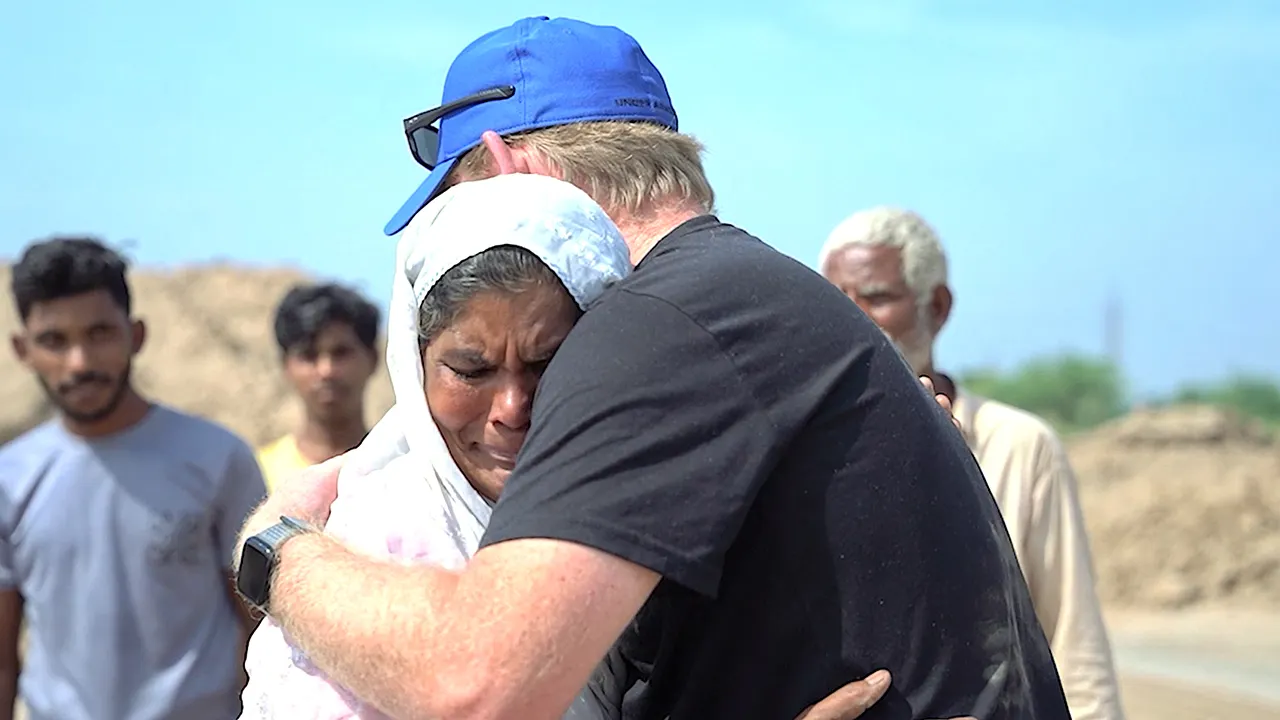
This life-altering mission soon caught the attention of Aaron Hutchings, a retired IT professional from Idaho who was searching for a purposeful way to practice his Christian faith. After discovering Hernandez’s work online, Hutchings knew he had to act, and in January, he boarded a plane to Pakistan to witness the humanitarian crisis firsthand. Standing in the middle of a bustling, dusty brick factory, watching small children dry and flip heavy clay bricks under the oppressive heat, Hutchings was overwhelmed by emotions, immediately paying out of his own pocket to free two Christian families and escort them to safety. This intense, beautiful experience of breaking a multi-generational curse of captivity left him deeply altered and completely committed to the cause. He went on to establish his own nonprofit, the Intentional Faith Foundation, and returned to Pakistan just a few months later to secure the release of ten more families, proving that a single, ordinary individual possesses the extraordinary power to fundamentally reshape the destiny of entire lineages.
The challenges these freed families face upon leaving the kilns point to a much larger, systemic failure of human rights and legal protection within Pakistan. While bonded labor was officially outlawed by the Pakistani government in 1992, the state’s enforcement of these laws remains weak and deeply compromised by corruption and the political influence of wealthy land and kiln owners. For the Christian minority, this vulnerability is compounded by escalating religious discrimination and violent attacks, as documented by organizations like the U.S. Commission on International Religious Freedom. Even after their debts are settled and they leave the kilns, rescued families frequently encounter intense hostility in the outside world, where prejudiced landlords routinely refuse to rent apartments to Christians. To overcome these barriers, Hutchings and Hernandez rely on a dedicated, underground network of local Pakistani Christian groups who quietly secure safe housing, arrange employment opportunities for the adults, and find compassionate teachers willing to educate children who have spent their entire lives without ever experiencing a day inside a classroom.
To truly end this humanitarian crisis, Pakistan’s National Commission for Human Rights has urged systemic structural reforms, advocating for a ban on child labor at kilns, registration of all brick-making facilities, and the transition toward automated machinery. Yet, until these high-level political changes are realized, the immediate survival of these families rests entirely on the grassroots efforts of those willing to step into the margins. For rescuers like Hutchings, the ultimate reward of this demanding work shines through in the quiet, simple moments—like asking a newly freed child what they want to be when they grow up, only to watch their eyes light up as they realize, for the very first time in their lives, that they actually have a future to choose. Reflecting on his journeys to the other side of the world, Hutchings realizes that the act of giving has come full circle, transforming his own life in ways he never anticipated. He feels that while they originally set out to share love and hope with those who had none, the pure resilience, gratitude, and faith of the rescued families ended up giving the rescuers far more than they could ever offer in return.