






Paragraph 1: The Terrible Arithmetic of Fear
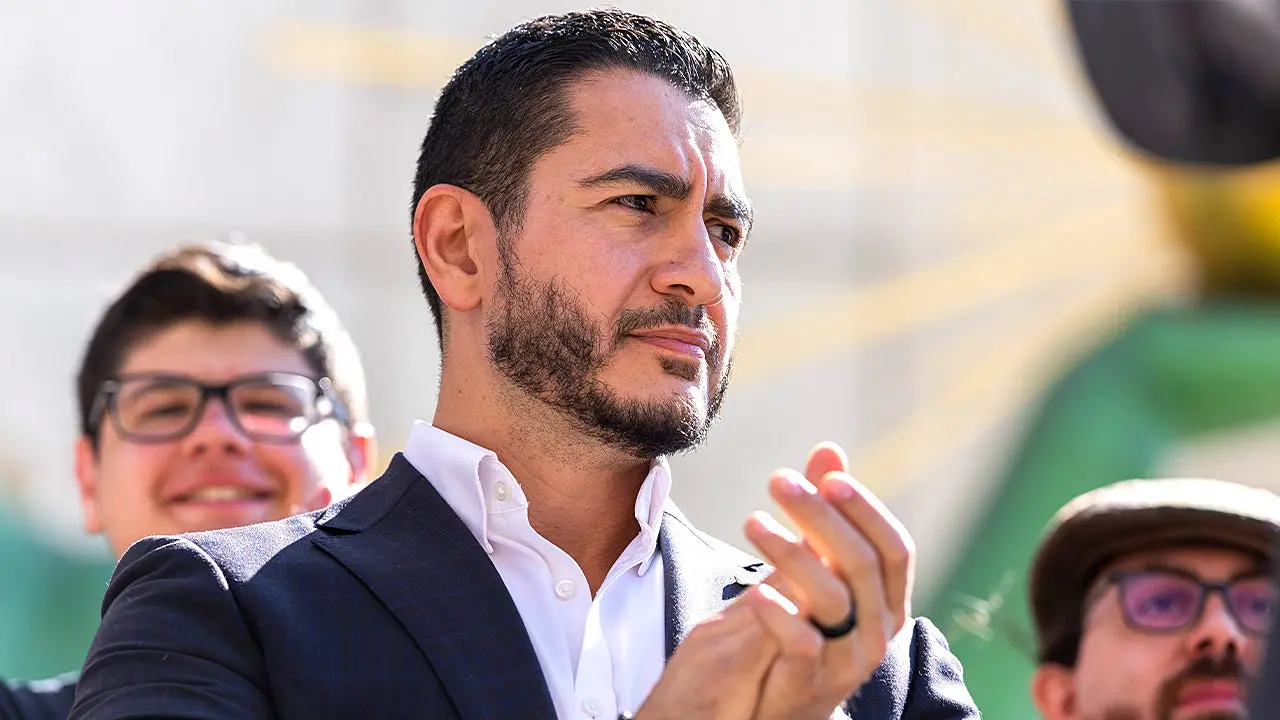
There is a particular kind of dread that settles over a community when it realizes that the institutions it once trusted have turned away—not with malice, perhaps, but with a profound and deafening indifference. In Michigan, that dread is now translating into a political earthquake that could reshape the United States Senate. We are talking about a historic, almost unthinkable realignment, where lifelong Democrats—people whose parents and grandparents marched for civil rights and whose own identities are inextricably woven into the fabric of the progressive movement—are preparing to cast their votes for the Republican Party out of pure, primitive self-preservation. The catalyst is not a tax policy or a trade agreement; it is the raw, visceral terror of being a Jew in a state where the political left has increasingly adopted rhetoric that feels less like critique and more like an existential threat. The numbers are stark: a state decided by just over 19,000 votes in the last presidential election now holds a Jewish population exceeding 100,000 voters. These voters are not a monolith, but their collective alarm is genuine and detectable in the hushed phone calls and anxious synagogue parking lots. The source of their panic is the candidacy of Abdul El-Sayed, whose political trajectory has become a litmus test for the tolerance of open anti-Zionism within the Democratic Party. El-Sayed’s public denunciations of Israel—often calibrated to sound intellectual and principled—are heard by Jewish ears as the unmistakable drumbeat of a pogrom in waiting. When a candidate speaks of the “decolonization” of the Jewish homeland, or dismisses the very premise of Jewish self-determination, it does not stay in the abstract realm of foreign policy; it bleeds into the reality of Jewish students being shoved off campus, of synagogues being vandalized, of a general cultural permission structure that allows for the harassment of Jews in the name of conscience. The result is a profound betrayal complex. These voters didn’t leave the Democratic Party casually; they are being driven out, holding their noses, and moving toward Mike Rogers, a candidate they may disagree with on a host of domestic issues, because he offers the simple, unquantifiable promise of safety. It is a bitter pill, swallowed by a community that is horrified to see the GOP as its only plausible shield, and it speaks volumes about the permanent damage being inflicted on the Democratic coalition by those who refuse to draw a bright line between legitimate political dissent and the persecution of an entire people.
Paragraph 2: The Shepherd’s Poison and the Price of a Vote
The betrayal felt by Michigan’s Jews is no accident; it is the direct byproduct of a political operation that appears desperate to placate the most radical fringe of the left, even as it wraps itself in the language of inclusivity. The clearest evidence of this can be found in the deeply unsettling alliances forged by the El-Sayed campaign. In a shocking display of political tone-deafness—or perhaps, more sinister, a calculated willingness to trade moral decency for electoral arithmetic—El-Sayed has proudly touted the endorsement of Detroit pastor Horace Sheffield III. For anyone familiar with the black church’s complex history with antisemitism, Sheffield’s background is a glaring, flashing warning sign. At some point in his career, Sheffield stood before his flock and extolled the virtues of Louis Farrakhan, the leader of the Nation of Islam, a man whose entire public ministry has been a toxic cocktail of Jew-hatred, conspiracies about Jewish control of the world, and praise for those who have committed violence against Jewish people. Sheffield called this man a “truth teller.” That is not a slip of the tongue; it is a fundamental indicator of a moral compass that points squarely towards the swamp of historic antisemitism. To make matters even more deeply corrosive to the public trust, the El-Sayed campaign did not just accept this endorsement passively; they actively funded it. A reported $75,000 was funneled to Sheffield’s nonprofit organization under the nebulous banner of “consulting.” One must ask oneself: what sort of consulting does a pastor provide to a political campaign that necessitates a payment of that magnitude? Is it outreach? Is it a payoff? Or is it simply the price tag of insulating the campaign against criticism from a specific bloc of voters while simultaneously signaling to the most virulent anti-Israel activists that they have a seat at the table? For Jewish voters watching this unfold, the message is chillingly clear: the El-Sayed campaign views them as collateral damage, expendable pawns in a bid to consolidate a base that feeds on animosity toward the Jewish state. The human reaction to this is not anger in the abstract; it is a deep, personal wound. It feels like being in a relationship where your partner tells you, “I will sit at dinner with the person who wishes you dead, and I will pay him to smile at me, as long as he delivers me his friends’ votes.” The desperation to win at any cost has stripped away the veneer of principle, revealing a naked transactional corruption that treats the dignity of the Jewish community as less than worthless. This is not political disagreement; this is an existential affront, and it is precisely the kind of behavior that pushes terrified, heartbroken Jews to look across the aisle in search of a party that, while imperfect, does not actively celebrate their enemies.
Paragraph 3: Inside the Party’s Own Panic
The schism within the Democratic Party over the treatment of its Jewish members is no longer a subtle undercurrent; it has exploded into public view with the force of a structural failure. Michigan Attorney General Dana Nessel, the state’s chief law enforcement officer—a figure who has dedicated her career to upholding the rule of law and protecting the vulnerable—has thrown a grenade into the heart of her own institution. In a move that should horrify every citizen, regardless of political affiliation, Nessel has announced a boycott of the upcoming Democratic National Convention, citing not a mere difference of opinion, but genuine security fears for her own physical well-being. Think about the profound irony and tragedy in that statement. The party that claims to be the bastion of safety, the defender of minority rights, has become an environment so hostile to Jews that its own top Jewish official fears for her life at its flagship gathering. Nessel’s complaint is not hyperbole. She points to the shocking reality that the party is permitting members who face criminal charges for making antisemitic threats to attend the convention. These are not people accused of political impoliteness; these are individuals whose alleged actions involve terrorizing a specific community—the Jewish community—through the implicit or explicit threat of violence. By allowing these individuals to walk the convention floor shoulder-to-shoulder with mainstream delegates, the party is making a profound declaration of values. It is effectively stating that the oaths of non-violence and mutual respect are subordinate to the demands of a faction that has weaponized hatred. Nessel’s frustration is born from the agonizing awareness that she is trying to hold the line for civil discourse while her colleagues are actively dismantling it. She accuses her party of “absolutely not” doing enough to counter antisemitism, and in doing so, she gives voice to the silent terror of thousands of officials, donors, and volunteers who feel they are being forced to choose between their party loyalty and their Jewish identity. The atmosphere she describes is not one of debate; it is a powder keg—a space where the charge is already lit, where the rhetoric has moved from “Israel shouldn’t do X” to “Jews are poisoning us,” and where the machinery of the party has become a brutal enforcer of conformity to those dangerous tropes. The human cost of this is fragmentation and paranoia. The Democratic Party, instead of being a ‘big tent,’ is becoming a burning tent, and as its pillars catch fire, the people inside—the Jewish ones—are the first to be suffocated by the smoke. Nessel’s walk-out is a desperate cry for help, a public admission that she cannot fix a house that has already set itself ablaze, and her absence from the convention will be a haunting, empty chair representing the abandoning of liberal values in the face of violent extremism.
Paragraph 4: Starvation, Lies, and the Resurrection of the Blood Libel
The domestic arena of fear is mirrored, and amplified, on the international stage where the ancient specter of the blood libel has been resurrected with a modern geopolitical wardrobe. The accusation that the Jewish state deliberately starves an entire civilian population is not merely a military critique; it is a direct recapitulation of the medieval slander that Jews are bloodthirsty, seeking to kill innocent children and use their suffering for malicious ends. Israel’s UN Ambassador, Danny Danon, has rightly identified this narrative for what it is: a grotesque lie laundered through international institutions and pro-Palestinian advocacy networks, built entirely on the foundation of Hamas’s own propaganda arm. The truth, as presented by a fresh UN-backed survey cited by Danon, directly contradicts the sensationalist headlines that dominate Western media. This data reveals that child malnutrition in Gaza has plummeted back to pre-war levels. This is not a minor statistical adjustment; it is a staggering refutation of the “starvation” narrative that has been used to incite global protests, to justify campus encampments, to physically intimidate Jewish students, and to paint Israel as a genocidal monster. The path of the aid is the same as the path of the lie: Hamas has historically hijacked aid deliveries, hoarding supplies and selling them at exorbitant black-market rates to desperate civilians, while simultaneously turning a blind eye to the suffering they are trading on. The human element here is deeply perverse. The terrorists who started the war on October 7, who brutally massacred, tortured, and kidnapped innocent people, are paradoxically elevated by the media as the untouchable arbiters of truth when it comes to casualty statistics. Their word is accepted as gospel by progressive institutions that would never deign to trust a Hamas representative on any other matter. This perverse exchange—granting credibility to a monstrous terrorist organization to condemn the Jewish state—is a modern-day manifestation of the lie that fueled the Crusades and the Holocaust. For average Jews watching this global spectacle, the impact is terrifying. They watch as a community of nations agrees to believe the worst fiction about them, armed with absolutely no evidence, preferring the twisted narrative that fits their pre-existing prejudices. It turns the conflict in the Middle East into a purely metaphysical struggle between good and evil, where the Jew is cast as the permanent villain, regardless of the actual reality of aid trucks entering and food being distributed. The “starvation slander” does not just damage Israel’s reputation abroad; it directly endangers every Jewish person in the diaspora who finds themselves held responsible, in the public square, for the alleged crimes of a state thousands of miles away, crimes that never actually happened.
Paragraph 5: A Voice of Nuance Amidst the Ashes
In the cacophony of accusations, violence, and political gamesmanship, a nuanced and profoundly human voice emerges offering a perspective that is often lost in the partisan binary. George Deek, Israel’s first special envoy to the Christian world, presents a masterclass in understanding the difference between localized bigotry and systemic persecution. Deek does not engage in the reactionary reflex of denying that antisemitic or anti-Christian extremism exists within Israel; in fact, he expressly acknowledges that the country faces acts of anti-Christian extremism that must be prosecuted and rooted out. This honesty is refreshing and vital. It humanizes the reality that no nation on earth is a perfect utopia, and that Israel, like any other open society, struggles with fringe elements who harbor hateful ideologies. However—and this is the crux of his compelling argument—these isolated, albeit criminal, acts do not define the character of the nation. He draws a breathtaking, and data-backed, comparison between the fate of Christians in Israel versus their co-religionists across the rest of the Middle East. In many neighboring countries, predominantly Muslim and authoritarian, the Christian population is in a catastrophic state of freefall, fleeing ancient homelands due to genocidal persecution, forced conversion, and utter subjugation. They are dying out, not just culturally, but physically. In stark contrast, the Christian community in Israel is not just surviving; it is thriving, growing, and fully integrated into the highest echelons of society. Christians in Israel serve as judges, police commanders, diplomats, and leaders in the tech and medical fields, a reality that is virtually unthinkable in significant swaths of the surrounding region. This comparative analysis is the ultimate humanizing lens. It forces the reader to discard the hyperbolic narrative that Israel is a bigoted, racist state and instead see the truth: that Israel is a messy, vibrant, cacophonous democracy where extremists exist but are held in check by strong legal and cultural boundaries, whereas its neighbors often enforce purity of faith through the barrel of a gun or the threat of a noose. Deek’s message is essentially a plea for proportionality and reality. He is asking the international community, and Christians in America in particular, to recognize that when a Christian is attacked in Israel, it is a crime committed by a fringe actor that horrifies the national conscience. But when a Christian is attacked in Syria or Iraq, it is typically state-sanctioned annihilation. To equate the two is a profound moral obtuseness that does great disservice to the victims of true genocide. His editorial provides a critical lifeline of nuance, helping us to see that the attack on Jews (and Christians) is not an inherent condition of the land, but a political virus that can be quarantined. It reminds us that amidst the fear of the American left, and the blood libels of the international stage, there is still a space for empirical truth, a space where a diverse society can fight its demons without being defined by them.
Paragraph 6: The Normalization of Madness and the Cry for a Home
To weave these disparate threads together—the fleeing Jewish voter, the poisoned campaign contributions, the paranoid convention floor, the fabricated genocide, and the nuanced envoy’s plea—we must return to the quiet desperation of the individual. Rabbi Aaron Starr of Congregation Shaarey Zedek in suburban Detroit captures this mood with devastating accuracy when he says, “Right now, however, it feels as though extremism on the left is not only becoming louder, but increasingly normalized. That has created a frightening moment for American Jews and certainly for the Jewish community here in Michigan.” This is the overarching thesis of our current predicament. The left’s extremism is not a fringe sidebar; it is being mainstreamed into the very vocabulary of political campaigns and party structures. When a candidate feels safe enough to take money from a Farrakhan acolyte, or when a party proudly platforms individuals charged with antisemitic threats, they are normalizing a level of hostility that was previously considered radioactive. This normalization does not just affect national politics; it infiltrates the daily human experience. It turns the simple act of going to synagogue into a security assessment. It forces parents to ask their children if they should hide their necklaces under their shirts. It makes a Jewish student in a public university feel like a target merely because of the heritage they were born into. The fear is not abstract; it is the cold reality of a community under siege. The political realignment that is potentially happening in Michigan—the shift of terrified Jewish Democrats to the Republican column—is the most rational response to an irrational environment. You cannot negotiate with someone who has already determined that your existence is a crime. You cannot reason with a movement that sees Jewish self-defense as an act of aggression and terrorism as a form of resistance. When the ground beneath your feet becomes toxic, you move your feet. The human story here is one of profound loss and alienation. These Jewish voters are not leaving a coalition because they found better ideas elsewhere; they are fleeing a burning building. They are pumped full of dread, grieving the homes they thought they had in a party that now despises them. Nate Silver and the pundits may analyze this as a mathematical problem for the Democrats, but for the individual casting that defiant vote, it is an act of survival. It is a declaration to their children that they will not stand idly by while the ghosts of Jewish history—the ghettos, the expulsions, the blood libels, the complicity of the enlightened—return to claim them. The ultimate tragedy of this moment is that the promise of America, the great melting pot where all are judged on their character, is being betrayed by those who claim to hold it most sacred. They have traded the universal dignity of the individual for the cruel, tribal calculus of intersectional grievance. As Jews across Michigan and the nation grapple with this frightening era, their greatest hope lies in the stubborn persistence of their own community—in the resilience of the Jewish spirit, which has survived Pharaoh, Rome, the Inquisition, and the Holocaust—and in the reminder that even when the world goes mad, the search for safety, truth, and dignity remains the deepest human pursuit. They will endure this political storm, but they will not endure it silently, and they will not remain within the confines of a party that has traded basic human decency for a cheap, poisonous populism.