


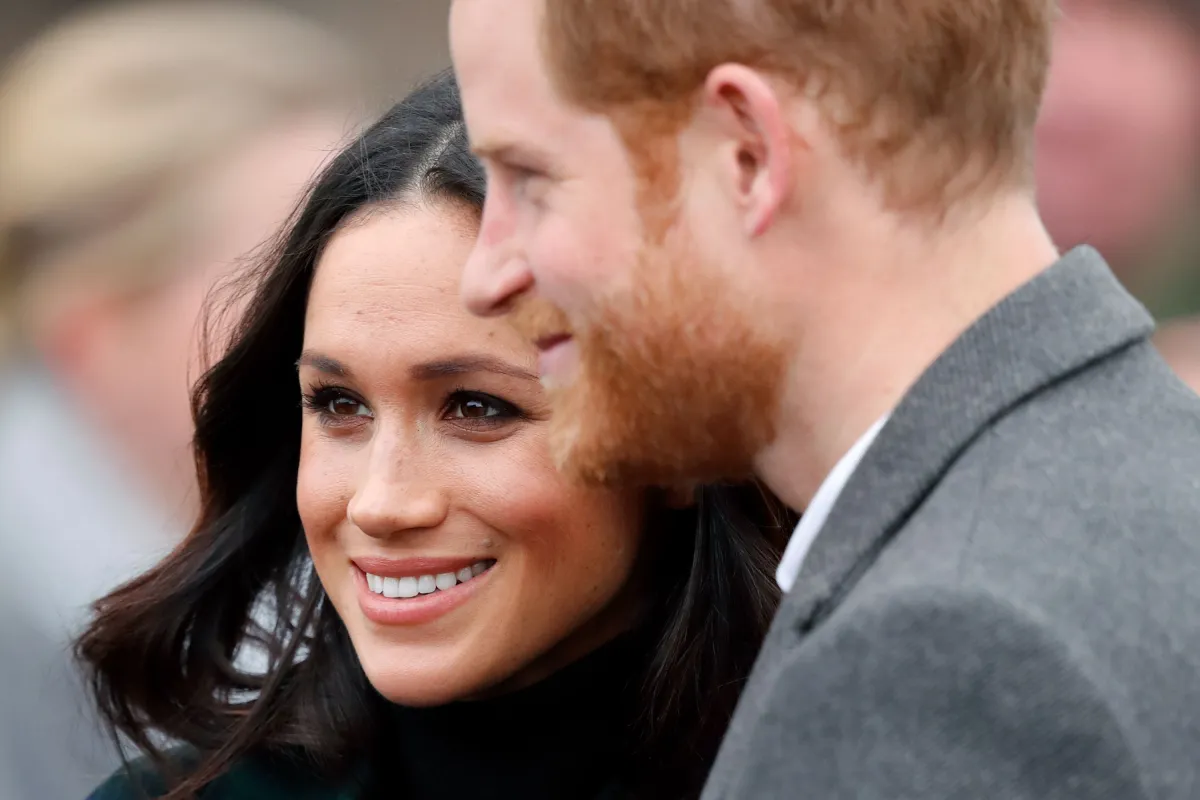
After six years of California sunshine, Prince Harry and Meghan Markle have quietly slipped back into British life, trading their Montecito hillside for the damp, green quiet of the English countryside. The couple returned to Britain in August, but their arrival felt less like a triumphant homecoming and more like an experiment in living. They have not sold their beloved California mansion, and according to Newsweek, there is no set timetable for how long they intend to stay in the U.K. Instead of moving into a royal residence or buying a new family home, they have been staying at the estate of a wealthy friend near the Cotswolds—a location that has been deliberately kept private out of respect for their security and peace of mind. Now, reports suggest the family has shifted from the main house to another property on the same estate, and significantly, they have stopped actively hunting for a permanent British home. The Sussex camp has declined to comment on the matter, which is perhaps unsurprising for a couple who have learned to guard their private lives fiercely. But the silence itself speaks volumes. It paints a picture of a family in a strange kind of limbo—here in Britain, but not fully anchored to it. They are close enough to embrace English life, yet loose enough to slip away again if it doesn’t work. There is something deeply human about that hesitation. Moving countries is never simple, especially when you’re followed by cameras, speculation, and the weight of a complicated royal history.
What makes the Sussexes’ situation so fascinating is the emptiness at the center of it. There is a vacuum of information about why they came back to a country they once said had driven them out, and how long they plan to stay. That absence of clarity forces observers to read meaning into every small decision—and there have been many small decisions. Harry has offered only one explanation for the move: a desire to put their children, Prince Archie and Princess Lilibet, into British schools. That is a powerful, understandable reason. Any parent wants stability and a sense of cultural belonging for their children. But the couple has not said whether they intend to stay for the full span of their children’s education, which, in Lilibet’s case, could stretch all the way to around 2039. That would be a monumental commitment, and so far they have not made it. Instead, their actions suggest they are testing the waters. Their living arrangement alone is telling. They have not stayed with the royal family, nor have they purchased a home. They are guests on someone else’s land, enjoying a kind of semi-privacy that allows them to experience Britain without yet owning it. In September, Meghan shared glimpses of their new life on social media: rain boots splashing through muddy puddles, a child’s feet warming by a crackling fire. It was a deliberately cozy, earthy contrast to the sun-drenched images from California. The message seemed to be that they were embracing the elements, embracing simplicity, embracing a slower kind of English childhood. And yet, the lack of permanence lingers. They are not rushing to put down roots in a physical or legal sense, and that makes this period feel like a trial run rather than a final destination.
The children’s schooling has already proven to be more complicated than they might have hoped. Archie and Lilibet are enrolled at a British private school, but the family reportedly switched from their original choice after their security team raised concerns about the lengthy traffic jams around the school. It is a striking detail—security concerns, not academic ones, reshaped their decision. For a family living under intense scrutiny, even the school run has to be carefully choreographed. The family went abroad for the half-term holiday, though Newsweek understands they did not travel to Portugal, where they own a holiday home. They returned to Britain in time for the children to be back at their desks on Monday. These rhythms of school terms, holidays, and returns are the same ones that define life for millions of British parents. Yet for Harry and Meghan, they are also loaded with symbolic weight. Every choice they make is examined as evidence of intention. If they were to buy a property, it would instantly suggest long-term roots, a commitment to spending years rather than months in the U.K. Reports indicate they were originally looking for a home with a budget of around £10 million, roughly $13 million. But they have now stopped house hunting altogether. That decision carries its own quiet significance. It doesn’t necessarily mean they are leaving, but it does mean they are not ready to lock the door. They are, in a sense, living out of suitcases inside a borrowed home—comfortable, protected, but not yet settled. It is a very human state of in-between, the kind of place you find yourself when you’re not sure what kind of life you want to build next.
There are, however, several reasons why Harry and Meghan might choose to remain in Britain through the summer and beyond. One of the most compelling is the Invictus Games, which is scheduled to take place in Birmingham in July. Harry founded the tournament for wounded veterans, and it has become one of the defining projects of his public life. Being based in the U.K. in the months leading up to the event gives him a unique opportunity to raise its profile, to meet with competitors, veterans, and support networks, and to put the cause at the center of British public conversation. He has already demonstrated his commitment to that mission. In September, he attended the inaugural Invictus Spirit Awards, an event that raised $2.2 million for the Invictus Games Foundation. That kind of work is personal to him; it connects to his military service and his deep sense of duty. It is hard to imagine him wanting to be an ocean away during such an important year. But there is also something more tender pulling at his attention. August 2027 will mark the thirtieth anniversary of his mother’s death. Princess Diana remains a deeply beloved figure, and Harry has long spoken about wanting to protect and honor her legacy. According to Newsweek, he is preparing a tribute project to mark the milestone, though specific plans are still taking shape. One possibility being considered is a Netflix documentary about Diana and the legacy she left behind. If that project moves forward, staying in Britain would be almost essential. It would allow Harry and his team to film on location, to interview friends and relatives based in the U.K., and to immerse themselves in the places and memories that shaped his mother’s life. There is an emotional logic to this, too. Being near the places where Diana lived, walked, and worked might feel meaningful to Harry as he reflects on her life and death. The country that once rejected his mother is now the place where he might honor her most fully.
Then there is the question of family reconciliation. In a September 2025 interview with The Guardian, Harry said that his father, King Charles III, would be his main focus for the next twelve months. That statement was striking in its simplicity and tenderness. It suggested a desire to repair, or at least to tend, a relationship that has been strained by years of distance, accusation, and misunderstanding. Harry saw his father in July and spoke to him by phone shortly after the couple moved back to Britain. But even for members of the royal family, face-to-face time with the king does not come easily. It has to be carefully arranged, fitted into schedules, security plans, and the delicate diplomacy of the palace. And opportunities are rare. Prince William, the Prince of Wales, works closely with the king but still has to plan around the realities of royal life. For Harry and Meghan, these windows are even narrower. Yet despite Harry’s stated desire to focus on his father, the couple is expected to spend Christmas in California. That decision avoids an incredibly awkward situation. It is unclear whether they would have received an invitation to Sandringham, where the royal family traditionally gathers for the festive period. But by heading back to America, they spare the king a difficult choice. If Charles had invited them, it would almost certainly have upset Prince William, who no longer speaks to Harry. If he had not invited them, it would have been seen as a public rejection. Instead, the Sussexes have chosen to step away, leaving the question unanswered and avoiding another painful headline. It is a mature move, perhaps, but also a lonely one. The holidays are meant to be a time of togetherness, and for Harry, the distance between him and his family may feel especially sharp. It is hard to know whether Christmas in California will feel like freedom or exile.
In the end, Harry and Meghan are living a life of deliberate flexibility, refusing to be pinned down to one place or one future. They have kept their Montecito mansion, not bought a British home, and temporarily settled on a friend’s estate while they figure out what comes next. That kind of rootlessness can be exciting, but it can also be exhausting. For their children, there is a sense of belonging being built in school friendships, muddy walks, and roaring fires. For Harry, there is purpose in the Invictus Games, in the prospect of a Diana tribute, and in the slow, fragile work of reconnecting with his father. For Meghan, there is the challenge of carving out a meaningful life in a country where she has often felt unwelcome. They are trying to hold two possibilities at once: the idea of returning to the sunshine and ease of California, and the hope of building something real and lasting in Britain. The fact that they have stopped house hunting suggests they are not yet ready to choose. But sometimes the most honest answer is the one that refuses to commit. The Sussexes are not running away, and they are not entirely running home. They are, like so many families, simply trying to find a way to live that feels true to who they are now. The rain will keep falling, the children will keep growing, and at some point, a decision will have to be made. For now, they are somewhere in the middle—both here and there, both royal and independent, both hopeful and wary. And perhaps that is exactly where they need to be.