

Imagine being a naturalized American citizen. You waited years, studied for the citizenship test, took the oath, and finally became a U.S. citizen. You registered to vote, you voted in the August primary, and you planned to vote on Election Day. Then you learn that your name is on a list the Department of Justice wants election officials to use to set aside ballots—because the government thinks you might not be a citizen. That is the situation facing more than 400 voters in Washington state, and the DOJ itself admits the list is not airtight. In a letter to Secretary of State Steve Hobbs, federal prosecutors asked the state to hold back any ballots cast by people the Department of Homeland Security identified as noncitizens. But in the same letter, the DOJ conceded those same people “may have subsequently naturalized.” In other words, some of the ballots the federal government wants to quarantine could belong to citizens who have every right to vote. On Monday, the day before Election Day, three civic and labor groups asked a federal judge in Seattle for an emergency order blocking the demand. Their lawsuit argues the Trump administration has no legal authority to tell a state which lawfully cast ballots to count—and that the threat of prosecution is being used to scare election workers and naturalized voters. The timing could hardly be more fraught. Washington is a vote-by-mail state, and ballots postmarked by Tuesday will continue to be counted into the following days. A list that is even slightly inaccurate could mean a citizen’s vote is silently shelved, never counted, with no notification. The groups suing say naturalized citizens are the ones who will bear the brunt of the government’s error. They point out that federal immigration databases often lag behind real life: a green-card holder may become a citizen, update their records with some agencies, and still appear as a noncitizen in another database. Washington’s own elections office has said the federal system the DOJ relies on frequently flags legitimate U.S. citizens. So while the number at issue—405 ballots—is small compared with the state’s total vote, the principle is large: every eligible citizen’s vote should count.
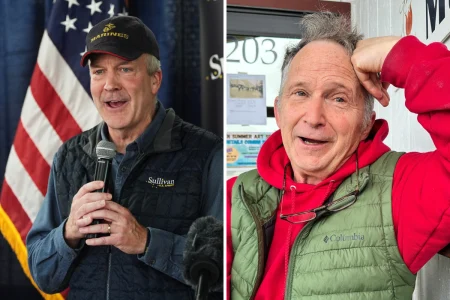
To understand why this is extraordinary, you have to remember how U.S. elections work. States administer elections. Federal prosecutors, meanwhile, can investigate and charge people who violate federal election laws. Usually, the federal government’s role comes after the fact: if someone votes illegally, prosecutors can bring charges. But in the final weeks of the 2026 midterms, the DOJ has tried something much rarer: telling states, before votes are counted, which ballots to set aside. Washington is the third state where the DOJ has gone to court or threatened to do so this fall over how votes are counted. In California, the government sought to segregate ballots from more than 20,000 people it identified as likely noncitizens. Monday evening, the Supreme Court rejected the Trump administration’s request. In Alaska, the DOJ tried to block certification of the Senate race over a dispute involving two candidates named Dan Sullivan; a judge dismissed the case Sunday. So far, every court to rule in these cases has turned the government down. That pattern matters. It suggests the DOJ is not simply tightening enforcement of existing law; it is pushing a novel theory of executive power, and judges are not buying it. The groups now asking a Seattle federal judge for an emergency order are hoping that pattern holds. The lawsuits against these moves describe a coordinated effort to inject distrust into the election process. Instead of waiting to see whether individual ballots were valid, the DOJ is telling states to treat entire categories of voters as suspect. Civil rights lawyers argue that flips the presumption of innocence on its head. A voter who did everything right—registered, signed a sworn attestation, voted—is suddenly presumed guilty of being a noncitizen until they can prove otherwise. And because the lists are built from immigration databases that are known to contain errors, the cost of the government’s mistake falls on real people: naturalized citizens who waited years to become Americans and exercised the most basic right of citizenship.
The list at the center of the case is riddled with holes. The sentence at the center of the case sits in the letter’s own description of the people it names. They “are or were noncitizens,” the DOJ wrote, before adding in parentheses: “they may have subsequently naturalized.” That parenthetical may be the most important part of the entire dispute. It is an admission that the federal government cannot actually confirm at this moment whether the people whose ballots it wants frozen are citizens or not. Washington’s review found more problems. In an October 28 reply to the DOJ, Secretary of State Steve Hobbs said a preliminary check showed the list “includes United States citizens and is not reliable.” The DOJ had sent a PDF of a printed spreadsheet rather than a data file, which made it harder to process. It left out voter identification numbers and addresses—precisely the information election officials need to match a name to a registration. Some records were decades old; one dated back to 1994. The state counted 403 unique names on a list the DOJ had publicly described as 405. At least 62 of those people had not even been sent a ballot, because their registrations were canceled, inactive, or they could not be found in the system at all. Acting U.S. Attorney Neil Floyd acknowledged the limits. He described the list as covering “a very tiny population of people that we have made contact with recently,” allowed that “there might be a lot of John Does,” and said some people on it had told agents they never filled out a ballot. How did the names get there? According to Floyd, federal agents had been questioning noncitizen detainees and people crossing the border about whether they had voted, then checking what they said against federal immigration databases and public voter rolls. It was, in his words, essentially one person at a time. That method may sound precise, but it is not the same as pulling a voter’s file and confirming their citizenship status today. It relies on statements from people in stressful situations, information they may not know, and databases that cannot keep up with life changes. Washington’s elections director, Stuart Holmes, laid out the gaps in a sworn declaration filed Monday. The state’s effort to match the DOJ’s list to actual registered voters produced far fewer matches than the federal government implied. A list that was supposed to identify illegal voting was, in many cases, identifying nothing at all.
The demand itself was blunt. Pete Serrano, the top federal prosecutor in eastern Washington, signed the October 26 letter to Secretary of State Steve Hobbs and announced it alongside Neil Floyd, the acting U.S. attorney in Seattle. The letter said the Department of Homeland Security had identified more than 400 people who were registered to vote in Washington despite not being citizens, and who had cast more than 1,500 ballots between them, some as recently as the August primary. It gave the state 24 hours to check the names and a deadline of noon October 28 to reply. The core request was unambiguous: if anyone on the list returned a ballot, county officials were not to verify the signature or count it until the person’s citizenship was settled. If Washington did not comply, the letter warned, the United States “will have no choice but to seek emergency relief.” The letter said only that DHS had identified the names “through the efforts of our federal law enforcement partners.” Floyd offered more at a news conference. Agents, he said, had been questioning noncitizen detainees and people crossing the border about whether they had voted, then checking that against federal immigration databases and public voter rolls. “We are having to do this essentially one person at a time,” he said. The letter also promised more. Prosecutors said they expected “imminently” to receive a second list and to send it before what they called the “November 2, 2026 General Election.” The problem? Election Day is November 3. It is possible the date was a typo, but it is also a sign of how fast the DOJ was moving. The request came less than a week before Election Day, with no time for careful matching, no time for affected voters to challenge their inclusion, and no time for counties to verify citizenship before the deadline. The letter’s 24-hour deadline gave the state almost no room to respond thoughtfully. And the promised second list meant the potential scope could grow, perhaps significantly, with names that would face the same flawed process.
That is the backdrop for the lawsuit filed by OneAmerica Votes, the Latino Community Fund of Washington State, and the United Food and Commercial Workers International Union. The groups, which work largely with immigrant and Latino voters, sued October 30 in federal court in Seattle. Represented by Elias Law Group, they named President Donald Trump, the DOJ, DHS, Floyd and Serrano, among others. The legal argument is rooted in the Constitution: elections in the United States are administered by the states, not by federal prosecutors. No federal law, the groups argue, gives the DOJ the power to tell a state to hold back ballots. The lawsuit also makes a more human point. Many of their members are naturalized citizens who would never know their ballot had been set aside. There is no notice, no hearing, no chance to prove citizenship before the vote is frozen. The groups say the administration is using the threat of prosecution to frighten election workers and naturalized voters—pressuring county officials with the possibility of criminal liability while casting a cloud of suspicion over citizens who have done nothing wrong. On Monday, they asked U.S. District Judge Jamal N. Whitehead for an emergency order blocking the demand. As of Monday evening, no hearing had been publicly scheduled. The urgency is obvious: Washington votes by mail, and county election offices are already processing ballots. Without a court order, ballots from people on the DOJ’s list could be set aside in silence, and the voters who cast them may never know until after the election is decided. For the plaintiffs, the case is not about 405 ballots as numbers. It is about the people behind them: immigrants who became citizens, registered legally, and participated in democracy. They describe the DOJ’s letter as a form of voter intimidation dressed up as law enforcement. The complaint quotes Floyd’s own words to show the list is raw and incomplete; he said there “might be a lot of John Does” and that some people on it denied ever filling out a ballot. If the government cannot be sure of its own list, the groups argue, it has no business ordering a state to treat those voters as presumptive criminals.
The response from the U.S. Attorney’s Office in Seattle was muted. Asked whether the second list had been sent, whether the DOJ would oppose the emergency motion, and what its next steps in Washington would be, the office said it does not comment on pending litigation and does not expect to say more until after the election. Instead, it pointed to a statement Floyd issued Thursday, before the lawsuit was filed. In that statement, Floyd wrote that Washington is “knowingly sending out ballots to non-citizens and trusting that the non-citizens will not fill out the ballot.” That framing reflects a fundamental disagreement about how to think about this case. Washington does not require documentary proof of citizenship to register; voters attest to it when they sign up. That is the law in many states, and it is not the same as deliberately inviting noncitizens to vote. But the DOJ sees it differently, and it says so in forceful terms. Abha Khanna, a partner at Elias Law Group, called the demand “unlawful intimidation of election officials, plain and simple.” The fight is likely to outlast Election Day. Washington votes by mail, and ballots postmarked by Tuesday will be counted for days afterward. A ruling from Judge Whitehead, the promised second list, or a DOJ lawsuit against the state could all come during the count. In other words, the full consequences for the 400-plus voters on the list—and for the integrity of the election—may not be known until well after the polls close. But one thing is already clear: in the final days before the election, the DOJ was asking a state to set aside ballots based on a list it admitted was imperfect. For naturalized citizens who did everything right, that is a chilling thought.