

Last season, the Denver Broncos transformed the football field into a high-stakes hunting ground, unleashing a relentless pass rush that terrorized quarterbacks across the league and re-established the franchise as a defensive powerhouse. Led by a ferocious collective energy, they compiled an astounding 68 sacks, a number that sat comfortably at the top of the NFL and left their closest competitors, the Atlanta Falcons, trailing far behind with 57. This extraordinary feat was not merely a modern success story; it was a historic milestone, marking the highest single-season sack total since the legendary 1985 New York Giants and tying them for the fifth-most in the history of professional football. For the players who put their bodies on the line week after week, those numbers represent more than just cold statistics on a page—they are the physical embodiment of sweat, sacrifice, and an unyielding competitive spirit. Yet, in the high-stakes world of the NFL, yesterday’s triumphs quickly fade into the background, and the Broncos’ defensive unit is refusing to look back or rest on their laurels. Instead of basking in the glory of their dominant campaign, this tight-knit group of athletes is channeling their achievements into a burning motivation for the future. They have tasted what it feels like to be feared, to dictate the terms of a game from the defensive side of the ball, and to bring opposing offenses to a grinding halt. This shared experience has forged an intense internal brotherhood, transforming a collection of highly talented individuals into a singular, cohesive force driven by a common purpose. As they look ahead to the challenges of the upcoming season, the memory of last year’s near-historic run serves as both a foundation and a catalyst, igniting a collective desire to push the boundaries of what is possible and redefine the standards of defensive excellence in the modern era.
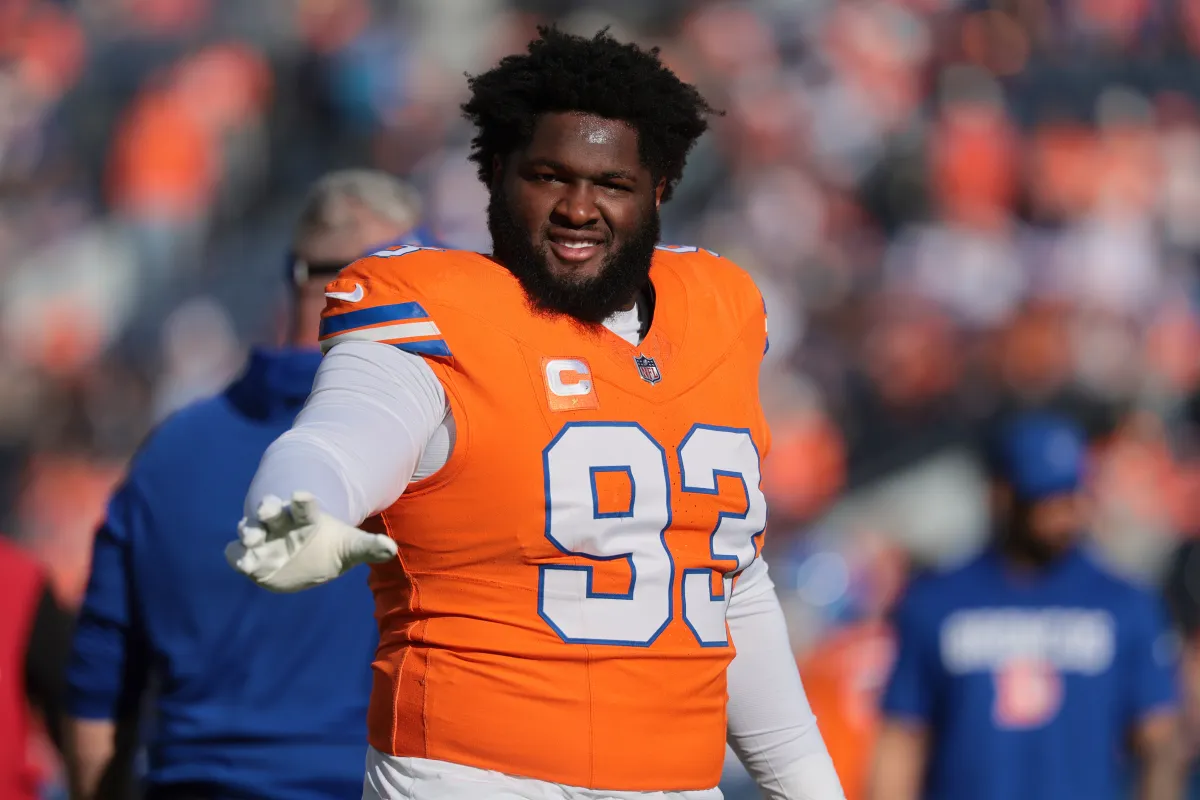
At the heart of this relentless pursuit is veteran defensive tackle D.J. Jones, whose colorful and deeply human perspective captures the exact mindset of a locker room that is hungry for legendary status. Rather than speaking in the dry, rehearsed clichés so common in professional sports, Jones used a vivid culinary metaphor to describe the insatiable appetite driving his teammates toward greatness. He explained that while the team thoroughly enjoyed the taste of success they experienced last year, they are far from satisfied; instead, they are ready to prepare the ultimate feast, consume it, and then eagerly return for more. “We can break it,” Jones asserted with the quiet confidence of a man who knows exactly what his brothers are capable of when they step onto the turf. “We’ve got what it takes. We’ve tasted it, and now it’s time to cook the meal, eat it, and take a break. You know how you eat a good meal, you lay down after to take a good nap, and then wake up to go eat again? We ’bout to eat again. It’s time.” This visceral imagery goes beyond mere trash talk—it humanizes the grueling, physical reality of playing along the defensive line, where the battle for supremacy is won in the trenches through sheer will, brute strength, and endurance. For Jones and his comrades, the act of sacking an opposing quarterback is an addictive sensation, a hard-earned reward that demands to be repeated over and over again. This mindset is nurtured daily within the team facility, fostering an environment where complacency is treated as the ultimate enemy and the pursuit of perfection becomes a daily lifestyle, reminding everyone that the hunger for greatness can never be fully satisfied.
To understand the sheer scale of the mountain the Broncos are attempting to climb, one must look back to the ultimate gold standard of defensive football: the iconic 1984 Chicago Bears. Coached by the larger-than-life Mike Ditka and orchestrated by the defensive mastermind Buddy Ryan, that legendary Bears squad established a single-season record of 72 sacks that has stood untouched like a monument for over four decades. That defense was a terrifying force of nature, boasting a ferocious line-up that featured three players reaching double-digit sacks, including Hall of Fame icons Richard Dent with an incredible 17.5, Dan Hampton with 11.5, and Steve McMichael with 10. In total, an amazing 13 different players recorded at least one sack during that historic campaign, creating a culture of defensive terror that defined an entire era of the sport. For forty years, teams have chased this mythical record, only to fall short against the ghost of a defense that played with an unmatched level of violence, discipline, and swagger. For the modern Broncos to openly target this specific milestone is an incredibly bold statement, a direct challenge to the history books that requires both immense courage and a deep belief in their own collective identity. It is a bridge spanning generations of football, linking the old-school, smash-mouth grit of the 1980s with the fast-paced, highly specialized schemes of the modern game. By setting their sights on the ’84 Bears, the Broncos are not just chasing a numerical statistic; they are chasing immortality, aiming to etch their names alongside the mythical figures who constructed the foundation of modern defensive dominance.
While the legendary 1984 Bears relied heavily on a handful of dominant superstars to carry the bulk of their pass-rushing load, the modern Denver Broncos have built their success on a vastly different, highly democratic philosophy. Last season, Denver featured only one player who reached double-digit sacks—their brilliant, All-Pro edge rusher Nik Bonitto—but they compensated for this by unleashing an incredibly diverse, wave-like assault that involved nearly every member of the defense. Players like Jonathon Cooper, who finished with a career-best eight sacks, alongside John Franklin-Myers with 7.5 and Zach Allen with seven, proved that danger could come from any direction on any given play. In an impressive display of depth and versatility, a total of 15 different Broncos recorded at least one sack over the course of the season, including D.J. Jones himself, who contributed three sacks to go along with his 39 combined tackles. This balanced approach paints a picture of a defense that does not rely on a single superstar to save the day, but rather functions as a true collective unit where every individual is fully committed to playing their role for the greater good of the team. This shared responsibility fosters a unique sense of camaraderie and joy on the field, as players celebrate each other’s successes with genuine enthusiasm, knowing that a sack for one is a victory for the entire brotherhood. It is a modern blueprint for defensive excellence, proving that a relentless, unified pack can be just as devastatingly effective as a few legendary individuals, turning the weekly game plan into a collaborative masterpiece of disruption.
Maintaining this elite level of production is never an easy task in the volatile landscape of the NFL, especially when key pieces of the puzzle begin to shift during the offseason. The Broncos will have to navigate the upcoming campaign without the valuable contributions of John Franklin-Myers, who departed for the Tennessee Titans, leaving a significant void in terms of both physical production and veteran leadership on the defensive line. However, the core identity of this defense remains firmly intact, and the continuity of having the brilliant defensive coordinator Vance Joseph at the helm provides a massive sense of stability and confidence. Joseph has proven time and again that he possesses a rare gift for maximizing the unique strengths of his players, designing creative, aggressive schemes that keep opposing offenses off-balance and constantly guessing. Under his watchful guidance, the returning core of the defense is highly motivated to prove that last year was not a fluke, but rather the beginning of a sustained era of dominance. The loss of a key teammate like Franklin-Myers is viewed not as an insurmountable obstacle, but as a golden opportunity for younger players to step up, embrace larger roles, and make their own mark on the team’s legacy. This resilience is a testament to the culture that Joseph and the veteran leaders have built in Denver—a culture that views challenges as fuel, trusts the system implicitly, and believes that as long as they play with passion and unity, they can overcome any personnel changes to achieve their loftiest goals.
Ultimately, the Broncos’ pursuit of the Chicago Bears’ forty-year-old record is a beautiful testament to the audacity of human ambition and the romantic spirit of competitive sports. To declare war on one of the greatest defensive milestones in NFL history requires a rare blend of supreme confidence, relentless work ethic, and a refusal to be limited by conventional expectations. Last season, Denver came agonizingly close, finishing a mere five sacks short of tying the legendary mark, which proves that this is not some unrealistic pipe dream, but a highly achievable reality sitting right within their grasp. As they prepare to embark on the journey of the upcoming season, the players are carrying the hopes of a passionate fanbase and the weight of historical comparison on their shoulders, yet they approach the challenge with a sense of joy and anticipation. They understand that the road to history is paved with pain, exhaustion, and unforgiving pressure, but they are more than willing to pay the price for a chance at football immortality. Whether they ultimately surpass the legendary number of 72 or fall just short of the mark, the journey itself is a powerful reminder of why we love the game—it is the sight of passionate individuals daring to chase greatness, refusing to settle for mediocrity, and stepping onto the field each week with the burning desire to write their own unforgettable chapter in the archives of NFL history.