


With just six weeks left before Russia heads to its first parliamentary elections since tanks rolled across the Ukrainian border, Vladimir Putin finds himself walking a high-stakes tightrope between absolute political dominance and creeping domestic instability. In a traditional democracy, elections are a time of intense anxiety for incumbent politicians who must desperately defend their records, cross-examine polling data, and sweat over every shift in public sentiment. In Russia, however, the decades-long consolidation of authoritarian rule means United Russia, Putin’s ruling party, has no real fear of losing its grip on the State Duma. The political theater is tightly scripted, the genuine opposition is systematically dismantled or exiled, and the outcome is largely a foregone conclusion. Yet, even the most entrenched autocrat cannot completely ignore the psychological climate of the nation he rules, especially when a costly, grinding war of attrition is beginning to puncture the bubble of domestic normalcy. For over two years, the Kremlin has attempted to sell a paradox to the Russian public: that the country is engaged in an existential struggle against the West, but also that daily life can carry on exactly as it did before. This delicate illusion is now fracturing under the weight of Ukraine’s increasingly effective military strikes, which are bringing the physical and economic costs of the conflict directly to the doorsteps of ordinary Russian citizens. As voters prepare to go to the polls, Putin faces a classic dictator’s dilemma: how to project an image of triumphant, unified national resolve while managing a restless population that is quietly bearing the brunt of soaring inflation, resource shortages, and the terrifying, ever-present threat of another military draft.
The most explosive issue threatening this fragile social contract is the looming specter of military mobilization. The memory of September 2022 still haunts the Russian collective psyche, when the Kremlin’s sudden announcement of a “partial mobilization” to draft 300,000 reservists triggered widespread panic, protests, and a massive exodus of military-age men. Within a single week, over 66,000 Russians fled into the European Union, while tens of thousands of others choked the mountain passes into Georgia and the arid borders of Kazakhstan, desperate to escape being sent to the front lines of a war they had previously watched only on state television. Today, Russian battlefield casualties are mounting at an alarming rate, creating a desperate, ongoing need for fresh bodies to hold the line. While Ukraine claims that Russian losses are outstripping their recruitment capacity, Moscow insists that voluntary enlistment contracts—totaling some 200,000 in the first half of this year alone—are sufficient to meet military needs. However, the lack of a decisive strategic breakthrough has fueled relentless rumors among Russian military bloggers that another massive draft of up to half a million men is inevitable. The anxiety has grown so palpable that high-profile state propagandists like Vladimir Solovyov and defense officials have had to publicly scramble to reassure the public that no mobilization is planned, even threatening to prosecute independent bloggers for spreading panic. Instead of a politically disastrous draft right before an election, the Kremlin is opting for a “carrot” approach, aggressively raising sign-on bonuses, recruiting on university campuses, and even expanding the list of violent crimes—including drug trafficking and gang assault—that can be legally wiped clean if a convict agrees to sign a military contract.
Compounding the human cost of the war is the physical destruction of Russia’s domestic infrastructure, as Ukraine wages an increasingly sophisticated asymmetric campaign designed to disrupt the everyday lives of Russian consumers. In recent months, Ukrainian drone strikes have successfully targeted the massive logistics centers of Wildberries, Russia’s dominant online retail giant and its equivalent to Amazon. With over a quarter of Wildberries’ warehouse space reportedly damaged or destroyed, the primary arteries of Russian e-commerce have been severely disrupted, leading to canceled orders, dramatic shipping delays, and the sudden unavailability of basic household products in major cities like Moscow. For millions of average Russians, Wildberries was a modern convenience that offered a sense of continuity and comfort amidst international sanctions; its sudden vulnerability is a stark, frustrating reminder of the war’s reach. Furthermore, these attacks have devastated the countless small- and medium-sized independent businesses that rely entirely on the platform to store and ship their merchandise, pushing many to the brink of financial ruin. By striking at the heart of Russia’s digital economy, Ukraine is proving to the Russian middle class that they cannot simply shop their way out of the geopolitical reality their government has created, transforming a distant military conflict into an immediate, irritating domestic crisis.
An even greater headache for Putin is the systematic dismantling of Russia’s energy infrastructure. Ukrainian drone attacks have pounded Russian oil and gas refineries with pinpoint accuracy, triggering a domestic energy crisis that is highly visible and impossible to spin. Since June, motorists across various Russian regions have been forced to confront a reality previously unthinkable for a global energy superpower: hours-long queues at gas stations, strict fuel rationing, and soaring prices at the pump. According to economic analysts, domestic gasoline production plummeted by nearly a third over the summer, forcing the country into a dangerous deficit where it is consuming far more fuel than its damaged refineries can produce. Industry experts warn that if these trends continue unabated, Russia’s domestic fuel reserves could be virtually empty by autumn—a timeline that threatens to collide directly with the upcoming elections. This crisis is not just causing anger at the gas pump; it is dealing a devastating blow to Russia’s export economy, with oil-product exports dropping to record lows. The economic fallout is stark, with the Central Bank slashing GDP growth forecasts to near-zero and raising inflation predictions. To keep the war machine funded, the government has implemented aggressive tax reforms, raising the value-added tax (VAT) and drastically lowering the tax-exempt thresholds for small businesses. This means that small entrepreneurs, who are already struggling with supply chain disruptions and delayed payments, are now being squeezed by their own government to pay for a war that is actively destroying their livelihoods.
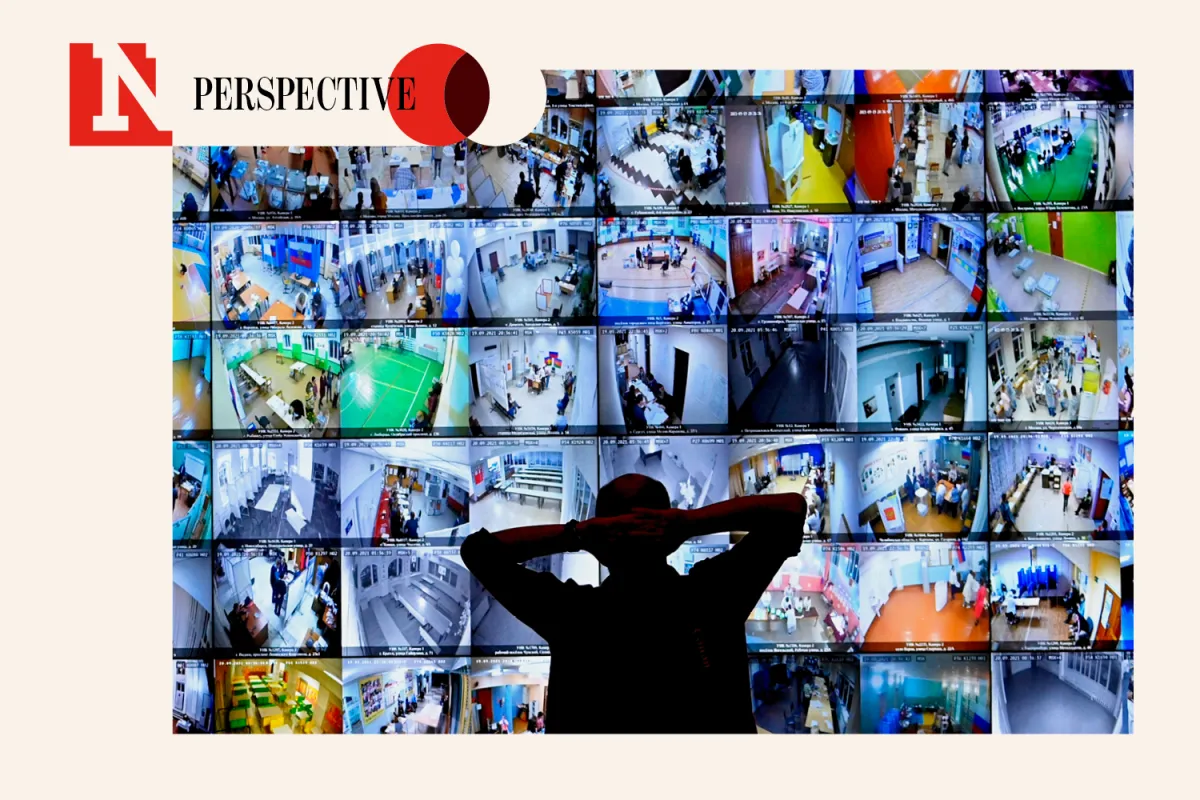
Despite these growing fractures, the ruling United Russia party is virtually guaranteed to maintain its overwhelming supermajority in the 450-seat State Duma. The Kremlin’s political machinery is too well-greased, and the domestic security apparatus too ruthless, for any genuine electoral upset to occur. However, the real story lies not in who wins, but in how hard the regime must work to manufacture the appearance of enthusiastic public support. Internal leaks suggest that the Kremlin has quiet anxieties about the public’s mood, prompting officials to repeatedly lower their internal targets for voter turnout and United Russia’s share of the vote in several key regions. Gaining an authentic-looking mandate is becoming increasingly difficult in a society gripped by quiet pessimism. Independent polling, though notoriously difficult to conduct in a climate of fear, reveals a striking shift in public consciousness: a recent Gallup survey indicated that a staggering 60 percent of Russians believe their local economy is actively worsening, while over half feel their personal standard of living is in freefall. Even state-run polling institutions have registered a noticeable dip in the president’s popularity, reflecting a deep-seated exhaustion among the urban working class and small business owners who feel abandoned by a state that demands their quiet compliance but offers little in return.
Ultimately, the upcoming parliamentary elections will go exactly as planned, complete with choreographed patriotic rallies, highly publicized voting drives, and a final tally that will be heralded by state media as a resounding endorsement of Vladimir Putin’s vision. But while the Kremlin can easily manipulate the ballot box, it cannot so easily manipulate the laws of economics or the physical reality of drone warfare. The true danger to Putin’s regime does not come from a surprise electoral defeat, but from the slow, relentless grinding down of the Russian state’s foundational stability. By targeting oil refineries, squeezing the retail economy, and forcing the Kremlin into a corner regarding military recruitment, Ukraine is exposing the steep costs of Putin’s geopolitical ambitions to the very people he relies on to stay in power. The Russian public may remain outwardly compliant for now, choosing survival and silence over active resistance, but their resentment and exhaustion are quietly compounding. As the curtain falls on another staged election, the glittering facade of United Russia’s victory will do little to obscure the cold reality that the war is slowly consuming the nation from the inside out, leaving Putin to govern a country that is increasingly tired, financially strained, and running on empty.