





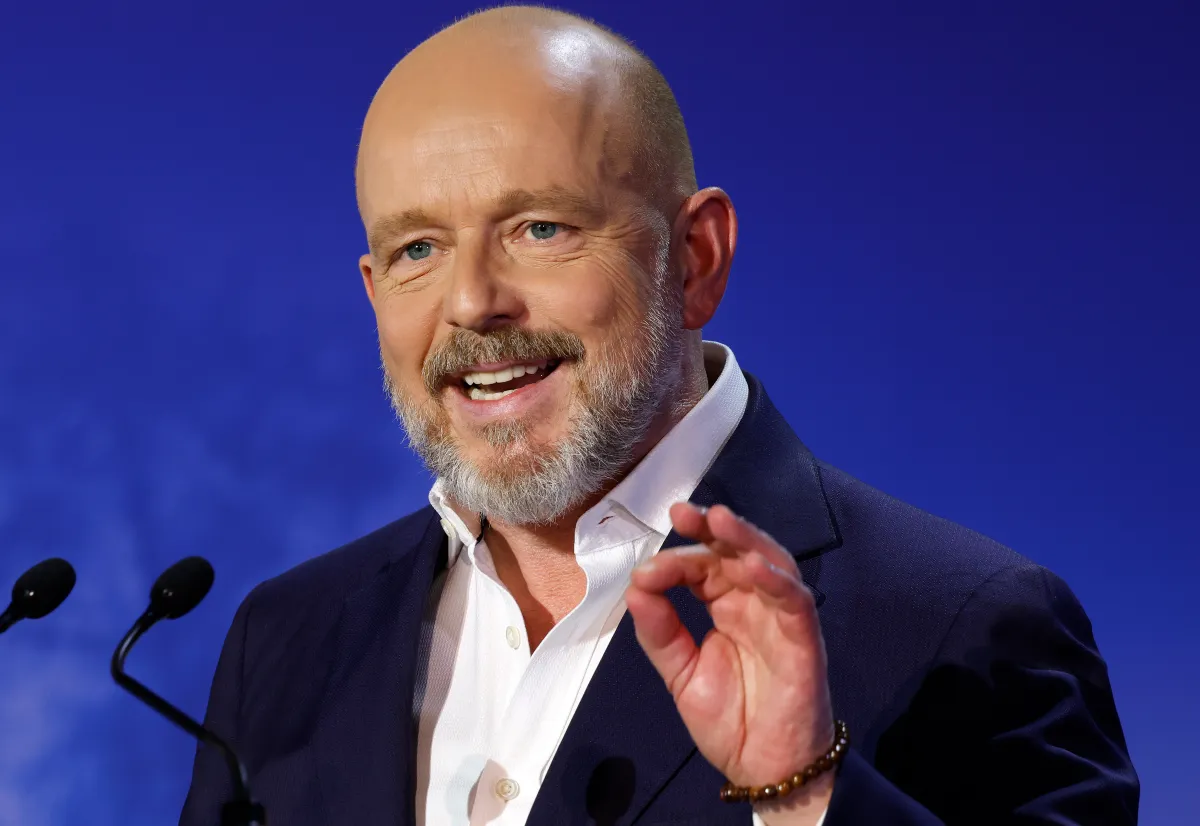
As California prepares to bid farewell to the term-limited Governor Gavin Newsom, the state finds itself standing at a profound political and cultural crossroads, setting the stage for a dramatic general-election showdown. For the first time in fifteen years, a Republican candidate has a viable, albeit challenging, path to the governor’s mansion in Sacramento. Steve Hilton, a former Fox News host and conservative commentator, has successfully emerged from a crowded and chaotic primary field to secure a spot in the November election. On the other side of this ideological divide stands Xavier Becerra, the former U.S. Health and Human Services (HHS) Secretary and California Attorney General, who represents the formidable machinery of the state’s Democratic establishment. This impending match-up is not merely a contest between two ambitious politicians; it is a clash of two starkly different visions for the future of the nation’s most populous state. For Hilton, the race is an audacious crusade to rescue a state he views as declining under the weight of progressive governance, while for Becerra, it is an opportunity to solidify a history-making legacy of public service and defend the progressive policies that have come to define modern California.
The journey to this high-stakes general election reached a critical milestone on Tuesday night, as initial primary election results began to paint a picture of a changing political landscape. According to the Associated Press, with approximately 83 percent of the ballots counted as of 12:21 a.m. Tuesday, Steve Hilton had captured a crucial second-place position with 25.1 percent of the vote, narrowly edging out wealthy Democratic activist Tom Steyer, who stood at 22.4 percent. While the official race call for the second spot remained in progress under the meticulous scrutiny of election officials, the Decision Desk proactively predicted that Hilton would indeed advance to the general election, prompting a wave of celebration among his supporters. Former President Donald Trump took to his social media platform, Truth Social, to enthusiasticly congratulate Hilton on his advancement, signaling a highly visible alignment that Hilton’s campaign hopes will galvanize the conservative base. Trump praised Hilton’s performance and expressed confidence that he possesses the vision and strength required to “turn it around before it is too late” for California. For Hilton, the victory was a validation of his message of restoration, having spent his campaign rallying voters on the issues of rising crime rates, homelessness, and the cost-of-living crisis. At a campaign event just hours before the polls closed, Hilton emphasized the urgency of his mission, telling a passionate crowd of supporters that the state desperately needed to get back on track, and that his advancement to the final round was the only true catalyst for that change.
Yet, despite the palpable excitement surrounding Hilton’s primary success, the cold, hard numbers of California’s political reality present a monumentally steep hill for him to climb. The state’s political demographics have undergone a massive, structural transformation over the last two decades, making a statewide victory for any Republican a rare and extraordinary feat. The last Republican to occupy the governor’s mansion was Arnold Schwarzenegger, who achieved a historic reelection victory back in 2006. However, the electorate that Schwarzenegger won over was far more politically balanced than the electorate of today; in 2006, California was home to roughly 6.7 million registered Democrats and 5.4 million registered Republicans, a gap that could still be bridged by a charismatic moderate with cross-party appeal. Today, that thin margin has widened into a vast chasm, with registered Democrats now exceeding 10 million, while registered Republicans have actually shrunk to around 5 million. This two-to-one registration disadvantage means that even if Hilton manages to perfectly unify and turn out his Republican base, he will still fall far short of the votes required to win. To achieve the unthinkable and secure the governorship, Hilton must build an incredibly broad, diverse, and unconventional coalition, persuasive enough to win over a massive share of independent voters and peel away disaffected Democrats who are deeply fatigued by the state’s economic struggles and the current administration’s performance.
This steep uphill battle is also reflected in the sobering data from public opinion polls and prediction markets, which suggest that Hilton begins his general election campaign as a heavy underdog. Prior to the primary, polling data highlighted just how fractured and unpredictable the electorate remains, with an Emerson College poll placing Becerra in the lead with 28 percent, Steyer in second with 22 percent, and Hilton trailing in third with 21 percent. Conversely, a SurveyUSA poll in the final days of the primary had Hilton tied for the top spot with Steyer at 20 percent, while Becerra lagged slightly behind in third at 17 percent. Now that the primary is over and the crowded field of Democratic candidates has been narrowed down, political analysts expect the democratic vote to coalesce rapidly. During the primary, Democratic support was split among several prominent figures, but moving into the general election, voters who previously backed Steyer and other progressive hopefuls are highly likely to align behind Becerra. This consolidation could easily widen the gap between Hilton and his opponent, a reality reflected in the predictive betting markets. On major platforms like Kalshi and Polymarket, Hilton’s current odds of winning the governorship sit at a mere 7 percent, contrasting sharply with Becerra’s dominant 70 percent chance of victory, highlighting the steep mountain the Republican nominee must scale in the months ahead.
In addition to negotiating the challenging demographic landscape, the candidates must also navigate a financial battlefield that illustrates the sheer scale and intensity of modern California campaigns. The overall primary season was dominated by historically unprecedented levels of spending, largely driven by billionaire candidate Tom Steyer, whose self-funded campaign amassed an astonishing war chest of over $160 million according to state campaign finance records. While Steyer’s immense financial advantage ultimate failed to secure him a spot in the general election, his spending sets a high bar for the kind of visual media saturation required to reach California’s vast and diverse media markets. By comparison, Steve Hilton has raised a respectable $7 million for his campaign throughout the year, with a significant surge of nearly half of those donations coming in after April 19, signaling a powerful uptick in his appeal to donors who began to view him as the party’s best hope. Xavier Becerra, meanwhile, has compiled a competitive war chest of just over $6 million, with more than $5 million collected after that same April 19 threshold, demonstrating that both candidates possess the financial momentum to mount aggressive, state-wide campaigns as they move into the high-turnout general election season.
As the race shifts focus toward November, the contrast between the two candidates’ human stories and policy platforms will take center stage, presenting voters with a profound choice. Xavier Becerra’s campaign is built upon a narrative of stable, lifelong public service, framing himself as a highly experienced, steady hand who can serve as an effective buffer against federal conservative polices. If successful, Becerra would also make history as California’s first Latino governor in more than a century, an achievement deeply resonant in a state where the Latino community represents a vital and growing demographic block. His campaign has focused heavily on everyday economic anxieties, pledging to address skyrocketing housing costs and rising energy utility prices that are straining families across the state. However, his extensive record also brings vulnerability, as political rivals have already begun to target his performance as federal HHS Secretary, raising tough questions about his leadership during the complex challenges of the COVID-19 pandemic. Meanwhile, Hilton plans to counter Becerra’s institutional resume by leaning into his outsider status and his background as a media personality to champion populist reforms, promising lower taxes, strict law-and-order policies, and even a formal investigation into Newsom’s administration for potential fraud. In a state characterized by extreme wealth and equally extreme challenges, the voters of California will ultimately decide whether they prefer a seasoned political insider promising stability and representation, or a bold disruptor offering a dramatic, conservative course-correction.