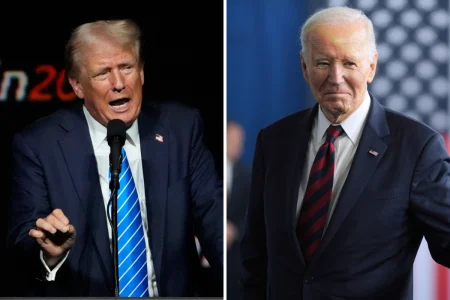







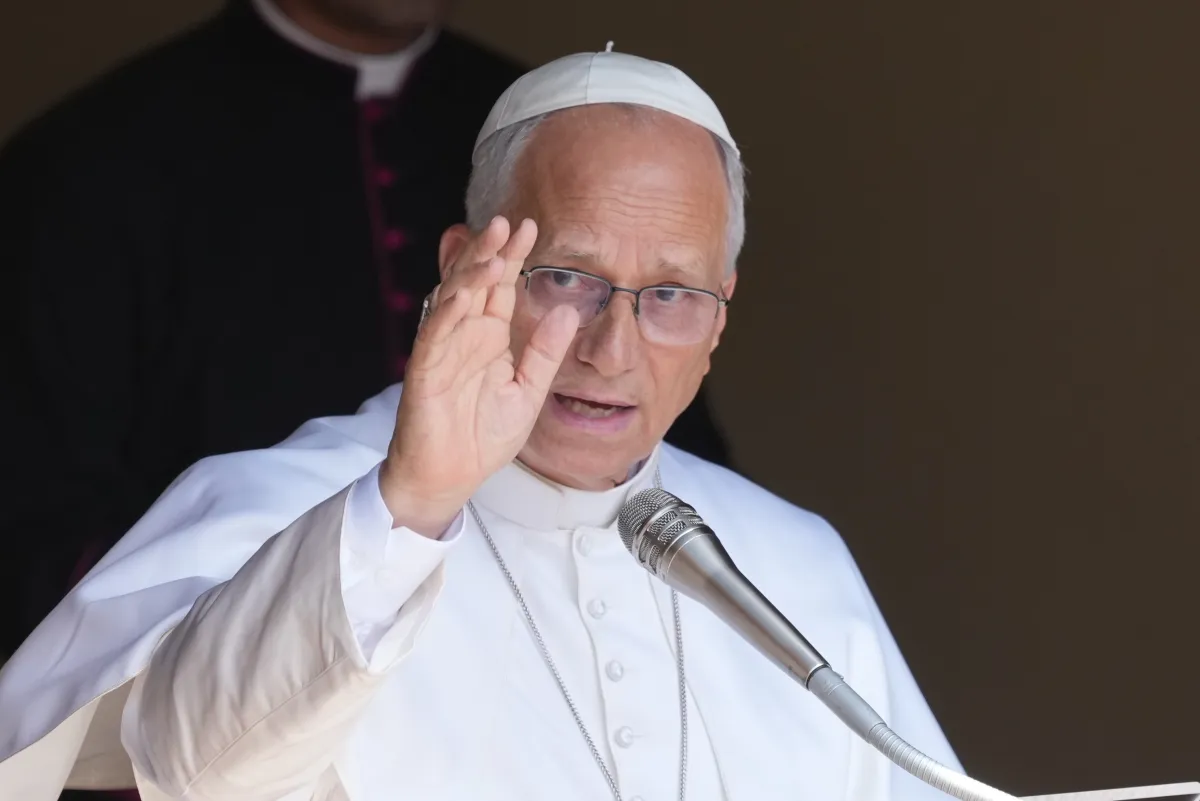
The theater of modern warfare often unfolds in the sterile, high-stakes briefings of Washington and the solemn, ancient halls of the Vatican, yet the true weight of these decisions is always borne by the quiet, nameless millions caught in the crossfire. In a stark demonstration of this disconnect, President Donald Trump stood before reporters at the White House on Tuesday to signal a dramatic and aggressive escalation of military operations against Iran, asserting with practiced defiance that the United States would not back down from its current campaign. Even as he claimed that Tehran was “desperately” seeking a ceasefire after more than a week of devastating exchanges, the President painted a picture of an unfinished crusade, declaring that any site tied to Iran’s nuclear ambitions remains a viable target. Into this atmosphere of gathering storm clouds stepped Pope Leo XIV, who chose this precise moment of heightened global anxiety to issue one of his most profound and emotionally charged appeals for peace and nuclear disarmament. Speaking directly to the conscience of the international community, the pontiff implored people of goodwill everywhere to reject the seductive pull of violence and to actively resist what he characterized as an increasingly unjust, escalating conflict. The Pope’s urgent vocabulary did not merely address the abstract mathematics of geopolitics; instead, his words focused squarely on the human tragedies unfolding on the ground, reminding a distracted world of the families, children, and innocent bystanders who have already paid, or will soon pay, the ultimate price for this cycle of state-sanctioned bloodshed. This widening chasm between the Vatican’s defense of human dignity and the White House’s unyielding projection of military might underscores a deeper, more troubling crisis of global leadership, one where the pursuit of security through absolute destruction threatens to systematically dismantle the fragile pillars of international stability.
At the heart of the administration’s aggressive posture is an absolute resolve to dismantle Iran’s technological and military infrastructure, a policy that President Trump defended with characteristic rhetorical intensity. During his press conference, the President repeatedly vowed that Iran would never be permitted to cross the threshold into nuclear weapon capability, outlining a preemptive strategy that leaves no room for diplomatic ambiguity or strategic self-restraint. When specifically questioned about the heavily fortified, subterranean facility nestled within Pickaxe Mountain—a site international observers believe is central to Iran’s atomic program—Trump warned of an impending and catastrophic strike, promising that the United States military would soon hit the area “very heavily” to ensure its complete destruction. He boasted that previous American strikes had already inflicted structural and economic damage so severe that it would take the Iranian regime a quarter of a century to fully recover. This uncompromising militancy was further reinforced by Defense Secretary Pete Hegseth, who framed the conflict in chillingly pragmatic terms, suggesting that while the door to negotiations technically remained open, Iran’s failure to immediately capitulate would leave them at the mercy of the “War Department.” By enforcing a maritime blockade that Trump described as an impenetrable “steel wall” designed to starve Iran of essential commerce, the administration has signaled to both allies and adversaries alike that it views total economic and physical strangulation as the only acceptable path to securing American interests in the Middle East, regardless of the humanitarian toll such a siege inevitably inflicts on ordinary citizens.
Yet, this doctrine of peace through overwhelming strength is meeting formidable philosophical resistance from Pope Leo XIV, who has sought to dismantle the moral justification for the conflict in his writings and public addresses. In a newly published book, the pontiff delves into the spiritual anatomy of warfare, challenging the widespread hypocrisy of political leaders who routinely cloak acts of aggression in the language of pacification and justice. Pope Leo observes that because the desire for peace is wired deeply into the human soul, even those who initiate devastating wars feel compelled to claim they do so in the name of a greater good, knowing that no civilization would willingly embrace violence purely for its own sake. The Pope argues passionately that true, enduring peace cannot be engineered through the barrel of a gun or negotiated through coercive intimidation; rather, it must be painstakingly built on a foundation of “truth” and an honest acknowledgment of our shared humanity. This moral critique has sparked a highly public, deeply personal feud between the spiritual leader and the American President, with Trump previously lashing out at the Pope on social media, labeling him “weak on crime” and a failure at foreign policy. Unmoved by the political vitriol, the Pope has steadfastly maintained that he harbors no fear of the administration, expressing a quiet determination to protect the sacred message of the Gospel from being co-opted, distorted, or abused by powerful interests seeking to legitimize their geopolitical ambitions through religious rhetoric.
This ideological battle between Rome and Washington is mirrored by an equally bitter, constitutional civil war taking place within the halls of the United States Congress, where lawmakers find themselves deeply divided over the legality and strategic wisdom of the President’s campaign. On one side of the aisle, hawkish defenders of the administration, such as Republican Senator Rick Scott of Florida, argue that the President has a fundamental duty to protect American citizens from the existential threat of an Iranian state armed with weapons of mass destruction. Scott defends the ongoing military operations as a logical and necessary preemptive shield, insisting that the administration has made its objectives abundantly clear: to neutralize a hostile regime that has actively targeted American lives and resources for nearly half a century. Conversely, of the opposing viewpoint, Democratic Senator Cory Booker of New Jersey has launched a blistering critique against what he perceives as a profound betrayal of the American public and a blatant violation of constitutional law. Booker points out that the administration has dragged the nation into an unauthorized, undeclared war since late February without ever seeking the consent of Congress, effectively bypassing the democratic checks and balances designed to prevent unilateral military adventures. For Booker and his colleagues, the administration’s refusal to provide adequate accountability or a clear exit strategy represents a dangerous erosion of democratic norms, one that leaves the nation vulnerable to endless conflict and skyrocketing military expenditures.
The domestic debate has taken on a profoundly somber, emotional tone following the recent deaths of three American service members killed during a sophisticated drone and ballistic missile attack on a military outpost in Jordan. The tragedy has forced a painful reckoning over the human cost of the administration’s strategy, especially as President Trump prepares to travel to Dover Air Force Base to witness the dignified transfer of their remains. When pressed about the security lapse that allowed the lethal strike to succeed, Trump chose to deflect responsibility, suggesting that the tragedy occurred because the United States had entrusted local defense operations to foreign partners who failed to perform their duties adequately. This attempt to shift blame has drawn fierce condemnation from critics like Democratic Senator Richard Blumenthal of Connecticut, who characterized the entire military campaign as an impulsive, whimsical endeavor devoid of factual justification or strategic foresight. Blumenthal lamented that the administration has consistently kept the American public and Congress in the dark regarding the true scale of the conflict, concealing vital details about service member injuries, financial costs, and asset damage. For families of the fallen, the political bickering offers little comfort, leaving them to grapple with a haunting and unresolved question: what did these young men and women sacrifice their lives for in a war initiated on a whim, without congressional approval or a clear path toward resolution?
Ultimately, the standoff over Iran represents a critical crossroads for the future of global diplomacy, illustrating the terrifying ease with which modern states can slide into prolonged, catastrophic conflicts when military escalation is prioritized over dialogue. As the world watches the tense interplay between Trump’s unyielding military maneuvers and Pope Leo’s steady, moral pleas, the limits of raw power are laid bare against the enduring resilience of the human spirit. The Pope’s message serves as a timely, urgent warning that in an era of unprecedented nuclear capability, the pursuit of total victory through destruction is an illusion that can only end in mutual annihilation. For true security to be realized, world leaders must find the courage to step back from the precipice, to look past the immediate demands of political theater, and to engage in the difficult, often unpopular work of building a peace rooted in truth, empathy, and mutual respect. Until that fundamental shift occurs, the international community remains trapped in a perilous cycle, where the rhetoric of strength is continually purchased with the blood of the innocent, and the hope of a stable, prosperous world remains tantalizingly out of reach.