





If you had told anyone in Broncos Country before the season that Denver would walk out of Week 1 looking like one of the worst teams in football, they probably would have laughed in your face. But there they were on Monday Night Football, stumbling through an ugly, one-sided loss to their bitter division rivals in Kansas City. The scoreboard read 31-10, and that actually felt generous. Denver managed just 10 points, tied for the second-lowest total of the entire week, and mustered only 176 total yards, the fewest in the entire league. It wasn’t just a bad game; it was the kind of performance that makes you wonder whether this team actually has any pulse. The Broncos were never in it. From the opening kickoff, the Chiefs looked faster, stronger, more prepared, and more confident. Every time Denver tried to establish anything, the Chiefs seemed to slam the door. The offense couldn’t move the ball. The defense couldn’t get off the field. Special teams didn’t provide any spark either. It was a complete no-show on a national stage, and for a franchise with a proud history and a fanbase starving for relevance, it felt like a punch in the gut. The hope of a fresh start evaporated quickly, replaced by the same old sinking feeling that has haunted Denver for years. It’s still only one game, but the way the Broncos lost carried an unsettling weight, as if all the optimism of the offseason had been exposed as a mirage in just a few hours of football.
On the other sideline, the Chiefs looked every bit like the championship machine they’ve always been. Patrick Mahomes was playing his first game back after tearing his ACL, and to make matters worse, Kansas City was without starting left tackle Josh Simmons. None of that mattered. The Chiefs moved the ball at will, piling up 392 total yards and dominating on the ground with 220 rushing yards, the second-highest rushing total in the NFL in Week 1. They cruised to a convincing victory, and honestly, the game was over long before the final whistle. Kansas City’s offense looked explosive, their defense looked impossible to score on, and their special teams were clean and efficient. It was a reminder that despite all the roster changes, contract drama, and inevitable outside noise, this is still one of the greatest dynasties in sports. Watching them play, you got the sense that they haven’t lost a step at all. They didn’t just beat Denver; they dismantled them in every phase of the game. The Chiefs know exactly who they are, and they play with a confidence born from years of success. For the Broncos, that made the loss even more painful. It’s one thing to lose a close game to a great team. It’s another to be completely outclassed by your rival on national television with absolutely no answer for anything they threw at you. The gap between the two franchises felt enormous, not just in talent but in identity, discipline, and overall football IQ. And when you’re a fan on the losing side of that equation, it’s easy to start asking serious questions about where your own team is headed.
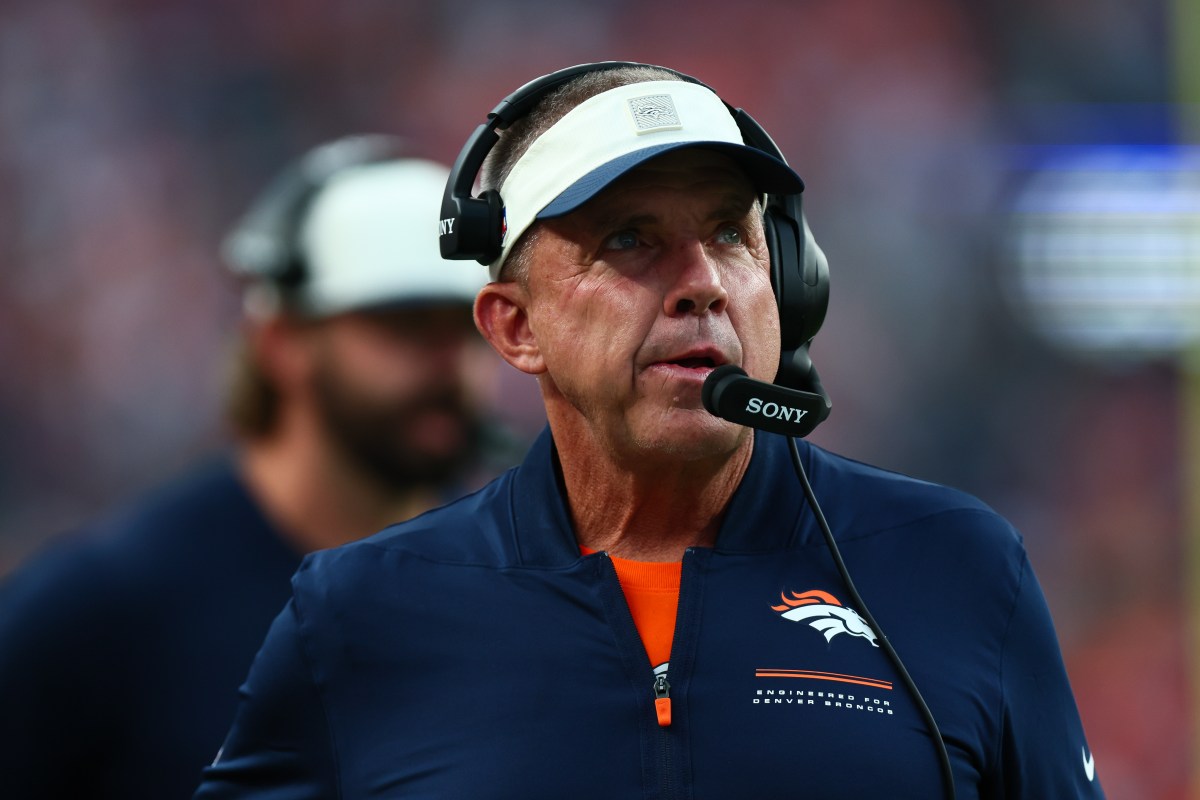
Sean Payton, always sharp and never one to mince words, took full ownership of the disaster. In his postgame press conference, he didn’t blame the players, the injuries, or the schedule. He pointed the finger squarely at himself and his coaching staff. “Obviously not a great evening. Didn’t do a lot well at all in the game,” Payton said. “That starts with me, that starts with our coaching staff. I thought they won, really, in every phase.” He went on, “Regardless of who’s calling the plays, when you have a game like that, and you’re the head coach, it’s frustrating, it’s disappointing.” That kind of accountability is rare in today’s NFL, where coaches often spin losses and deflect blame. Payton didn’t do that. He looked embarrassed, and he should have been. But taking blame is one thing; fixing the problems is another. The reality is that Payton is a proven coach with a Super Bowl ring and a long resume of winning football. He knows how to build an offense, and he knows how to put players in position to succeed. On Monday night, none of that was visible. The game plan seemed disjointed. The adjustments never came. The team looked unprepared, and in a way, that’s more concerning than simply being outmatched. If Denver had played well and lost to a better team, you could live with that. But this was a total breakdown, and for a coach with Payton’s reputation, that’s an uncomfortable feeling. It raises questions not just about the roster but about the entire approach heading into such a meaningful season. Payton earned the benefit of the doubt with his track record, but he’ll need to show that Monday was an anomaly, not a sign of things to come.
Before we burn Denver at the stake, though, it’s worth remembering that one bad game doesn’t necessarily define a season. The Broncos won 14 games last year, and they were playing without one of their key defensive weapons in edge rusher Jonathon Cooper, who posted eight sacks a year ago. Losing a player like that hurts any defense, especially against a quarterback like Mahomes, who thrives when given time in the pocket. The Chiefs also happen to be one of the greatest teams of all time, and they looked exactly like their usual dominant selves. So maybe the Broncos aren’t the worst team in football, and maybe Monday night was more about Kansas City being great than Denver being terrible. Still, it’s the way the Broncos lost that leaves a sour taste. They never looked competitive. They never made Mahomes uncomfortable, never challenged the Chiefs, and never gave their own fans a reason to believe a comeback was possible. And then there’s Bo Nix, the quarterback who is supposed to be the future of this franchise. Nix, who’ll be fighting for a new contract soon, didn’t give Broncos fans any reason to believe he can be their guy long-term. He’s always been a polarizing quarterback, capable of mixing explosive plays with head-scratching decisions. On Monday night, he looked overwhelmed by Kansas City’s pass rush, often rushed his throws, held onto the ball too long, and struggled to read the defense. It was the kind of performance that fuels his critics and makes the contract conversation even more complicated. The Broncos have to decide whether Nix is worth a long-term investment, and nights like Monday don’t help his case. He has time to recover, but the clock is ticking, and the pressure is only going to grow.
What makes this loss even more troubling is what comes next. The Broncos’ schedule over the next several weeks is absolutely brutal. They play the Jaguars in Week 2, which on paper looks like a winnable game, but after that, things get frightening. They face the Rams, the 49ers, the Chargers, the Seahawks, and the Cardinals before a rematch with the Chiefs. That’s a gauntlet of tough opponents, hostile environments, and plenty of teams that can exploit Denver’s weaknesses. If the Broncos don’t fix their issues quickly, there’s a very real chance they head into the second half of the season with a losing record. That would be a disaster for a team with playoff aspirations, and it would put Payton and Nix under even more scrutiny. Football is a week-to-week sport, and early-season struggles aren’t always permanent. Teams have started 0-1 and gone on to win championships. But they’ve also started 0-1 and completely unraveled. The difference usually comes down to leadership, resilience, and the ability to learn from mistakes. Denver has the coaching to adjust, but do they have the players? Do they have the mental toughness? Do they have the quarterback? These are questions no one can answer yet, but the schedule will force an answer soon enough. The Jaguars game is now essentially a must-win, not just for the record but for the team’s confidence and identity. If Denver loses that one too, the wheels could truly come off, and a season that began with so much promise could spiral into another disappointing year.
So what does it all mean? Honestly, it’s too early to write the Broncos off completely. The NFL season is a marathon, not a sprint, and teams have proven time and time again that early struggles can be overcome. But it’s also too early to dismiss the concerns, because the warning signs are there. Denver looked unprepared, uninspired, and outmatched in a game that mattered enormously. They need to respond with urgency, energy, and a far better plan. Payton needs to find ways to protect Nix, establish some sort of running game, and give the defense a chance to breathe. The players need to own their roles and execute with more discipline. And the fans? They need to hold onto a little bit of patience, even as their patience wears thin. Being a Broncos fan right now means accepting that this team is a work in progress, with a coach who knows how to win and a quarterback who still has something to prove. The season isn’t over after one game, and the worst team in football label is probably an exaggeration. But if the Broncos don’t fix what went wrong in Week 1, that label will start to stick. The next few weeks will tell us everything we need to know about the heart of this team, the vision of the coaching staff, and the future of Bo Nix in Denver. For now, all they can do is go back to work, learn from the pain, and hope that the rest of the season looks completely different from that Monday night disaster.