






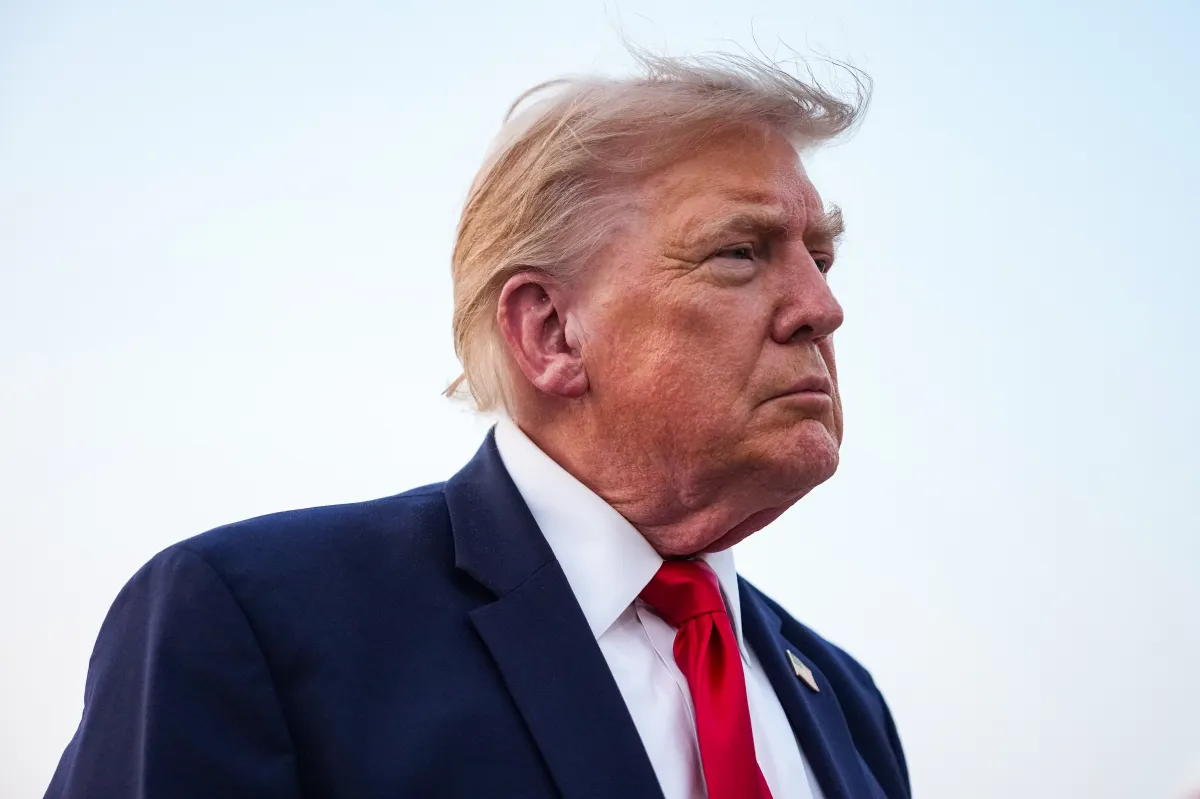
Behind every percentage point in a political poll is a living room, a family kitchen, or a community center where everyday Americans are weighing their futures. For older Americans—a group whose life experiences span decades of political and economic shifts—those quiet, daily calculations seem to be changing. According to the latest Economist/YouGov poll, President Donald Trump’s approval rating among citizens aged 65 and older has slipped to 39 percent, marking his weakest showing with this vital demographic in nearly three months. This dip below the 40-percent threshold indicates a noticeable cooling of support from a generation that has traditionally leaned conservative and served as a bedrock for the Republican Party, suggesting that the day-to-day realities of the current economic climate are prompting some deep reassessments.
The details of the Economist/YouGov survey, conducted between July 17 and July 20 among 1,602 U.S. adults, paint a challenging picture for the administration’s standing with seniors. Beyond the senior demographic, Trump’s overall national approval stands at 36 percent, while 60 percent of respondents express disapproval. Among older Americans specifically, the numbers reveal a similar division: 39 percent approve of his job performance, while a matching 60 percent disapprove. To find the last time senior approval dropped into the 30s, we have to look back to late April, when a similar survey registered a 37 percent approval rate. Political analysts note that while weekly polls can fluctuate, a return to these springtime lows highlights a persistent undercurrent of dissatisfaction that cannot be easily dismissed as statistical noise.
To understand why these numbers are causing quiet concern among political strategists, one must look at who these voters are. Older Americans are not just a line item in a demographic report; they are the nation’s most dependable voters, turning out to vote at much higher rates than younger generations. This consistent civic participation means their collective voice carries immense weight, particularly in highly competitive congressional districts. With the 2026 midterm elections on the horizon, any erosion in this reliable base could have a cascading effect, reshaping the balance of power in Washington. Because seniors are often highly sensitive to issues like fixed retirement incomes, healthcare costs, and cost-of-living increases, their political alignment is a direct reflection of how successfully they feel a government is addressing their immediate peace of mind.
In response to these findings, the White House maintains a steady and defiant confidence, pointing to a much larger, more permanent metric of success. White House Spokesman Davis Ingle emphasized that the ultimate poll took place on November 5, 2024, when nearly 80 million citizens overwhelmingly elected President Trump to deliver on his promised agenda. The administration argues that day-to-day polling numbers fail to capture the long-term impact of their policies. From the White House’s perspective, the President is working tirelessly to tackle the very issues that keep families awake at night—such as cooling stubborn inflation, boosting job creation, and making housing more affordable. They assert that the historic progress being made both domestically and globally is only the beginning of a larger agenda that will ultimately validate the voters’ trust.
Yet, this latest poll is not an isolated data point; rather, it appears to reflect a broader trend across recent polling data. A poll by Echelon Insights, conducted earlier in July among likely voters, mirrored these findings by placing Trump’s approval among older Americans at 38 percent with a 62 percent disapproval rate. Similarly, a Harvard CAPS/Harris poll from the same month showed a slightly higher but still subdued 41 percent approval rating among seniors. When multiple respected pollsters capture the same downward trajectory, it suggests a shared sentiment among older citizens who may feel that the promises of economic relief have yet to fully translate into their monthly household budgets or ease the strain of high grocery prices and utility bills.
As the administration pushes forward with its legislative goals, these shifting numbers serve as a reminder of the delicate relationship between a leader and the public. It is not just seniors who are showing signs of hesitation; recent analyses suggest that younger voters and men—groups that have previously shown stronger support—are also displaying a growing skepticism toward the current national trajectory. In a democracy, approval ratings are the heartbeat of the relationship between the governing and the governed. While campaigns are won on election night, governing is an ongoing dialogue. For President Trump, the challenge ahead lies in transforming the grand promises of his agenda into tangible, felt relief for the millions of older Americans who are watching, waiting, and ultimately holding the power of the ballot.