


Once this WNBA season ends, something significant will happen beyond the final buzzer and playoff celebrations. Commissioner Cathy Engelbert will step down after seven years, and the league will begin searching for her successor. On its face, that kind of transition might feel normal, maybe even routine. Another executive leaves, another one comes in, the business moves forward. But anyone who has been paying attention to the WNBA over the past few seasons knows this is not a routine moment. The league has been thrust into a spotlight it has never experienced before. Records are falling, arenas are filling, and fans who once had to hunt for games can now find them everywhere. But along with that growth came a chorus of criticism from the people who make it all happen. Players and fans have been saying for years that the league needed a different kind of leader. Not necessarily a smarter business mind, but someone who could match the moment emotionally and culturally. It’s a bit like watching a band finally hit the big time and realizing the manager who helped them pack small clubs isn’t equipped for stadium tours. The manager didn’t suddenly become terrible. The circumstances simply outgrew their skill set. Engelbert did not come from the basketball world. She brought a corporate background and a business-focused approach, and in many ways that helped stabilize the league. But as the WNBA exploded in popularity, the distance between the front office and the players became harder to ignore. The phrase “this is a players’ league” became a recurring theme, and it wasn’t just a slogan. It was a plea. A demand. A reminder that no broadcast deal or sponsorship matters if the women risking their bodies every summer feel unheard. So Engelbert’s departure is not just a leadership change. It’s a moment of accountability. The next person will take over a league that is richer, louder, and more relevant than ever, but also a league where trust needs rebuilding. The job ahead will require more than business strategy. It will require presence, empathy, and the ability to look a player in the eye and truly hear what they are saying.
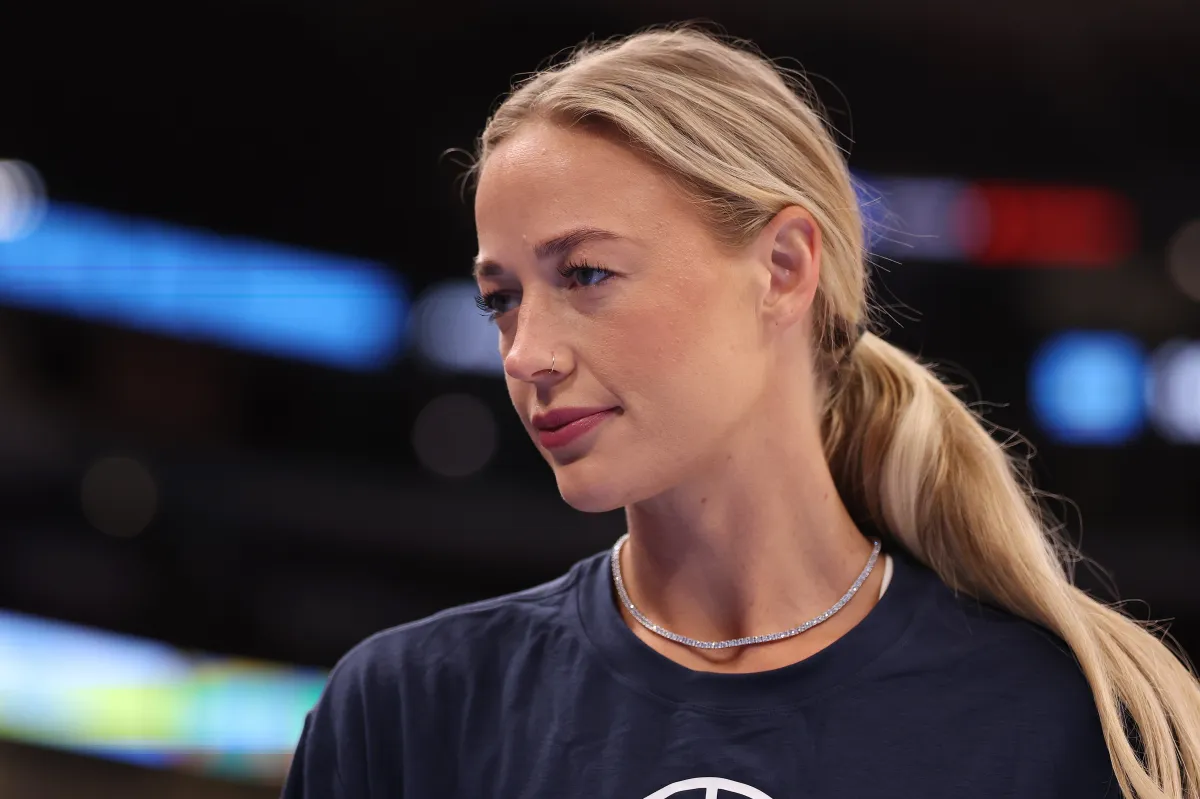
If there is one player who has been willing to say what so many others think, it’s WNBA veteran Sophie Cunningham. She has never been the kind of person to hide her opinions behind safe, polished answers. Maybe that’s why her comments about Engelbert’s upcoming exit hit so hard. On The Colin Cowherd Podcast, Cunningham was asked about the idea that the WNBA needs fresh leadership. She didn’t rip into Engelbert without nuance. She started by acknowledging how difficult the job is. That matters. It would be easy to paint Cunningham as just another disgruntled player taking shots on the way out. But her criticism came from a place of wanting better, not bitterness. “I hate to be critical because I know that job is so tough,” she said. Then she laid out what she thinks the league needs: someone with a backbone, someone bold, someone courageous, someone who tries to unify. And then she said something that probably stung because it was so specific. She described a commissioner who would walk into a room full of players and not even say hello. Think about how that feels. In any workplace, if your boss walks past you without acknowledgment, it sends a message. You’re not important. You’re replaceable. You’re just part of the machine. For WNBA players, that feeling is magnified. They aren’t clocking in at an office; they are performing in front of thousands of people, dealing with injuries, travel, and immense pressure, all while representing a league that wants them to be its smiling faces. To be ignored by the person nominally leading that league is more than an etiquette failure. It’s a leadership failure. Cunningham was clear: this is a players’ league, and the commissioner should have a relationship with the players. That means communication. That means showing up. That means being present when things are good and when things are uncomfortable. She noted that Engelbert made some good business decisions early on, and she didn’t pretend the job was easy. But she also pointed out that once the league exploded in popularity, Engelbert did not seem ready for that new reality. That’s not cruel. It’s honest. And honesty is exactly what the next commissioner will need to face.
Cunningham’s critique actually paints a more human picture than most headlines suggest. She isn’t saying Engelbert was a villain. She is saying that leadership is timing, and Engelbert’s timing was off. At first, the commissioner did what the league needed: made business decisions, helped stabilize things, focused on growth. But then the WNBA exploded. Maybe because of generational stars, maybe because of a broader cultural shift, maybe because the players were so compelling that the world finally couldn’t look away. Suddenly, the league was everywhere. Media attention multiplied. Sponsors came knocking. Every comment mattered. And in that new environment, players felt that the woman at the top was more focused on managing the moment than managing relationships. Cunningham wants a commissioner who will fight for the players, who will be in communication, who will listen. She thinks Engelbert missed that. And she’s not just saying it for the sake of saying it. She is describing the kind of culture players need to trust their own league. Think about what it feels like to be in a place where you’re producing incredible results but you don’t feel connected to the person who is supposed to lead you. You start to wonder if you even matter. You start to question decisions. You become cynical. That’s where some WNBA players have found themselves. They look at the rising revenues, the packed arenas, the media deals, and they ask: where are we in this picture? Not just as labor, but as human beings. Cunningham wants a direct line of communication. She wants leadership that doesn’t hide behind press releases. She wants someone who can handle the fact that players are not going to agree with every decision, but at least they should feel heard. That’s not an unreasonable request. In fact, it’s the basic foundation of any strong organization. The WNBA is not a typical corporation. It’s a league built on the sweat, talent, and star power of its players. Any commissioner who forgets that will eventually hit the same wall. Cunningham’s message is essentially this: you can have the best business plan in the world, but if the people playing the game don’t trust you, you don’t have leadership. You have a title.
Cunningham didn’t just criticize from the sideline. She also offered a glimpse of what she would do if she were in charge. During the launch of her podcast, “No Hesitation,” she had a conversation with co-host Drew Hanlen that blended humor and seriousness. At one point, she joked that maybe she should become the commissioner herself. “I think it would be really cool to be the commissioner,” she said. It was the kind of comment that makes you laugh, but then you think about it and realize she might actually have a point. She knows the league from the inside. She knows what it feels like to land in a city and walk into a facility that isn’t up to standard. She knows what the grind actually demands. When Hanlen asked her what she would change first if she had the job, Cunningham didn’t mention logos, broadcast windows, or marketing campaigns. Her first answer was basic: she would make sure every WNBA team had a functional practice facility. It seems like such a simple thing, but in a league at this level, it’s not guaranteed. Some teams are still operating without the kind of facilities that NBA players would never accept. That says a lot. A practice facility isn’t just a convenience. It’s a statement about how much an organization values its players. When a league is experiencing record growth and landing major sponsors, it shouldn’t be asking players to make do with subpar conditions. Cunningham knows that better than anyone. But she also knows that facilities are just the beginning. She wants communication about the real issues, the hot topics, the things players are talking about behind closed doors. She wants a leader who is bold and confident enough to have those conversations without getting defensive. At the same time, Cunningham was clear that she isn’t angling for the position right now. “I don’t want that job currently in my life. I don’t know if I ever will,” she said. That honesty is refreshing. The job of WNBA commissioner looks glamorous from the outside, but it’s also a grind. You are constantly in the middle. Players want more. Owners want returns. Fans want progress. The media wants answers. You have to make decisions that will please some people and infuriate others. Cunningham understands that. She said there are people who are going to love you and people who are going to hate you. There’s no way around it. So the person who takes this job needs character that can withstand all that. They need to uphold their values and fight for what’s best for the players, even when it’s not the popular choice. That is a tall order. But it’s exactly why the search for Engelbert’s replacement is so important. The WNBA doesn’t just need another executive. It needs someone who can handle the weight of a moment that is bigger than any one person.
So what should the WNBA actually look for in Engelbert’s successor? If you listen to Cunningham, the answer isn’t just “someone from basketball” or “someone with a media background.” It’s someone with the right temperament. Bold. Confident. Courageous. A unifier. Someone who can engage players and maintain a direct line of communication with them. Those are the exact words she keeps coming back to. And those are the qualities she believes Engelbert was missing. It’s not about having all the answers. It’s about creating a culture where players feel like their voices matter. The next commissioner will walk into a league that is in a strange and exciting position. On one hand, the financial future looks brighter than ever. Media deals are bigger. Expansion is happening. More eyes are on the league than ever before. On the other hand, there are serious unresolved issues. The players are pushing for better conditions, better facilities, better treatment overall. There is a growing gap between what the league is saying and what players are experiencing. That gap is dangerous. It creates resentment. It creates distrust. And it eventually leads to moments like the public criticism we’ve seen from players like Cunningham. The next commissioner has to be comfortable in uncomfortable conversations. They have to be willing to take criticism without becoming defensive. They have to be able to look at a player like Cunningham and not dismiss her as difficult, but actually listen to what she is saying. Because she is not just speaking for herself. She is speaking for a lot of women who have been told to be grateful for what they have, instead of being supported in asking for what they deserve. The search committee has a chance to do something bold. They can choose someone who is not afraid of the players. But it will be a challenge to find that person, because the WNBA is full of strong personalities, and the job requires someone who can match that energy without dominating it. It takes a special kind of leader to stand in the middle of a storm and keep everyone moving forward.
Ultimately, Engelbert’s departure is a reminder that leadership is not just about what you accomplish; it’s about how you make people feel. When Sophie Cunningham described a commissioner walking into a room and not saying hello, she wasn’t complaining about a bruised ego. She was making a larger point about the relationship between decision-makers and the people on the ground. The WNBA has grown in ways that previous generations of players could only dream of. But growth without mutual respect is hollow. And that’s why the next commissioner search is so important. It’s not just about finding someone who can build on the business momentum. It’s about finding someone who can repair the emotional bond between the league and its players. It’s about finding someone who understands that every policy, every contract, every facility, every decision ultimately affects real people. People who sacrifice their bodies. People who inspire young fans. People who have carried this league through years of uncertainty. Cunningham knows what she’s talking about because she lives it. She also knows that the commissioner’s job is brutal. It’s not for the faint of heart. There will always be critics. There will always be people saying you didn’t do enough. That’s why the next leader needs character, not just credentials. They need to be strong enough to take the hits and humble enough to learn from them. They need to be bold enough to make tough calls and compassionate enough to understand the human impact. The players don’t need a friend in the commissioner’s office. They need a partner. They need someone who will look them in the eye, say hello, sit down, and listen. Maybe that sounds overly simple. But in leadership, simple things often matter most. The WNBA is at a crossroads. The spotlight is brighter than ever. The stakes are higher than ever. And the voices of players are louder than ever. The next commissioner should see that as an opportunity, not a threat. As Cunningham said, it takes great character to withstand all the love and hate. And it takes a person who knows what they stand for. The league has a chance to set a new standard. It can choose someone who is not afraid to fight for the players, talk with them, and build something together. It can choose someone who understands that the WNBA doesn’t belong to executives, sponsors, or even fans. It belongs to the women who step on the court. They are the reason this league exists. They deserve a leader who remembers that every single day.