


Paragraph 1: The Weight of a Confession
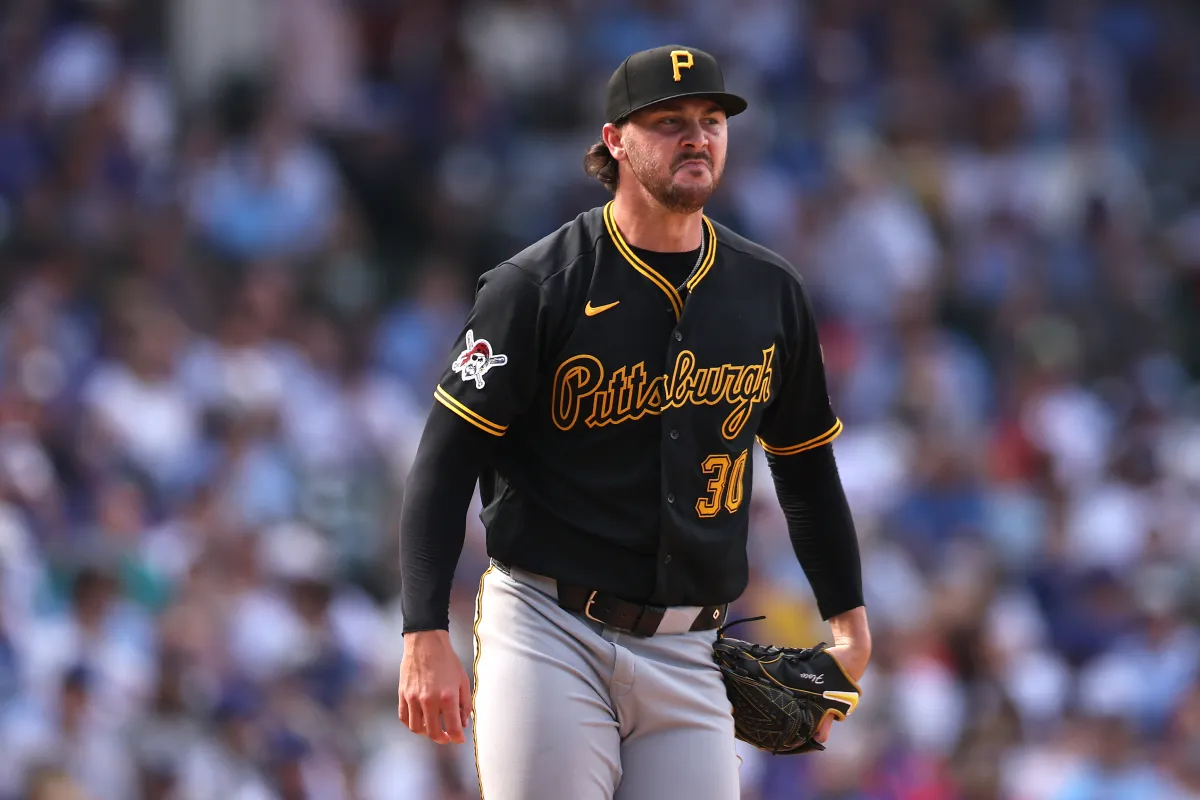
There is a particular kind of silence that falls over a baseball town when its ace finally admits to the cracks in his armor. For the Pittsburgh Pirates and their fans, that silence came this week when Paul Skenes, the young phenom whose fastball once seemed to defy physics, openly acknowledged what many had suspected but few dared to put into words. Skenes, the All-Star starter who had become the beating heart of a franchise desperately searching for relevance, pointed a finger at the 2026 World Baseball Classic as the root cause of a season that has felt like a slow, agonizing unraveling. It wasn’t a flippant excuse, nor was it a desperate deflection. His confession carried the weight of a man who has spent months puzzling over his own diminished mechanics, searching for answers in video rooms and bullpen sessions, only to settle on the simple, brutal math of fatigue and disrupted rhythm. He was quick to hedge—”there are a lot of other factors,” he insisted—but he didn’t shy away from the central truth that the global tournament, played in the crucible of spring training, had sapped something essential from him. This honest admission humanizes a player who is often treated as a cold statistic, a radar gun reading, or a highlight reel. It reminds us that even the most gifted arms are tethered to human bodies that demand rest, routine, and the sacred monotony of a baseball calendar that the WBC gleefully obliterates.
Paragraph 2: The Hidden Toll of the International Stage
When the World Baseball Classic was conceived, it was meant to be a celebration of the sport’s global reach, a mid-spring spectacle that would bring national pride to the mound. But for a pitcher like Skenes, the tournament represents a paradox: a high-stakes performance that arrives far too early in the physical cycle. In a normal spring, a starter methodically builds up his arm strength, throwing on carefully scheduled days, gradually increasing pitch counts while focusing on fine-tuning secondary pitches rather than winning a meaningless Grapefruit League game. The WBC throws that calculus into a blender. Skenes was asked to ramp up his intensity to game-level velocity almost immediately, facing hungry international lineups who were swinging for the fences in front of raucous, partisan crowds. The adrenaline required to pitch for a national team is intoxicating, but it is also profoundly taxing on the connective tissue, the rotator cuff, and the delicate timing of a pitcher’s delivery. By the time the tournament ended and the regular season began, Skenes was already operating at a deficit. The body had peaked too early, the arm had spent its stored energy on games that didn’t count in the standings, and the carefully orchestrated periodization of his training was shattered. This is not just a physical phenomenon; it’s a psychological one. The emotional comedown after representing one’s country is steep, and diving back into the grind of a 162-game season without that mid-spring release valve forces a player to play catch-up from day one. Skenes knows this intimately now, and his struggles are a stark reminder that these international showcases, for all their glory, extract a terrible price from the athletes who sacrifice their prep to wear their country’s colors.
Paragraph 3: The Erosion of an Unhittable Arsenal
The statistics from Skenes’ 2026 campaign read like a eulogy for a dominant pitcher. A career-worst 3.91 ERA through 31 starts is the most glaring indicator, but it’s the granular erosion that tells the true story of a man fighting his own body. Last season, during his Cy Young campaign, his fastball averaged 98.2 miles per hour—a number that made hitters flinch before they even swung. This year, that average has dipped to 96.8 mph. To the casual observer, that 1.4 mph difference might seem insignificant, a rounding error in the grand scheme of things. But to a hitter facing him, it is the difference between a pitch that explodes late and one that arrives slightly flatter, slightly easier to track. That margin is why his whiff rate has plummeted, why his strikeout numbers have fallen, and why his walk rate has climbed to career-worst levels. When a pitcher loses that inherent fear factor, he starts to pitch differently. He nibbles at corners, trying to trick batters rather than overwhelm them. He second-guesses his grip. He throws more pitches per at-bat, tiring himself out earlier in games. The mental decline is inexorably linked to the physical one. Skenes has spent the season chasing the ghost of his former self, the version of him that never posted an ERA over 2.00 and seemed invincible. Now, he’s learning that velocity isn’t just a gift—it’s a currency that must be replenished through diligent rest and a proper ramp-up. The WBC robbed him of that currency, and he’s been paying interest all season long, struggling to find the release point that once made his slider look like a diving missile and his fastball like a rising meteor.
Paragraph 4: A Franchise’s Unexpected Resurgence and Heartbreaking Ceiling
While Skenes has individually stumbled, the Pittsburgh Pirates collectively have experienced something of a renaissance, albeit one that ultimately ended in the familiar territory of October heartache. With a 79-77 record coming down the stretch, the Pirates have been mathematically eliminated from playoff contention, yet their season is a testament to resilience that far exceeded the paltry 71-win campaign of the previous year. This is a team that resides in the fearsome gauntlet of the National League Central, a division where the Milwaukee Brewers and Chicago Cubs wage a year-round arms race. The Pirates, despite their improved record, found themselves locked out of the Wild Card race, sitting an agonizing seven games behind the Philadelphia Phillies for the final spot. The final series of the regular season against the St. Louis Cardinals and the Detroit Tigers carry no weight in the standings, rendering them little more than a formality—a slow, quiet funeral for a season that momentarily sparked hope. But for the fans and the players, this improvement is a lighthouse in the fog. They have proven they can compete, that they can hover around .500 and even push toward the mid-80s in wins. The problem is that the division is so stacked that a 79-win season in a normal year might have been a story of triumph; this year, it’s merely a footnote. The hunger remains, however. The Pirates haven’t tasted the postseason since 2015, and the organization knows that this year’s heartbreak is a necessary stepping stone toward ending the longest playoff drought in the major leagues.
Paragraph 5: The Human Side of Professional Struggle
Beyond the box scores and the playoff math, there is a deeply human narrative to Skenes’ season that transcends baseball. We often deify athletes, treating them as cyborgs who should be immune to the mundane pressures of fatigue, jet lag, and overwork. Skenes’ willingness to openly blame the WBC—while he tries to avoid making it a scapegoat—is a rare moment of gut-wrenching authenticity. He is saying, in essence, that the sport asked too much of him, and he paid the price. This honesty is cathartic for fans who have watched him struggle and wondered why the magical arm had gone silent. It is also a stark reminder that the business of baseball is cruel; the Pirates are paying him to be a franchise anchor, and yet the decision to participate in the WBC, which many would see as a patriotic honor, has inadvertently compromised his ability to deliver that value. However, there is an undeniable maturity in his acknowledgment. He isn’t complaining; he’s diagnosing. He’s accepting accountability for the season while explaining the physiological reality of his decline. In a culture that often demands stoicism and “next man up” mentality, Skenes’ vulnerability makes him more relatable, not less capable. It suggests that beneath the 100-mph fastball, there is a thoughtful young man who is acutely aware of his own mortality as an athlete, and who will use this adversity as a crucible. The struggles of 2026 are not the end of his story; they are the uncomfortable middle chapter that every great pitcher must endure, the gritty humbling that separates fleeting greatness from sustained excellence.
Paragraph 6: The Promise of a Reset
As the curtain falls on the 2026 season, both Skenes and the Pirates stand at a crossroads, holding a map that points to a brighter future. For Skenes, the upcoming offseason offers the gift he was denied last winter: a full, unbroken period of rest followed by a traditional, unhurried spring training. No international duty, no flag-waving, just the slow, deliberate rebuilding of his arm strength and the rekindling of his confidence. He knows that the 96.8 mph fastball can become a 98.2 mph pitch again with a clear head and rested tendons. The Pirates, meanwhile, can look at their 79-win improvement as the foundation upon which they will build a legitimate contender. They have the young core, the emerging talent, and now the bitter taste of elimination to fuel their hunger. The final two weeks against the Cardinals and Tigers may be meaningless in the standings, but they serve as a final audition for the future. The distance between 79 wins and a playoff berth is a yawning chasm, but it is not unbridgeable. With a healthy Skenes anchoring the rotation, and with the invaluable experience gained this season, the Pirates have every reason to believe that 2027 will finally break the 2015 drought. For the fans who have endured years of losing, the narrative of 2026 will be remembered not as a failure, but as the season when the promise became tangible—a year when a young ace learned the harshest lesson of his career, and a franchise realized how close it truly is to glory. The silence that followed Skenes’ admission will soon be replaced by the crack of bats and the roar of a stadium dreaming of October.