

The Weight of a Championship Run
The San Francisco 49ers are, on paper, the best team in football. But paper doesn’t win titles. Talent, health, and a little bit of luck do—and right now, the latter two are slipping through the franchise’s fingers like dry sand. There’s a cruel irony in being this good and this banged up at the same time. It’s like owning a Ferrari with four flat tires: everyone can see the beauty, the raw potential, the promise of speed, but nobody can actually enjoy the ride. And in the NFL, where the margins between glory and heartbreak are thinner than a playbook page, the injury bug has a way of turning a dream season into a painful what-if. The 49ers are still winning games, still dominating opponents with that suffocating defense and explosive offense, but underneath the victories, there’s a growing shadow. The training room is fuller than the locker room these days. And for a team with Super Bowl aspirations, that’s not just a concern—it’s a ticking clock.
The Decimated Receiving Corps
Start with the receivers, because the carnage there has been almost absurd. In the span of a few brutal weeks, the 49ers lost Mike Evans, Deebo Samuel, De’Zhaun Stribling, and Demarcus Robinson to a variety of ailments. That’s not just losing depth—that’s losing the entire identity of an offense. Deebo alone is a culture-changer, a guy who runs like a fullback with the hands of a wideout and the heart of a street fighter. Watching him hobble off the field is watching a fire go out in the huddle. And Evans, the future Hall of Famer, brought a big-body presence that defenses had to scheme around. Without these guys, quarterback play becomes an exercise in improvisation; routes get short-circuited, coverages get tighter, and the rhythm that makes this offense sing turns into static. The coaching staff keeps saying “next man up,” and they mean it, but there’s a reason these players are starters and the next men are not. Each absence chips away at a team’s belief that their best football is still ahead of them. And when your playoff run is measured in January football, every missed snap in October and November feels like a stolen treasure.
A Defense Under Siege
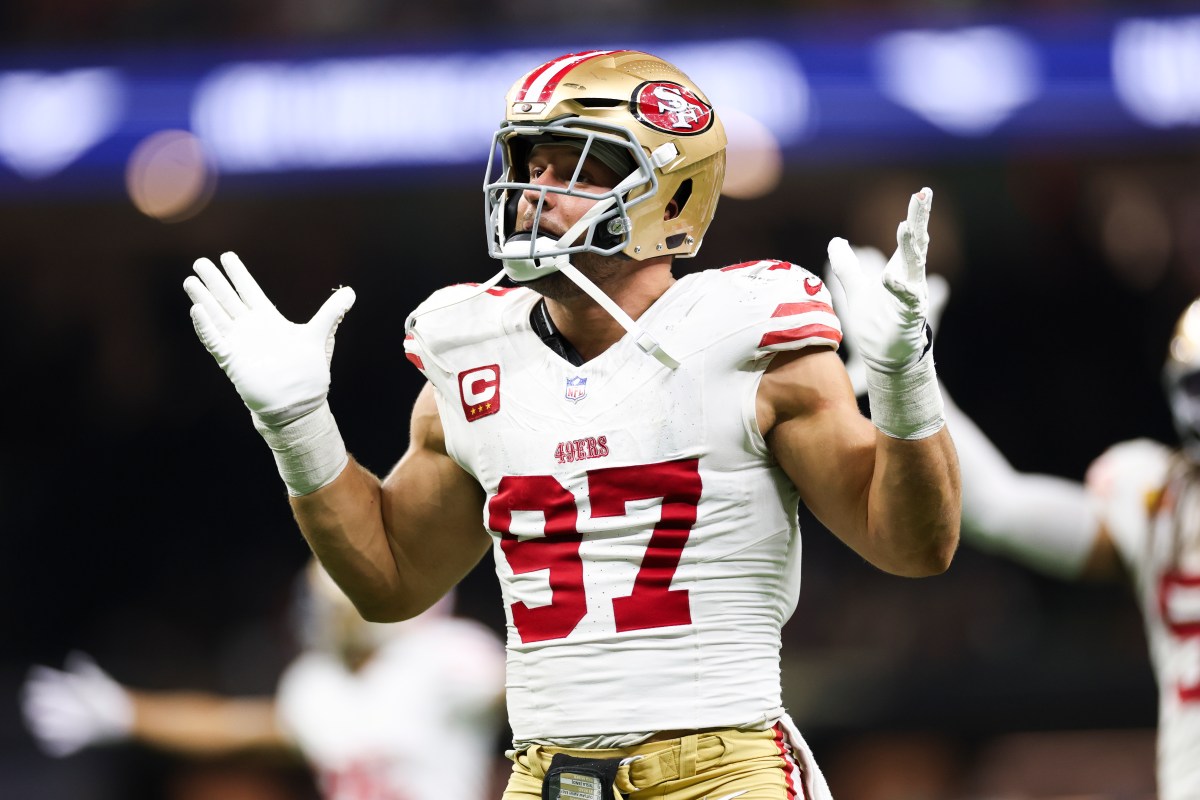
But the wideouts aren’t the only ones feeling the strain. The defensive side of the ball has been absolutely ravaged. Defensive tackles Alfred Collins, CJ West, and Sam Okuayinonu are banged up. Edge-rushers Nick Bosa and Mikail Kamara have missed significant time. Linebackers Nick Martin and Garret Wallow are out. Cornerback Nate Hobbs is shelved, and safeties Marques Sigle and Darrick Forest are either on injured reserve or playing through things they shouldn’t. It’s a massacre. And for a defense that prides itself on being a top-five unit, the pressure is now on the remaining players to hold the line with one hand tied behind their backs. The funny thing about football injuries is they’re contagious—not in a medical sense, but in the mental toll they take. When guys see their brothers dropping one by one, there’s an instinct to play more cautiously, to flinch just a millisecond later, and that hesitation is all an NFL offense needs. The 49ers’ defensive identity has always been built on aggression, on swarming the ball carrier, on never giving the quarterback a clean pocket. But you can’t swarm when half your swarm is on the sidelines with ice packs and grimaces. You can’t pressure the quarterback when your best pressure player is in street clothes. And you can’t pretend everything’s fine when your depth chart reads like a hospital registry.
The Bosa Brothers’ Crossroads
Nick Bosa can return any week now, a fact that brings a collective exhale from the Bay Area. But his calf injury, suffered during warm-ups of all moments, has been a lingering curse. For weeks now, the 49ers have operated with the understanding that their best defensive player might not be available—and there’s a strange limbo that comes with that. You don’t want to give up hope, but you also can’t build a game plan around a ghost. And while Nick waits to heal, the front office has been eyeing a familiar name: his older brother, Joey. Bleacher Report’s Alex Kay made the suggestion recently, pointing out that despite the team’s defensive ranking, the pressure has been inconsistent without Nick. Against elite quarterbacks—the kind you meet in the playoffs—that’s a recipe for disaster. Joey Bosa, at 31 years old and with a laundry list of past injuries, might look like a risky bet. But last year with the Buffalo Bills, he proved he still has fuel in the tank: five sacks, nine tackles for a loss, 16 quarterback hits, and a league-leading five forced fumbles in just 15 games. That’s not a washed-up veteran. That’s a guy who knows how to find the quarterback when it matters most.
The Temptation of a Perfect Ending
Here’s where the story gets genuinely human. ESPN’s Adam Schefter reported weeks ago that Joey Bosa was leaning toward retirement. The body aches. The long seasons. The endless rehab. The mental grind of a sport that takes everything you have and asks for more. At 31, a man can be forgiven for wanting to walk away with his health and his dignity intact. But then there’s this: his brother, Nick, is chasing a Super Bowl on a team that’s clearly among the best in football. And San Francisco wouldn’t ask Joey to carry the load—they’d ask him to be a rotational piece, a situational pass-rusher, a veteran presence who can give 15 quality snaps a game instead of 60. That’s not a burden; that’s an opportunity. Playing alongside your brother, on a roster that can genuinely win it all, with a role that honors your talent without crushing your body—that might just be the perfect temptation. The kind of scenario that makes a man reconsider retirement, pack his bags, and chase one last ring. It’s romantic, in a way. Two brothers, reunited on the biggest stage, trying to cement a legacy together that neither could fully capture alone.
The Human Cost of a Title Chase
And maybe that’s the real story here. The 49ers aren’t just a football team; they’re a collection of men sacrificing their bodies for something they can’t touch, only feel. Every injury represents a personal story—a setback, a fear, a lonely hour in a cold MRI machine, a conversation with a doctor who uses words like “weeks” and “months” and “we’ll see.” The fans see the jersey numbers and the depth charts, but behind each one is a person who has worked his entire life for this moment, only to watch it slip away through no fault of his own. The 49ers’ season is a testament to resilience, but also a reminder that, in this sport, greatness is fragile. It can be shattered by a single awkward step, a single collision, a single bad break. The team will keep fighting. They’ll keep signing free agents, keep adjusting schemes, keep pretending that the next guy can fill the void. But somewhere deep down, everyone associated with the organization knows the truth: this roster, at full strength, could be legendary. At half strength, it’s just another good team hoping for a miracle. The hope now rests on healing, on timing, on a little bit of luck and maybe, just maybe, a Bosa brother answering the phone and deciding that the story isn’t finished yet. Because some stories deserve a happy ending—and this one, with all its pain and promise, hasn’t earned its final chapter yet.