

**With just two weeks to go before Election Day, the 2026 midterms have entered their most feverish phase, and nowhere is the intensity clearer than on the television and digital screens of voters in battleground states. In these final days, campaigns no longer have time for grand policy speeches or careful introductory messaging. They are fighting for every last undecided voter, and the way they are doing so is by spending staggering sums on advertisements. The ad-tracking firm AdImpact reports that Republican candidates and aligned groups have reserved roughly $208 million in Senate ad time between now and November 3, while Democrats have booked about $147 million. That gives Republicans a financial advantage of more than 40 percent, a cushion that allows them to flood the airwaves and drown out their opponents in key markets. The close of a campaign is always a strange mixture of discipline and chaos, but in 2026 the financial reality is unmistakable: Republicans are treating the final two weeks as an arms race, and they are currently winning it. But money alone does not decide elections, and the same numbers that show GOP dominance also reveal a paradox. Despite the Republican spending edge, the nonpartisan forecaster Race to the WH calculates that Democrats still have a 73 percent chance of emerging from November with a Senate majority. That gap between financial strength and predicted outcomes is a reminder that voters are not simply consumers of advertisements. They are also responding to the broader national mood, the economy, and the lingering influence of the president. Still, in this final stretch, campaigns are making choices that will determine whether they enter Election Day with momentum or with regrets, and the spending decisions they make in the next fortnight are the clearest window into their fears and hopes.
Nowhere is that arms race more visible than in Ohio, a state that has become the epicenter of the battle for control of the Senate. The contest between Republican Senator Jon Husted and Democratic challenger Sherrod Brown is drawing more advertising money than any other race in the country. Both parties have devoted a full fifth of their closing ad budgets to Ohio, an extraordinary statistic that shows how much is riding on a state that remains a true toss-up according to the Cook Political Report. Even with the Republican financial advantage nationwide, Democrats are not surrendering the airwaves in the Buckeye State; they are simply being outbid. In fact, AdImpact’s latest analysis shows that Republicans are outspending Democrats in eight of the ten most expensive Senate contests in the country. The only two exceptions are Georgia and Kansas, and it is no coincidence that both are defying the usual political gravity. In Kansas, Republican Senator Roger Marshall is trying to fend off a historic challenge from Democrat Adam Hamilton. Kansas has not elected a Democrat to the Senate since 1932, and yet polls are showing a race that is essentially tied. That in itself is remarkable, because it means a state once considered safely Republican is now the target of millions of dollars in Democratic advertising. The fact that both parties are fighting so hard in such a traditionally red state is a sign of how volatile the political landscape is. Voters in Ohio, Georgia, Kansas, Michigan, and Pennsylvania are being treated to an endless stream of commercials, each one designed to tap into a specific anxiety or hope. The candidates themselves have become secondary characters in their own campaigns, replaced by five-second attack clips and dramatic background music. But the spending is more than just noise; it is a measure of where the political parties believe their best chances lie, and it is a bet that convincing a small number of voters in a few key places can change the balance of power for years to come.
The sheer volume of money in this election cycle is almost hard to comprehend. AdImpact reported that as of October 13, nearly $2.8 billion had already been spent on Senate ads alone. Of that enormous sum, Republicans were responsible for about $1.6 billion, while Democrats spent roughly $1.1 billion and independent groups added another $136 million. When House and governor races are included, the projected total for the entire 2026 midterm cycle reaches $11.6 billion. That is actually higher than the $11.2 billion spent during the presidential election year of 2024, which is a startling reminder of how nationalized and expensive every election has become. Even in a year with no presidential contest on the ballot, the parties are spending more money than ever before, because every Senate seat, every House district, and every governor’s mansion now feels like part of a broader national war. In the specific races that will determine Senate control, the Republican financial edge is consistent and broad. As of mid-October, the GOP held the spending advantage in seven of the eight Senate races regarded as toss-ups or leaning toward one party by the Cook Political Report, and that number has since grown to eight out of ten. These are not small differences; they represent millions of additional impressions, more commanding ad placement, and the ability to respond instantly to breaking news. For Democratic campaigns, this means being forced to choose which markets to defend and which to abandon, while Republicans can afford to broaden their attacks and define the terms of the debate. Yet despite this imbalance, the election is far from settled. Political strategists have long known that spending alone has diminishing returns, and campaigns that are outspent can still win if their messages are more resonant. But the advertising war is not fought only in dollars; it is also fought in the emotional territory of the voters, and that is where the two parties’ strategies have taken very different paths.
Perhaps the most significant strategic divide is over the kitchen-table issues that have come to define the 2026 campaign season. While Republicans have the overall spending advantage, Democrats are investing heavily in advertisements that focus on the cost of living, particularly the rising price of energy and utility bills. The climate-focused advocacy group Climate Power has been tracking these ads, and its recent findings are striking. Over the first nine months of 2026, more than $191 million was spent on political advertisements that explicitly referenced utility and energy bills. This is a massive sum, and it is growing: in the third quarter alone, over $138 million went toward such ads, with Democrats accounting for $96 million of that total. The geographic concentration is just as telling. Between July 1 and October 16, Ohio saw $74 million in utility-focused advertising, followed by Michigan with $26 million and Pennsylvania with $24 million. These are not random choices; they are the states where voters have been most vocal about the strain of high heating bills, electricity costs, and grocery prices. Democratic strategists believe that this message bridges the gap between broad economic anxiety and everyday experience. Climate Power spokesperson Marcus W. Robinson put it clearly, saying that Democrats are the ones listening and that they are putting their message about lowering costs in front of voters because they know it resonates. This approach is a deliberate attempt to turn a potentially abstract economic debate into something personal. Every time a voter opens a bill from the electric company, there is a reminder of the political stakes. Democrats are betting that those small moments of frustration will matter more than any carefully crafted Republican talking point. It is a humanizing strategy, one built on the idea that the most powerful advertisement is the one that makes a voter nod in recognition as they sit at their kitchen table.
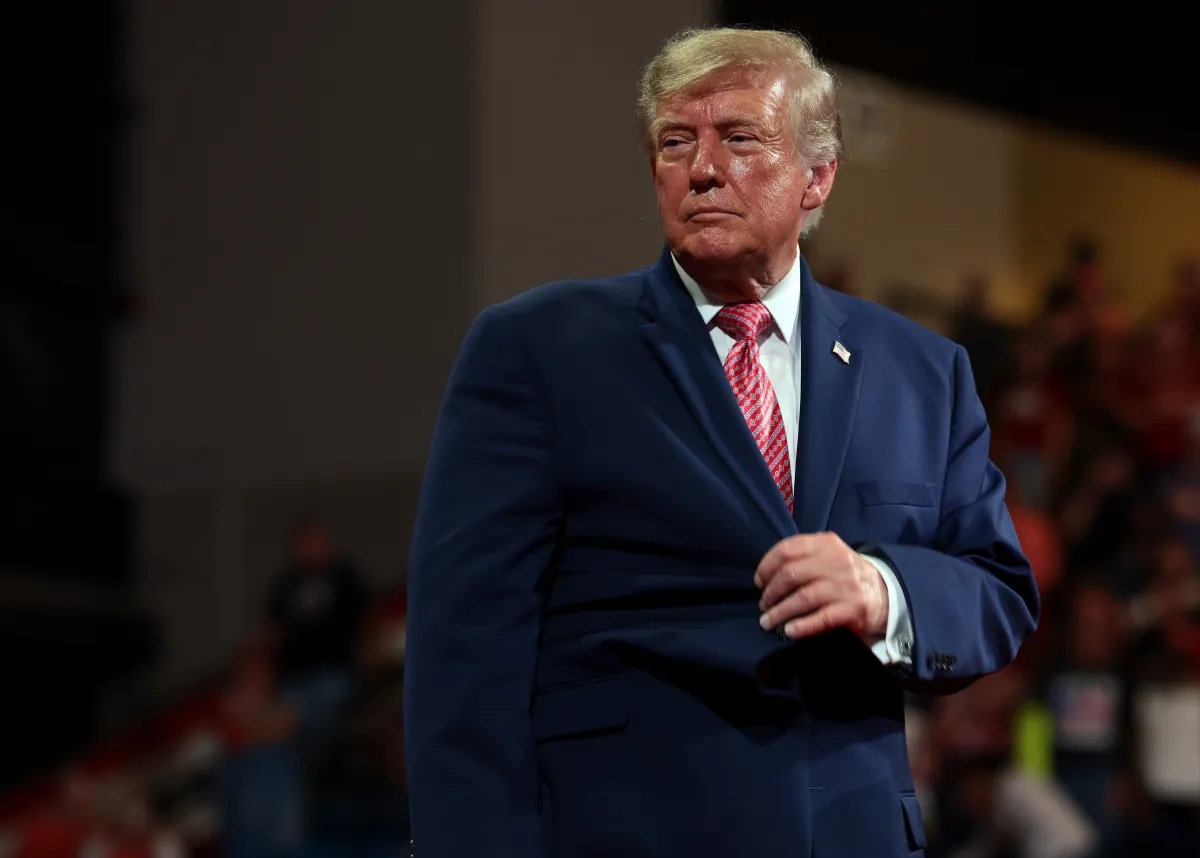
If Democrats are leaning into the economic anxieties of everyday life, Republicans are making an equally deliberate choice to step away from one of the most polarizing figures in American politics: Donald Trump. AdImpact found that the president has been mentioned in only about 1 percent of Republican broadcast ads aired in October as of the 19th. That is a dramatic drop from May, when Trump appeared in 47 percent of Republican advertising. In contrast, Democrats have mentioned Trump in 21 percent of their own broadcast airings over the same recent period. This is not an accident; it is a tactical decision that reflects the polling reality of the president’s declining job approval ratings. In a midterm election, particularly one in which the economy and affordability are top of mind, many Republican candidates do not want to carry the heavy baggage of a polarizing brand. Instead, they are focusing on local issues, Democratic vulnerabilities, and their own records. The former White House spokesperson Pete Seat, who served in the George W. Bush administration, explained the logic behind this approach. He noted that television ads are seen by everyone, including Republicans, Democrats, and independents, so why alienate a sizable chunk of the electorate when it is not necessary? Seat added that Republican candidates can still include Trump in messages that help drive turnout in their own states or districts, but those messages can be delivered directly to voters through targeted digital ads, texts, or direct mail, where they do not risk turning off the broader audience. This kind of surgical messaging is a sign of how professionalized political campaigns have become. Nothing is left to chance, and every word in a television ad is carefully tested. The absence of Trump from these ads says as much about the climate as the presence of utility bills in Democratic commercials. Both parties are trying to avoid the issues that may hurt them and emphasize the ones that help them, and the final weeks of the campaign are essentially a battle between two very different theories of what voters want to hear.
The clash of strategies raises an uncomfortable possibility for both parties: that all this money and careful messaging may not be enough to control the political weather. The Republican financial advantage is real, and it is giving the party a louder voice in the final days. But the fact that Democratic challengers remain competitive in states like Kansas and Ohio, despite being outspent, suggests that voters are making decisions based on signals other than sheer ad volume. The Democrats’ focus on utility costs, heating bills, and the daily struggle to afford life is a direct appeal to the emotional core of the midterm electorate. The Republicans’ decision to distance themselves from Trump in many competitive races is an admission that the president’s brand is not the asset it once was. Both parties are, in a sense, trying to control the narrative, but the voter is the final arbiter. With two weeks remaining, the true test is not which party has reserved more airtime, but which party has chosen the stories that will feel true to the people watching from their living rooms. The advertisements will continue to pile up, the numbers will grow even larger, and the candidates will keep making their pitches. But at some point, the spending becomes less important than the human moment in which a voter decides that they trust one candidate more than another. In that way, the 2026 midterms are not simply a contest of money, but a contest of understanding. The parties have placed their bets—Republicans on volume and message discipline, Democrats on economic pain and the cost of living—and now all that remains is for the voters to respond. In the coming days, every commercial break will carry the weight of millions of dollars and months of planning, but the final decision will belong to millions of individual Americans, each one weighing what they see on their screens against what they feel in their own lives.