

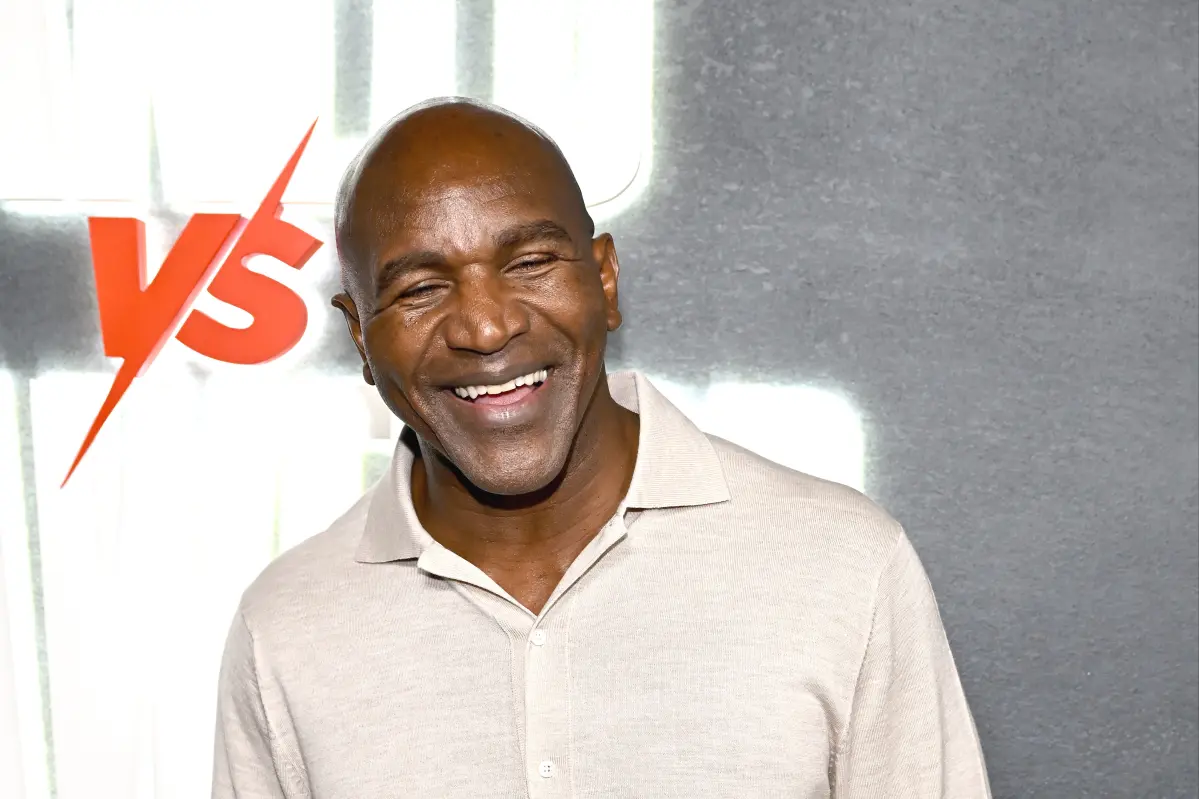
Politics and boxing have always shared a strange, magnetic kinship, a world of brash promises, brutal setbacks, and the perpetual promise of a comeback. And on Wednesday afternoon, those two worlds will collide aboard Air Force One as President Trump flies to South Carolina with Evander Holyfield, the former heavyweight champion and one of the most resilient figures in American sports. The pairing is not just a photo op; it is a deliberate piece of political theater, engineered by a president who has always loved the glitz and drama of the fight game. Republicans are hoping to deliver a knockout punch in the midterm elections, and Holyfield, at 64, still carries an aura that resonates with working-class voters, sports fans, and anyone who appreciates the spectacle of a man refusing to stay down. The trip, first reported by The Post, is part of a frantic week of campaigning in which Trump is holding a rally nearly every day, trying to keep his party in control of Congress. For a president who famously judges people by their toughness and loyalty, Holyfield is the perfect wingman: a man from the Deep South, born in Alabama, raised in Georgia, who clawed his way to the top of the heavyweight division and became a legend not just for winning, but for how he handled losing.
The friendship between Trump and Holyfield is older than most people realize, stretching back to the 1980s and 1990s when Trump was a New York real estate mogul and owned casinos in Atlantic City. In those days, Trump was a ubiquitous presence at ringside, hosting championship fights and rubbing shoulders with the biggest names in boxing. He saw boxing as the ultimate metaphor for business and life: two people alone in the ring, with nowhere to hide, and the only thing that matters is who can take the hardest punch and keep moving forward. That philosophy never left him. Years later, when Holyfield stepped back into the ring for a bizarre exhibition bout under the Triller Fight Club banner in 2021, Trump and his eldest son, Don Jr., served as guest commentators. The fight itself was a strange, sad spectacle. Holyfield had come out of retirement as a last-minute replacement for Oscar De La Hoya, who had tested positive for COVID-19, and at 58 years old, he was nowhere near the fighter he had once been. He lost by technical knockout to Vitor Belfort, a younger and stronger opponent. Trump, true to form, did not focus on the loss. “I love great fighters and great fights,” he said at the time, a line that could serve as his political motto. It was a moment that captured both the absurdity and the charm of the alliance: a former president, a fallen boxing great, and a spectacle that blurred the lines between sport, entertainment, and politics.
Holyfield’s presence carries a particular weight in the American South, where he is not just a sports icon but a folk hero. He was born in Atmore, Alabama, and raised in Atlanta, Georgia, in a family of nine children. His rise to the top of the heavyweight division was a classic American story of hard work and determination, and his two victories over Mike Tyson cemented his place in history. The first fight, in 1996, was a stunning upset, a furious battle in which Holyfield, written off by many experts, bullied the fearsome Tyson and stopped him in the eleventh round. The rematch, in 1997, is perhaps the most infamous fight in boxing history, remembered not for Holyfield’s skill but for Tyson’s meltdown, when he bit a chunk out of Holyfield’s ear and spat it onto the canvas. Holyfield’s response to that grotesque moment became the stuff of legend. He did not scream or collapse into outrage; he simply stood there, looked at the referee, and showed the crowd his bloodied ear. He accepted the indignity with a strange grace, and then went on to continue the fight, even as the blood streamed down the side of his head. For many people, that moment defined Holyfield’s character: a man who could absorb pain and betrayal and still find the strength to stand his ground. That kind of stoic resilience is exactly the quality politicians love to borrow. In South Carolina, where voters tend to admire toughness and faith, Holyfield’s story is not just a sports story; it is a sermon about endurance, forgiveness, and the will to keep going.
The political purpose of Wednesday’s trip is to boost Senator Darline Graham, who is running to keep the seat once held by her late brother, Lindsey Graham. Lindsey Graham, a long-serving Republican senator and one of Trump’s most loyal allies in Congress, passed away in June, and Darline was appointed to fill his seat temporarily. Now she faces a special election to win the seat outright, and the competition has been fierce. Several Republican opponents with more political experience challenged her in a special primary, and she has faced uncomfortable questions about whether she is truly prepared for the demands of the Senate. President Trump nevertheless embraced her from the very start, supporting her appointment and then backing her campaign with the full force of his political network. For Trump, this is not just about policy; it is about loyalty. Darline Graham is the sister of a man who stood by him through thick and thin, and Trump rewards loyalty with unwavering support. The rally in Clemson, a college town in the northwest corner of the state, is designed to energize the Republican base and silence the critics who say she is not qualified. South Carolina is deep red territory, a longtime Republican stronghold. Trump won the state by almost eighteen points in the last presidential election, so the math is on her side. But the special election has an air of uncertainty, because Lindsey Graham was expected to win easily, and his sudden death upended the political calculus. With Trump and Holyfield in her corner, the campaign hopes to project an image of strength and continuity, a reminder that the Graham family still commands loyalty among South Carolina voters.
This single rally is just one piece of a much larger campaign blitz. Trump is holding a rally every day this week, barnstorming across the country in an effort to keep the Republican Party in control of Congress. On Tuesday, he was in North Carolina with Richard Petty, the legendary NASCAR driver, in a similarly theatrical appearance. The choice of athletes is no accident. Petty and Holyfield represent two distinct veins of American culture: stock car racing and boxing, both beloved by the working-class voters who make up the core of Trump’s base. These athletes embody a kind of plainspoken, patriotic masculinity that resonates powerfully in the current political moment. They are not politicians; they are fighters and drivers, people who earn their fame through physical courage and grit. By surrounding himself with such figures, Trump is sending a message that the Republican Party is the party of strength, of real Americans, of people who do not flinch in the face of danger. The schedule will take him to Iowa, Florida, Georgia, Michigan, and Texas in the coming days, a punishing itinerary that would leave younger men exhausted. But Trump seems to thrive on the chaos, delighting in the crowds, the chants, and the illusion of a never-ending movement. The midterm elections are always a referendum on the sitting president, even when his name is not on the ballot, and Trump is determined to make this one about something bigger than policy. He is making it about tribalism, about identity, about the old American myth of the underdog who rises up and fights against the odds.
In the end, the image of Evander Holyfield standing alongside Donald Trump in South Carolina is more than just a curiosity. It is a perfect distillation of the strange, emotional, personal way we experience politics in the modern age. Holyfield once represented the purest kind of athletic achievement, a man who worked his way from poverty in the Deep South to the very pinnacle of his sport. But he also became a cautionary tale about the cost of fame, a figure who kept fighting long after he should have stopped, chasing a high he could never recapture. Trump, too, is a man who refuses to fade away, who will do anything to remain in the spotlight, even as he faces legal battles and political storms. Their friendship is built on mutual admiration and a shared understanding that in America, the spotlight is the only thing that matters. For the people packing the rally in Clemson, the sight of these two men together will be a source of pride, a reminder that their values are on display for the whole world to see. They will cheer for Holyfield, not because he won every fight, but because he never stopped fighting. They will cheer for Trump, not because he is perfect, but because he attacks his enemies with the same reckless fury that Tyson once brought into the ring. And they will cheer for Darline Graham, a woman thrust into a role she never expected, trying to hold onto something that was taken from her family too soon. Politics, like boxing, is ultimately about who can endure the most and still remain standing. On Wednesday, two old warriors will stand together in South Carolina, and for a few hours, at least, the old magic of the fight game will feel like the only thing that matters.