


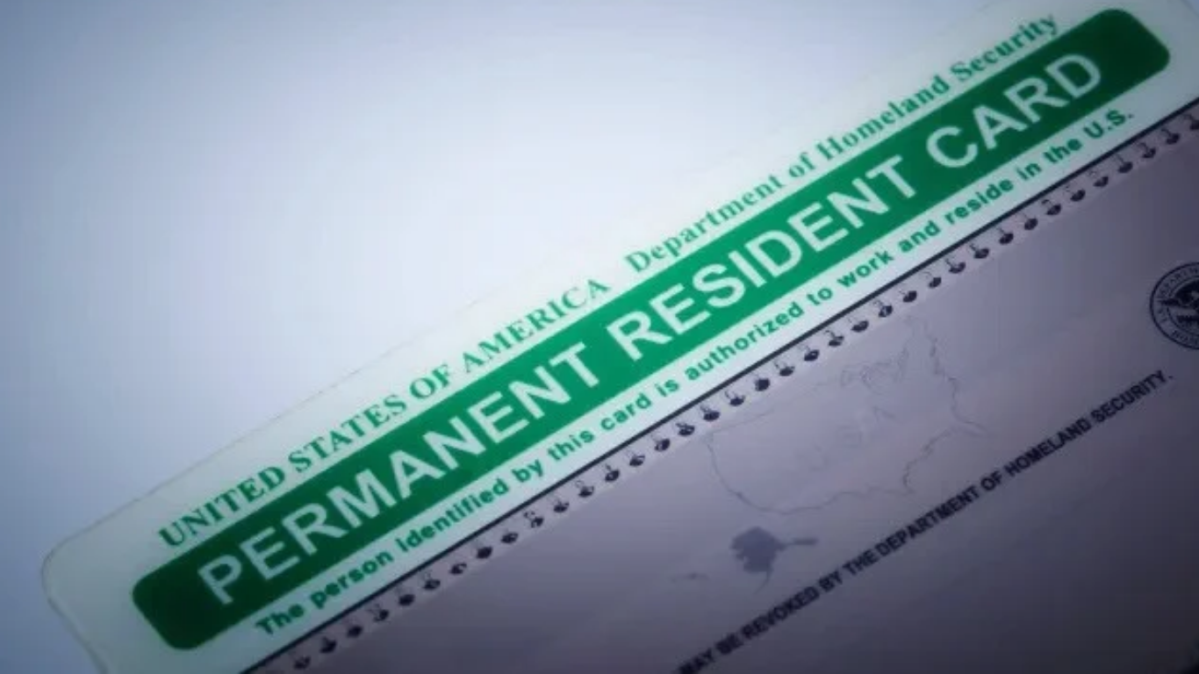
For Michael Liu, the American dream has never been about grand gestures. It is found in the quiet routines of a life built over decades: working, paying taxes, raising a family, and contributing to a community in Ohio. A native of Taiwan, Liu has been a lawful permanent resident of the United States since 2002, and for more than twenty years he has played by the rules, waiting patiently for the day when he could call himself a citizen. That day, however, keeps slipping away. In late spring of last year, Liu took the important and hopeful step of applying for naturalization, submitting his Form N-400 to U.S. Citizenship and Immigration Services. He expected the process to move forward with reasonable efficiency, perhaps with an interview and a ceremony within the timeframes the agency itself publishes. Instead, he has found himself trapped in a bureaucratic limbo, watching his application stall while the months pass without explanation. His frustration finally reached a breaking point, and in mid-October he filed a lawsuit in the U.S. District Court for the Southern District of Ohio, asking a federal judge to force the government to act. In the complaint, Liu paints a stark picture of his situation, describing his application as “gathering dust on an office shelf” and warning that, without judicial intervention, he is likely to wait “an eternity” for a decision on a process that should be anything but eternal.
The legal battle centers on a timeline that Liu’s attorneys argue has become unreasonable by any standard. Liu applied for citizenship on April 25, 2025, and the USCIS receipt included in the court filing confirms that the agency received his paperwork that same day. For a lawful permanent resident seeking to naturalize, the next steps are usually straightforward: a background check, a biometrics appointment if necessary, an interview, and finally a decision. In Liu’s case, the agency told him in May 2025 that it could reuse fingerprints and other biometrics it had already collected from him, meaning he did not need to attend another appointment. That notice seemed like a good sign, an indication that his case was moving forward and that the government would simply run the same security checks using the information it already had. But the early momentum faded. According to court filings, Liu has now waited roughly eighteen months for his application to progress, and he has still not been called for a naturalization interview. The wait is particularly hard to understand, his lawyers argue, because USCIS’s own published processing time for N-400 applications in Cincinnati was 9.5 months for 80 percent of cases to be completed. In other words, Liu has been waiting far longer than the vast majority of applicants should have to wait, and he has been given no explanation for why his case has fallen so far behind. A USCIS case-status page included as an exhibit shows that as of May 2, 2026, the agency was still processing his N-400 and would contact him if additional information was needed. But no additional information has been requested, and no interview has been scheduled. The government has not asked Liu for anything further, and yet his application remains unresolved, suspended somewhere between hope and despair.
The lawsuit raises a fundamental question about the limits of government patience: how long can federal officials take to decide a naturalization application before the delay becomes legally unreasonable? Congress has provided a specific remedy for applicants whose citizenship cases remain undecided more than 120 days after their naturalization examination, allowing them to petition a federal district court to intervene. But Liu’s situation is different, and in some ways more troubling, because he has not even reached the examination stage. He is stuck before the point where the statutory clock would begin to tick, waiting for an interview that may never come. His lawyers argue that this extended limbo violates the federal government’s obligation to process his application without unreasonable delay. Liu is not asking the court to ignore security concerns or to grant him citizenship without the necessary vetting. He acknowledges, in the complaint, that the government has a legitimate need to conduct criminal-record and national-security checks on all naturalization applicants. What he disputes is the amount of time the process has taken and the absence of any meaningful update or explanation. He has, he says, exhausted the other options available to him, and the courts are the only remaining avenue. His requested relief is precise and modest: he wants a federal judge to order federal officials to complete his record and background security checks within 30 days, and if he successfully clears them, to naturalize him within 30 days after their completion. He is also asking the court to award costs and fees. In essence, Liu is asking the judiciary to do what the executive branch has failed to do: treat his application as something more than a forgotten file.
Liu’s case arrives at a moment when the politics of immigration and citizenship in the United States have become deeply unsettled. The Trump administration has made denaturalization a priority, and the numbers tell a striking story. According to data from the Transactional Records Access Clearinghouse, at least 105 civil denaturalization cases were filed in the first seven months of 2026, compared with roughly 125 cases filed nationwide between 2008 and 2025. That dramatic increase reflects a broader shift in enforcement priorities, one that has made the path to citizenship feel more precarious and more adversarial. At the same time, the Department of Homeland Security has proposed increasing naturalization application fees by as much as 80 percent, a move that would raise the cost of Form N-400 from $760 to $1,330 for paper applications and from $710 to $1,280 for online filings. The proposal would also eliminate the reduced-fee option for eligible lower-income applicants and end fee waivers for naturalization applications and related appeals, while preserving statutory exemptions for qualifying current and former military service members. DHS has said the changes are intended to ensure that applicants cover the full cost of processing their cases. But for many immigrants, the combination of higher fees, longer waits, and a more aggressive enforcement climate creates a sense that citizenship is being pushed further out of reach. Liu’s lawsuit is, in that sense, not just a personal grievance; it is a window into the anxiety felt by thousands of lawful permanent residents who have done everything asked of them and still find themselves waiting for a government that seems indifferent to their futures.
The human cost of this delay is difficult to overstate. For Liu, citizenship is not merely a legal status or a bureaucratic formality; it is the final step in a journey that began more than two decades ago. As a lawful permanent resident, he has been able to live and work in the United States, but he has been denied the full rights and responsibilities of citizenship. He cannot vote in federal elections, cannot serve on a jury, cannot hold certain government jobs, and cannot travel with the same sense of security that a passport provides. Every year that passes without naturalization is another year of feeling like an outsider in the country he calls home. The uncertainty is corrosive in ways that go beyond the practical. It affects his sense of belonging, his confidence in the future, and his belief that the system will eventually reward patience and good faith. The lawsuit describes a man who has followed every rule, submitted every form, and cooperated with every security check, only to be met with silence. He is not asking for special treatment; he is asking for the same treatment that most applicants receive. The government’s need to conduct thorough background checks is legitimate, and no reasonable person would argue otherwise. But national security cannot be the excuse for endless delay, especially when the applicant has already been vetted, already has a long history as a permanent resident, and already has a clean record. At some point, the government’s silence becomes a failure of the very system it was designed to protect.
Ultimately, Liu is asking a federal judge to do something simple: impose a deadline and force the government to make a decision. His case highlights a larger issue in American immigration law, where the promise of citizenship can be undermined by the machinery of administration. The naturalization process is supposed to be a pathway to full membership, a way for immigrants to complete their integration into American society. When that pathway becomes clogged with unexplained delays, the promise rings hollow. Liu’s complaint is not just about one man’s application; it is about the principle that the government should not be allowed to keep people in limbo indefinitely. Whether the court will grant his request remains to be seen, but his case has already drawn attention to a growing problem. For every Michael Liu, there are likely many others who are waiting quietly, hoping that their files will not be forgotten, hoping that their applications will not gather dust. The decision in this case could send a message about whether the United States will honor its commitments to those who have played by the rules. For Liu, the wait has been long, but he has not given up. He is fighting not only for a piece of paper, but for the right to finally say, without qualification, that he belongs. And in a country built on the dreams of immigrants, that is a fight worth having.