



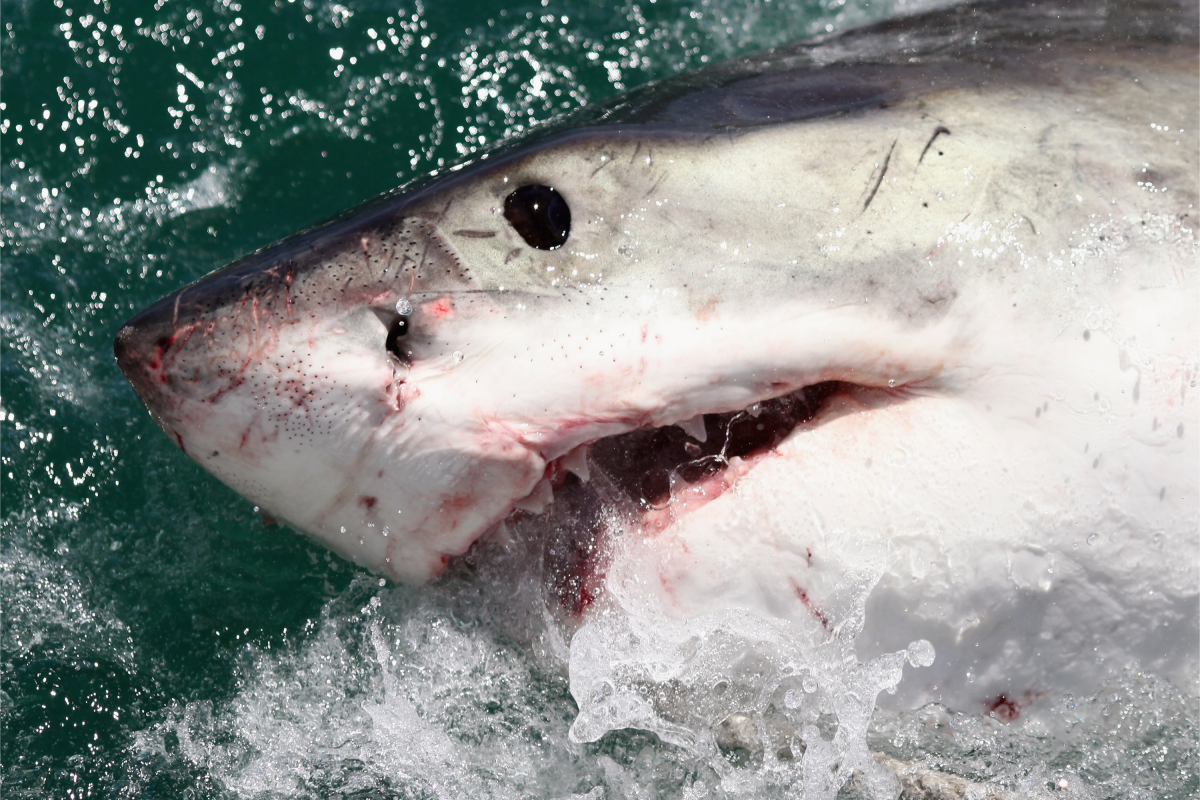
There is something about the California coast in October that pulls people to the water—long, golden afternoons, the last blush of summer warmth, and waves that seem to glow in the low autumn light. But this week, that pull has come with an extra layer of caution. Days after a dramatic drone video surfaced showing a great white shark suddenly breaching just meters from an unsuspecting beachgoer at Marina State Beach, California officials have renewed their warnings about shark activity along the shore. California State Parks confirmed to Newsweek that “shark advisories remain in place at Marina State Beach” and that drone footage captured additional shark activity in the area on Tuesday, October 20. The advisory is not meant to spark panic, but to remind everyone that the ocean is not a swimming pool—it is a wild, living landscape where humans are visitors, not owners. For those who grew up along the Pacific, the sight of a shark is both terrifying and strangely awe-inspiring, a glimpse of an ancient predator that has patrolled these waters long before any of us arrived. The viral breach, which circulated quickly across social media, turned a quiet day at the beach into a scene from a nature documentary, and it has left many wondering just how safe the water really is.
The concern is not based on a single dramatic moment. Sanctuary Cruises, a wildlife tour operator based at nearby Moss Landing, captured its own footage of two large great white sharks swimming along the Marina coastline on the same day, providing further evidence that multiple sharks have been moving through the popular stretch of water. The company said that exceptionally calm conditions allowed its crew to travel toward the shoreline, where the sharks were seen “cruising just beneath the surface.” With light winds and mirror-flat water, the crew enjoyed an incredibly clear view of the animals, a rare and awe-inspiring perspective that most beachgoers never get—and perhaps prefer not to think about. Sanctuary Cruises also noted that the surface water temperature was around 66 degrees Fahrenheit, and that Marina Beach’s shallow, sandy shelf creates ideal conditions for white sharks before winter begins to shift coastal patterns. In other words, the sharks are not there by accident. They are following a rhythm that has repeated itself for countless generations, drawn by the same combination of warm water, abundant prey, and familiar terrain. For scientists and local wildlife watchers, this is not an anomaly; it is a seasonal shift. But for a person wading into the surf with a boogie board, it is a humbling reminder that the ocean’s apex predators do not check a schedule or ask for permission.
California State Parks is responding with a measured tone, emphasizing awareness rather than alarm. Marty Greenstein, deputy director of communications and marketing at California State Parks, told Newsweek that “State Parks advises visitors to check with staff before entering the water,” and urged beachgoers to “be cautious of your surroundings, and to report any shark sightings.” He also noted that “interactions between people and sharks are rare,” a phrase that offers some comfort, even if it does not fully erase the image of a great white launching itself into the air a few meters from shore. The agency has good reason to take the situation seriously. In 2020, after a fatal shark attack at Manresa State Beach, state parks officials closed a section of ocean stretching one mile north and one mile south of the incident for five days, posting warning signs at beach access points. That kind of response is rare, but it shows that when the evidence points to elevated risk, officials are willing to act. The current advisory is softer, but the message is the same: respect the water, respect the wildlife, and don’t assume that a beautiful, calm day means an empty ocean. For locals and visitors alike, the best approach is to treat the ocean with the same caution they would a mountain trail during hunting season—be present, be observant, and understand that you are sharing the space with animals that were here first.
What makes this particular week so striking is that it falls squarely within what Californians—especially surfers and divers—have long called “Sharktober.” The term began as a kind of dark joke among those who spend their lives in the water, but it is rooted in biology. During the fall, adult great white sharks tend to return to the California coast after spending six to eight months gathering in a remote region of the open Pacific known as the “White Shark Cafe.” That stretch of ocean, far from land, serves as a kind of seasonal gathering place where sharks feed and mingle before migrating back toward the coast. By October, they are ready to make their move, and the shallow waters near beaches become part of their hunting ground. Sharktober is not an official season, but for those who know the coast, it is just as real as rainy season or salmon season. It is a time when surfers paddle out in wetsuits and scan the water with a little more vigilance, when drone operators keep their cameras ready, and when lifeguards pay closer attention to the shadows moving beneath the surface. The recent sightings at Marina Beach are a textbook example of the phenomenon, and they serve as a vivid reminder that the ocean’s rhythms do not bend to human convenience.
Despite the fearsome reputation of the great white shark, actual incidents remain extraordinarily rare in California waters. A study conducted by researchers with the California Department of Fish and Wildlife identified 201 verified shark incidents between 1950 and 2021, 178 of which involved white sharks. Of those, 107 resulted in injuries, and 15 were fatal. Over the course of more than seventy years, that works out to an average of around three incidents per year, with fewer than one fatality every five years. Those numbers are striking when you consider that millions of people visit California beaches every year, and thousands of surfers enter the ocean daily. Scientists have even suggested that some white shark bites may be cases of mistaken identity. Research into the animals’ vision has shown that swimmers and surfers, when viewed from below, can resemble seals and sea lions—the sharks’ natural prey. In a 2024 study published in the journal Cell, researchers tested this theory by towing seal-shaped decoys equipped with lights beneath them. The lights were designed to alter the silhouette of the decoy when seen from below, breaking up that familiar seal shape. The results were telling: sharks frequently attacked the unlit decoys, but they were far less likely to approach or strike the illuminated ones. It is a powerful reminder that these animals are not mindless killers, but complex predators responding to the information their eyes and instincts give them.
For now, the best advice for anyone planning to visit Marina State Beach or the surrounding coastline is to be smart, be humble, and be aware. Check in with park staff before going into the water, pay attention to posted warnings, and keep an eye on the surface for any signs of disturbance. Report sightings to lifeguards or park officials. And perhaps most importantly, remember that the ocean belongs to everyone—and to everything. The same waters that bring joy to families, surfers, and kayakers also sustain sharks, seals, and countless other creatures. A shark sighting is not an invitation to panic; it is a call to respect. It is easy to watch a viral video and feel fear, but it is just as easy to feel wonder. To see a great white shark breach in the wild is to witness something primal, a flash of silver and muscle and ancient instinct that most people will never see outside a screen. That is worth protecting, even as we protect ourselves. So as Sharktober continues, let the advisories stand as they are—not a warning to stay away entirely, but an invitation to be present, to be cautious, and to remember that we are never truly alone in the water. The sharks are there, just beneath the surface, gliding through the calm October sea. They were there long before the beaches were named, and they will be there long after we are gone. The least we can do is share the coast with grace.