


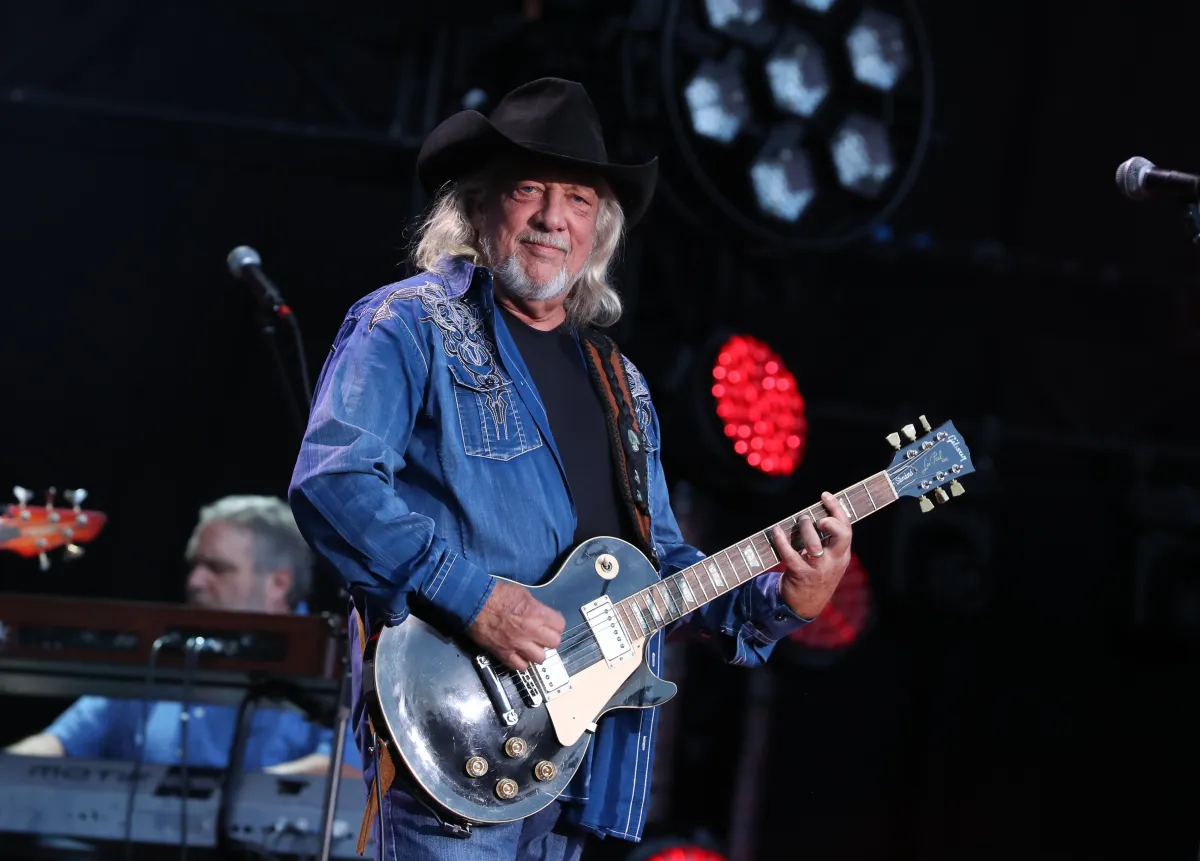
It is with a heavy sense of loss that the world says goodbye to John Anderson, the beloved country music singer whose warm, unmistakable voice gave us songs like “Wild and Blue,” “Swingin’,” and “Straight Tequila Night.” Anderson passed away at the age of 71, leaving behind a family who adored him, a catalog of music that will outlive us all, and a quiet legacy of tenderness that those closest to him will carry forever. The news arrived not as a clinical announcement but as a deeply personal farewell from the people who knew him best. In their statement, his family described him as their “beloved husband, father, grandfather, and best friend,” words that remind us that the man behind the microphone was first and foremost someone’s home, someone’s heart, someone’s laughter. For fans, he was a star; for his family, he was simply the one who made every ordinary moment feel like a memory worth keeping. That kind of love does not fade with a single headline. It lingers in the quiet spaces of a household, in the songs playing on an old radio, in the way people hold each other a little tighter when they hear his voice again.
The family’s statement, released on Wednesday, was a masterclass in grief and gratitude intertwined. “It is with the heaviest of hearts that we share the passing of our beloved husband, father, grandfather, and best friend,” they began. Then came the acknowledgment that the world knew him as a gifted singer whose voice and songs touched countless lives. But they were quick to draw the circle closer. “To us, he was so much more. He was the heart of our family, the one who made us laugh, loved us fiercely, and made every ordinary moment feel special.” That sentence carries the true weight of his life. We often measure public figures by awards, chart positions, and applause, but the people who sat at his kitchen table measured him in laughter, in fierce loyalty, in the sacred alchemy of turning a Tuesday evening into something warm and unhurried. The family went on to say they were completely heartbroken, that his music will live on, but that for them, his greatest legacy will always be the love he gave them and the memories they will carry with them forever. They closed with a simple, vulnerable request: “Please keep our family in your thoughts and prayers as we grieve this unimaginable loss.” In that moment, the country star became human again, not an icon on a pedestal, but a father whose absence now fills every room.
For decades, John Anderson’s music was a refuge for those who found comfort in storytelling and twang. His voice had a lived-in quality, a kind of weathered honesty that made you believe every word he sang. “Swingin’” was more than a catchy tune; it was a snapshot of young love and the thrill of stepping out into the unknown. “Straight Tequila Night” captured the bittersweet ache of watching someone drown their sorrows in a bar, a song so vivid you could almost smell the spilled drinks and hear the jukebox hum. And “Wild and Blue” reminded us that country music could be tender and untamed at the same time. His songs were not just hits; they were companions for people driving down empty highways, sitting on porches at dusk, or nursing a broken heart in a dimly lit kitchen. He had a way of making the ordinary feel poetic, and that is a rare gift. His voice was a bridge between generations, carrying the traditions of classic country while still feeling fresh and immediate. He never needed flashy gimmicks or overproduced theatrics. He just stood there, sang with his whole chest, and let the truth of the lyrics do the heavy lifting. That authenticity is why his music will continue to be discovered and rediscovered by new listeners long after today’s headlines fade.
John Anderson’s path to Nashville began in the quiet, sun-soaked town of Apopka, Florida, where he grew up surrounded by the kind of Southern landscapes that would later populate his lyrics. Like so many dreamers before him, he packed up his hopes and headed to Music City, the place where country music lives and breathes. It was not an overnight fairy tale; it was a journey of persistence, small gigs, long drives, and the stubborn belief that a song could change everything. Nashville eventually embraced him, and the industry took notice. In 1993, he received the Academy of Country Music Career Achievement Award, a recognition that honored not just his commercial success but the depth of his contribution to the genre. Then, in 2024, came the ultimate honor: induction into the Country Music Hall of Fame. That moment must have felt like the closing of a beautiful circle, a confirmation that his voice mattered, that his stories belonged in the great American songbook. But those honors, as meaningful as they are, were only part of the story. The Hall of Fame holds his records and his legacy, but his family holds his actual warmth, his inside jokes, his quiet presence in the living room. The man who stood on award-show stages was the same man who made his grandchildren laugh, and that duality is what made him so endearing.
The cause of death has not yet been revealed, and this remains a developing story, with more details to follow. In times like these, the unknown can feel especially painful. We want answers, explanations, a way to make sense of a sudden absence. But perhaps the most honest response is to sit with the uncertainty and simply remember the life that was lived. John Anderson gave us decades of music that made us feel less alone. He sang about love, loss, joy, heartache, and the messy, beautiful business of being human. His songs will be played at weddings and funerals, in dive bars and backyards, on road trips and quiet nights when someone needs to hear a voice that understands. And in that way, he will not really be gone. The notes will still rise and fall, the stories will still unfold, and the emotions he stirred in us will continue to stir in the next generation. His family asked for thoughts and prayers, and there is something profoundly communal about that request. Grief is not meant to be carried alone. When we lose someone who gave so much of himself to the world, the world shares in the mourning, even as we celebrate the gift.
As we process this loss, it is worth remembering that John Anderson was not merely a famous person who happened to die at 71. He was a husband who promised to love someone for better or worse. He was a father who cheered at ball games and worried about his children’s futures. He was a grandfather whose voice probably softened whenever a little one walked into the room. He was a friend who showed up, a man who found joy in simple moments, and an artist who never forgot that music is ultimately about connection. The family’s statement said it best: his greatest legacy will always be the love he gave his family. That is not a dismissal of his career; it is an elevation of what matters most. Awards fade, charts change, and even the most beloved songs eventually become echoes. But love, the kind that makes ordinary moments feel special, the kind that makes people laugh and feel safe and know they belong, that love leaves a mark that cannot be measured by any statistic. John Anderson has left us, but he has also left behind a world that is richer because he passed through it. We will keep listening to “Swingin’” and remembering what it felt like to be young. We will keep singing along to “Straight Tequila Night” and feeling the ache of every lonely soul. And we will hold his family in our hearts as they navigate this unimaginable loss. Rest easy, John. The music is still playing, and so is the love.