

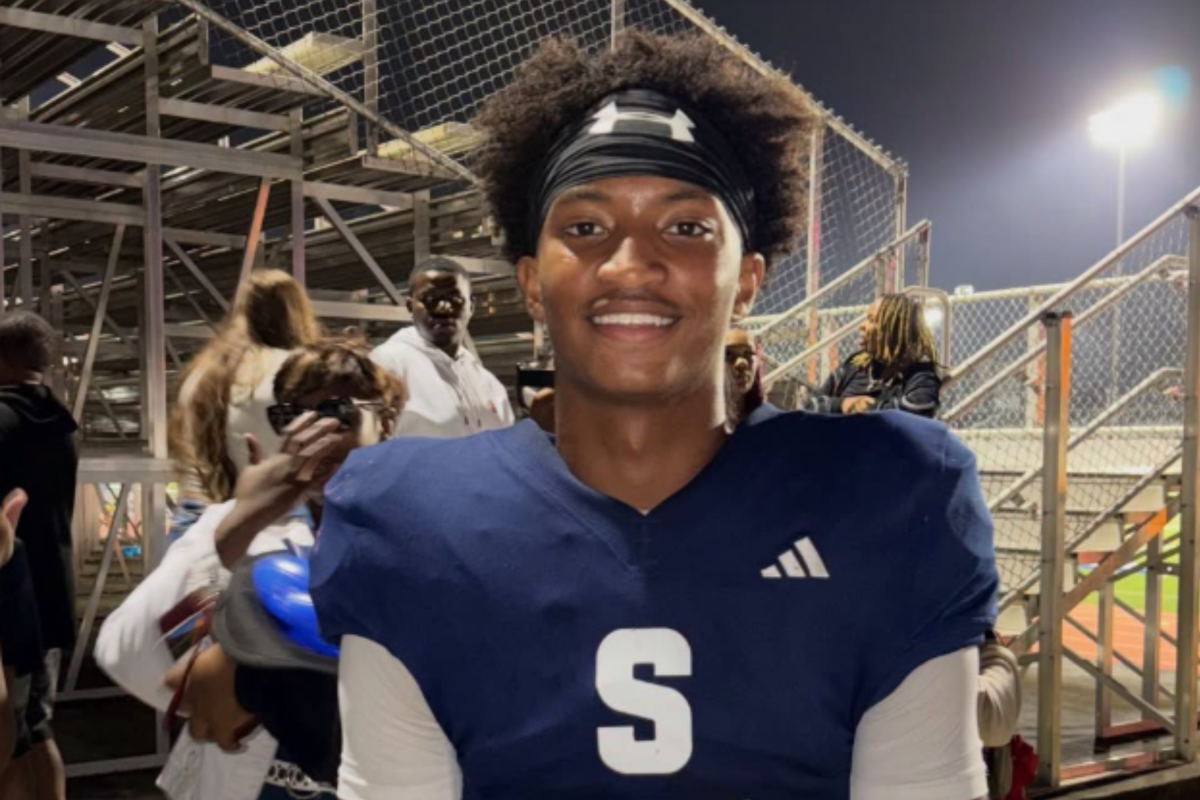
On a quiet Monday evening, the Jackson County District Attorney’s office delivered news that would close one chapter in a grieving Mississippi community while leaving others painfully open. A grand jury, after months of investigation, had unanimously returned a “no true bill” in the death of 18-year-old Nolan Wells, meaning that in the judgment of that jury, there was simply not enough evidence to bring criminal charges against anyone. For the young man’s family, the announcement was another turn in a road marked by confusion, sorrow, and an unrelenting search for answers. For the community that had watched his story unfold with growing unease, it was a moment of reckoning with a tragedy that had never quite made sense. The District Attorney’s office framed the grand jury’s decision not as an ending, but as the culmination of an exhaustive legal and investigative process—one that included 132 subpoenas and testimony from 43 witnesses. Yet even as officials emphasized the thoroughness of the inquiry, the family’s aching question remained unchanged: What really happened to Nolan Wells on that remote island, and why did he never come home?
Nolan Wells was only eighteen years old, at the very beginning of a life that should have stretched far into the future. On July 4, he did what thousands of young people do on that holiday: he went out with friends to celebrate, to enjoy the summer sun, to feel the salt air and the freedom of a day off from ordinary life. The group traveled by boat to Horn Island, one of the beautiful, windswept barrier islands that lie roughly ten miles off the Mississippi Gulf Coast. For a few hours, the island was full of laughter, music, and the easy camaraderie of a holiday gathering. But the day took a tragic turn. According to investigators, Wells was last seen on the island around 3 p.m., after which he did not return to the mainland with the others. The boats—the Triton, the Palm Beach, and the Tideline—departed without him. It is a detail that still haunts anyone who hears the story: a young man, left behind on an island, disappearing into the hours of that long afternoon. The search that followed was massive and desperate. Local and state agencies, the Coast Guard, first responders, and the United Cajun Navy all joined the effort, scouring the island and its surrounding waters. Two days later, on July 6, a U.S. park ranger found Wells’ body on the northwestern tip of Horn Island. For his family, the discovery was both a confirmation of their worst fears and the beginning of a new kind of anguish.
The grand jury’s investigation was remarkable in its scope. Over the course of its work, the panel issued 132 subpoenas and heard testimony from 43 witnesses, sifting through testimony, physical evidence, and forensic reports in an attempt to reconstruct the final hours of a life that ended far too soon. The jury’s findings were detailed and, for some, difficult to hear. They concluded that the “position of, condition of, time of discovery, and location” of Wells’ body were all consistent with drowning. An independent autopsy had earlier found that the cause and manner of death remained undetermined pending further investigation, and authorities had said from early on that they believed Wells drowned. The grand jury also noted that Wells had bruising on the back of his head, but determined that this injury was not fatal. There was no evidence, the jury found, of any fatal injuries or organic disease in his body. And to address rumors and speculation that had spread online and in the community, the jury determined that Wells did not have cocaine in his system at the time of his death, and found no evidence to suggest he had ever used the drug. These findings were meant to lay certain questions to rest, but they did not erase the deeper mystery of how a young man on a holiday outing could end up dead in the water, alone on an island, with so many unanswered questions swirling around him.
The Wells family had never accepted the easy explanations. From the beginning, they questioned the circumstances surrounding Nolan’s disappearance and death, and they called for an independent investigation, believing that the official narrative had not captured the full truth. They retained Ben Crump, a prominent civil rights attorney known for representing families in high-profile cases involving racial injustice and police violence. Crump spoke publicly about the case with both sorrow and determination. “His family deserves answers. They deserve the truth,” he said. “We will not rest until every fact about what happened to Nolan on Horn Island is brought into the light, and we call on investigators to pursue this case with the urgency and transparency this family deserves.” Those words carried enormous weight. They spoke to a fear that a young Black man’s death might not receive the same attention, the same rigor, the same respect as others. They also spoke to a family’s refusal to let their son’s story be reduced to a simple accident when the circumstances felt so complex and unresolved. For them, the journey was never just about legal outcomes; it was about honoring Nolan’s memory by making sure the world understood that his life mattered, and that his death deserved real answers.
District Attorney Angel Myers McIlrath responded to the grand jury’s report with a message that sought to acknowledge the community’s pain while firmly rejecting one of the most painful allegations that had emerged. “Nolan’s death has devastated our community,” she said in a video statement. She then addressed the rumors directly: “There is absolutely no evidence to support the allegations that Nolan’s death and disappearance were racially motivated.” It was a statement designed to close the door on a narrative that had taken root among some who followed the case. Much of that narrative had been fueled by social media—videos and posts showing numerous people and boats around Horn Island on the day of Wells’ disappearance. The Jackson County Sheriff’s Office had requested video and pictures from the island, especially footage that might show or contain audio of alleged altercations. Sheriff John Ledbetter said investigators were aware of videos that had surfaced and were looking into them. But the grand jury found no credible evidence that any of the people who traveled to or from Horn Island that day on the Triton, the Palm Beach, or the Tideline “engaged in any criminal conduct related to the death of Mr. Wells.” That finding did not necessarily close the door on questions about what happened on the island, but it did mean that no one would face charges. For the family, it was another layer of frustration—a legal system saying it could not prove what they had always suspected. For others, it was a reminder of how difficult the truth can be to reach once the moments have passed and the evidence has faded.
In the end, the grand jury’s decision is a legal conclusion, but not necessarily an emotional one. For a grieving family, no report can fully answer the question that lives at the center of every unexplained death: Why? The official finding that Nolan Wells drowned may be supported by forensic evidence, but it does not explain why an eighteen-year-old boy ended up alone on an island, separated from the people he came with, or what he experienced in his final moments. The grand jury’s work was exhaustive, and its members clearly took their responsibility seriously. But the human heart does not always follow the logic of subpoenas and witness testimony. The community of Jackson County will now have to find a way to heal, to trust in a process that felt, for some, too slow and too uncertain. The Wells family will have to carry on without the answers they desperately wanted, holding onto the hope that perhaps someday more will be revealed. And Nolan Wells—a beloved son, teammate, and friend who went to celebrate the Fourth of July and never came home—will be remembered not only as a name in a news story, but as a young man whose life was cut short in a way that still defies full understanding. The legal chapter may be closed, but the search for meaning, for peace, and for justice in the deepest sense is not something a grand jury can decide. That search belongs to those who loved him. And it will continue, long after the headlines fade.