



On Wednesday, basketball fans across the country felt a familiar pang of something between gratitude and loss. Ernie Johnson, the legendary broadcaster whose voice has been a constant companion for decades, announced that he is in the middle of his final season as host of Inside the NBA. At 70 years old, Johnson is preparing to close the book on an extraordinary 37-year run with the beloved program. The news arrived gently, the way Johnson himself does — without drama or self-congratulation, just a plain acknowledgment that everything has a season. But for the millions of viewers who have made Inside the NBA a late-night ritual, the announcement felt like the end of an era. It is one thing for a favorite player to retire, but another when the face of the program itself decides it is time to step away. Johnson has been more than an announcer. He has been a steady, warm, and reassuring presence in a world that can sometimes feel overly loud and chaotic. He often let others shine, laughed at their jokes, kept the conversation moving, and somehow made the show feel less like a production and more like a gathering of friends. Wednesday’s announcement was bittersweet in the truest sense of the word: there is sadness in knowing this chapter is ending, but there is also an immense appreciation for the years of wisdom, humor, and humanity he has given us. It is a farewell that wasn’t loud, but it was profound.
To truly understand what Johnson means to the sport, you have to understand the show he helped shape. Inside the NBA became far more than a highlights recap program. It became a cultural institution, a place where basketball was analyzed with genuine expertise but also approached with humor, humility, and heart. Johnson sat at the center of a sometimes chaotic mix, alongside four of the most colorful personalities the game has ever known: Charles Barkley, Kenny Smith, Shaquille O’Neal, and, in earlier years, other voices who helped make the roundtable a television legend. It would have been easy for a host to get run over by personalities like those, to become the straight man who simply tosses questions and dodges the jokes. But Johnson never seemed like he was just surviving the banter. He was the reason the banter worked. He knew when to step in and when to step back, when to ask a hard question and when to let the moment breathe. He brought out the best in everyone around him, never needing to be the loudest voice in the room. There is a reason so many fans describe the show as feeling like an old friend. That warmth starts with Johnson. He is the one who made sure the show stayed connected to the human side of basketball, reminding audiences that players are more than stats, that a game is more than a score, and that comedy and compassion can share the same couch. The show’s magic was often spontaneous, but Johnson’s steady hand was the one thing that always kept it from spinning out of control. He didn’t just host Inside the NBA; he became its emotional anchor.
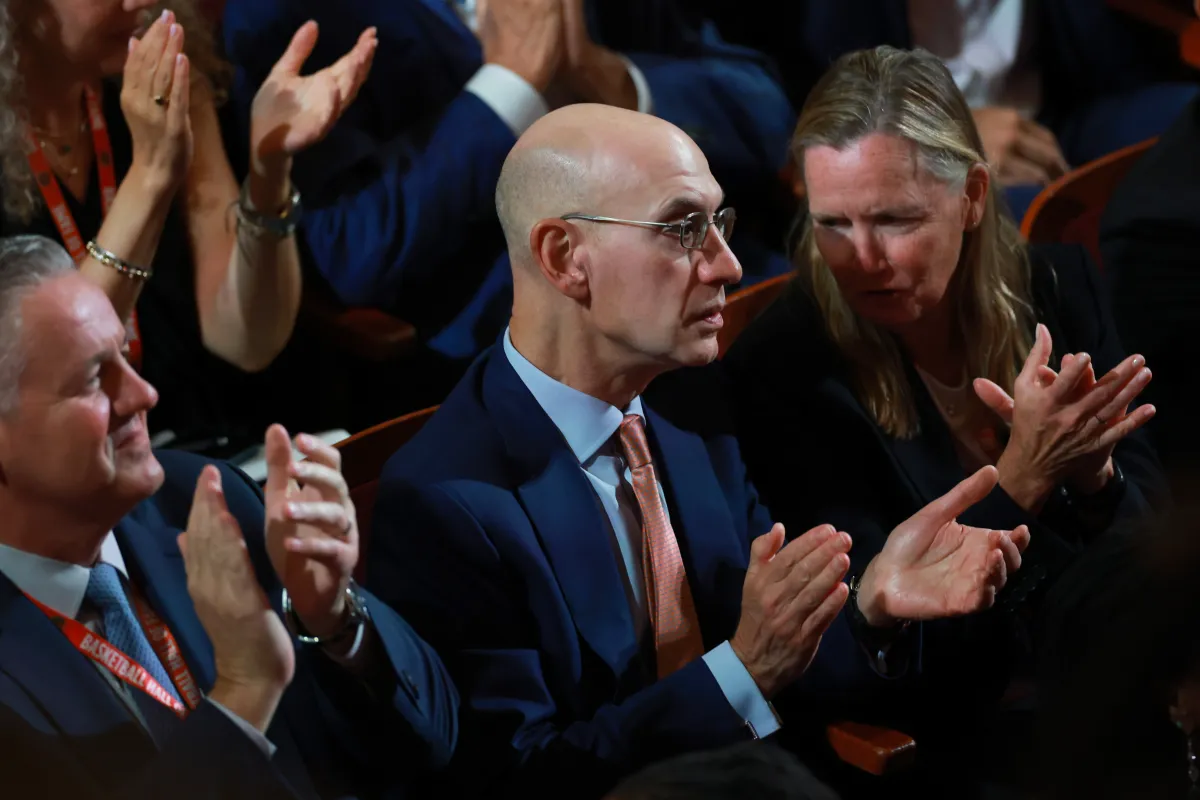
The reaction to Johnson’s announcement spread quickly through the basketball world, and perhaps no statement captured the moment better than the one released by NBA Commissioner Adam Silver. “Few people have shaped the way fans experience the NBA as profoundly as Ernie Johnson,” Silver said. “His brilliance as a broadcaster is matched by his character, compassion and generosity, which have been evident throughout his 37 years as host of Inside the NBA. We are grateful for Ernie’s extraordinary impact on our league and look forward to celebrating him during his final season.” Silver’s words are fitting, because they point to something that goes beyond broadcast technique. Johnson has always been regarded as one of the genuinely kindest people in sports media. In an industry often filled with hot takes and manufactured outrage, he chose a different path. He led with grace. He listened. He respected players, viewers, and colleagues alike. The tributes that poured in from around the league weren’t just professional courtesies; they were expressions of deep affection. Players who rarely grant interviews came on his show and relaxed. Analysts who could easily come across as combative seemed to soften when seated beside him. That is no coincidence. Johnson made space for people. He asked about their lives, their families, their struggles, not just their jumpshots. His final season will now be a long, well-deserved victory lap, with Commissioner Silver’s promise to celebrate him standing as a testament to how rare it is to spend 37 years in the spotlight and leave with your reputation not only intact but enhanced.
Of course, Johnson’s decision did not come out of nowhere. He has been open about the fact that life has handed him some difficult chapters in recent years, and those experiences shaped his outlook on the world. There were health issues, the kind that make a person pause and take stock of what truly matters. For someone who has spent a lifetime giving everything to his work, the thought of slowing down can feel foreign. But Johnson, ever grounded, reached a point where he realized that time is precious and that no highlight package, no playoff game, no roundtable debate is worth missing the moments that matter most at home. He has spoken before about the importance of family, and he has lived that value in ways people can see: in the love he has for his children, in the joy that comes into his voice when he talks about his household, and in the quiet choices he has made to prioritize the people closest to him. The schedule of an NBA host is not easy. There are long road trips, late nights, studio sessions that stretch into the early hours, and a constant hum of preparation that rarely pauses. For decades, Johnson handled it with a smile, but all careers have a natural boundary. He knows that now is the right time to hand over the hosting chair and enter a chapter with slightly fewer lights and cameras and a little more quiet. It is a profoundly human decision, and it makes his departure feel less like a loss and more like a choice to live intentionally.
For anyone worried that Johnson is disappearing entirely, there is comfort in what comes next. He will remain part of TNT’s March Madness coverage, and he will continue to work on other projects for the network. That is welcome news, because college basketball in the spring has been another place where Johnson’s voice has felt right at home. There is something about the tournament, with its raw emotion, improbable upsets, and student-athletes playing with their hearts wide open, that matches Johnson’s natural warmth. He doesn’t have to pretend to be excited; he simply is excited, and that joy translates through the screen. The fact that he is stepping back from Inside the NBA but not stepping away from storytelling altogether feels wonderfully like a compromise between the demands of a high-profile weekly studio show and the quieter rhythms he desires. This transition will allow him to be more present at home, while still offering fans enough of his voice to keep the connection alive. It is a healthy way to enter a new season of life. Instead of a hard break, there is a gentle glide. Instead of a long goodbye, there is a longer goodbye, one that lets everyone appreciate him properly. The NBA is known for celebrating legends, and the upcoming months will give the league and its fans ample opportunity to say thank you. But even after the final episode ends, Johnson will linger in the culture. His style, his kindness, and his professionalism will shape how sports shows are made and hosted for generations to come.
As the final season of Inside the NBA unfolds, there will surely be a new layer of meaning in every familiar opener, every laugh with Barkley, every gentle smile after Kenny says something outrageous, every moment when Shaquille and Charles swap playful insults and Johnson just shakes his head. Those small interactions are the textures of a show that has meant so much to so many. The details will be treasured now because fans know they are watching the last of a long, beautiful run. But the greatest legacy Ernie Johnson leaves behind is not just a list of awards or a streak of high ratings. It is the way he made people feel. He made viewers feel like they were sitting in the living room with somebody who understood them. He made players feel like they were more than interview subjects. He made colleagues feel like they were part of a family. And he made basketball feel like a gathering of friends, not just a competition. That is a rare gift, and it is one that will not fade when he steps out of the hosting chair. Ernie Johnson taught us all that a man can be successful and kind, competitive and compassionate, professional and playful. He gave us a model for how to carry ourselves through the game of life, and for that, he deserves every bit of celebration coming his way. So here’s to Ernie Johnson — to his voice, his heart, and the final season of a legendary run. The show will continue without him one day, but it will never quite sound the same. What he built, however, will live long after the lights go down.