


The Day the Ocean Dream Died
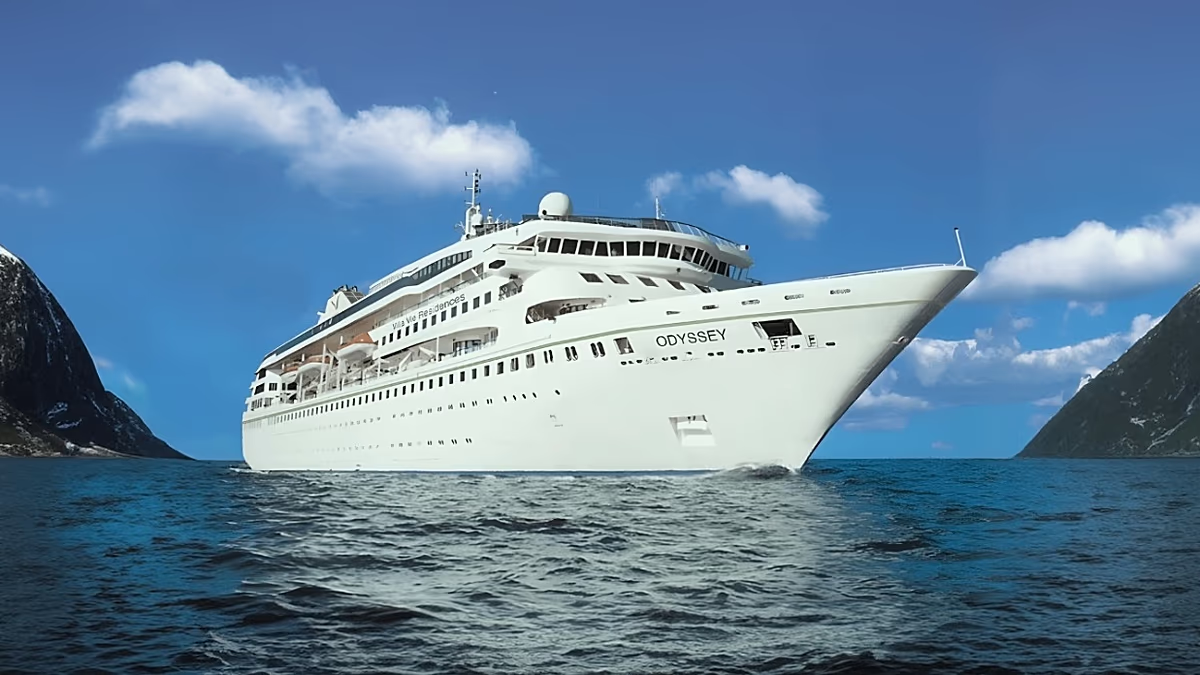
On a sun-baked morning in the Cambodian port of Sihanoukville, a quiet catastrophe unfolded that would shatter the lifelong dreams of more than two hundred people. They had come to this Gulf of Thailand harbor expecting just another stop in an endless voyage—a world tour that was supposed to last for years, perhaps even a lifetime. Instead, they were given seven hours to grab their belongings, leave their floating homes, and face a reality they never imagined possible. These were not ordinary vacationers. They were residents of the Odyssey, a cruise ship that had been sold to them not as a holiday but as a permanent home at sea. Some had sold their houses, their cars, everything they owned, to fund this life of endless horizons. Retirees who had planned to spend their golden years watching sunsets from a moving deck, remote workers who imagined themselves typing emails from exotic ports, dreamers who had traded the banality of landlocked existence for the romance of the open water—all of them were now standing bewildered on a foreign dock, clutching suitcases and staring at the ship that was no longer theirs to call home. The company that had promised them this life, Villa Vie Residences, had abruptly suspended operations, citing fuel costs that had spiraled out of control since the Iran war began. But for the people standing in that Cambodian port, the economics mattered less than the crushing human weight of what had just happened: they had been made homeless, thousands of miles from anywhere they could call their own.
The company’s explanation, delivered through a carefully worded statement, painted a picture of financial inevitability. Villa Vie said it had “suspended operations in Cambodia” and pointed to an “extraordinary” rise in fuel costs that had made its operating model “extremely challenging.” According to the company, the per-cabin monthly fuel expenses had surged from an average of $1,800 to an estimated $6,000 to $8,000 in parts of Asia—an increase of roughly four times that no reasonable business could absorb indefinitely. They claimed to have tried everything: slowing the itinerary, spending more time in port, reducing consumption. But the measures had not been enough. “Passing the full increase on to residents is not a realistic solution,” the company said, a statement that, while pragmatic, rang hollow to the people who had already paid for years of this dream. Instead, Villa Vie announced a restructuring and recapitalization effort over the next sixty days, with the admission that “no outcome is assured.” For the residents, these corporate words were a cold comfort. The announcement had come with breathtaking suddenness, leaving little time to process, plan, or even panic properly. Passengers scrambled to book flights, find hotels, and somehow communicate to worried families back home that their grand adventure had turned into a nightmare. The deputy governor of Preah Sihanouk province, Long Dimanche, described the scene with a mixture of sympathy and helplessness: 203 guests and 156 crew had arrived from Thailand on October 23, expecting to continue to Vietnam. Instead, they found themselves stranded, many of them “homeless thousands of miles from their home countries,” with the ship itself scheduled to refuel and depart without them on October 31.
To understand the depth of this tragedy, one must grasp what the Odyssey represented to the people who boarded it. The ship, built in 1993 and operated under various names by several cruise lines over the decades, had been purchased by Villa Vie Residences in 2023 after being idle since the coronavirus pandemic. It was refitted in Belfast, Northern Ireland, and launched on its maiden “continuous voyage” in October 2024 with grand ambitions: a three-and-a-half-year journey that would circle the globe, stopping at dozens of countries, offering residents a “permanent home at sea.” The purchase price for a suite for the lifetime of the vessel started at around $230,000—a significant investment, certainly, but one that many people found profoundly appealing. Here was a way to live a life of perpetual travel without the chaos of airports, hotels, and the logistics of land-based living. Your home would come with you. Your neighbors would be fellow adventurers. Your backyard would be the ocean. Passengers told stories of selling everything they owned to fund this dream—houses, accumulated possessions, the heavy anchors of conventional life—all traded for the lightness of a life on the waves. Some were retirees who had saved their entire careers for this. Others were remote workers who had arranged their professional lives around the freedom of the sea. They had joined a community, an experiment in floating living, and they had done so with their hearts as much as their wallets. When the announcement came, it wasn’t just a canceled cruise—it was the collapse of a carefully constructed identity, the loss of a home, a community, and a future all at once.
The logistics of the disembarkation were as brutal as the emotional shock. Residents were given approximately seven hours to collect their belongings and leave the ship—a timeline that, for anyone who has ever packed up a permanent residence, is almost unimaginably tight. People who had brought years’ worth of possessions, documents, family photographs, and treasured items now had to make impossible choices about what to carry and what to abandon. Randy Cassingham, a passenger aboard the ship who runs the ResidentialCruising.com blog, described the situation in a post entitled “Abandon Ship!” He wrote of a “cascade of problems” that had been building before the final blow, and he accused the company of doing “absolutely nothing to help” the stranded passengers. Some residents managed to catch flights out of Cambodia, dispersing to various corners of the world. Others remained in Sihanoukville, checking into hotels, trying to process what had happened and figure out their next steps. The crew—156 workers who had served these passengers, who had cooked their meals, cleaned their cabins, and shared their journeys—were now also displaced, their livelihoods evaporating with the company’s decision. The city of Sihanoukville, itself still recovering from its own complex history of development and decline, suddenly found itself hosting a community of the newly homeless: people who had expected to wake up tomorrow in Vietnam and instead were waking up nowhere at all. The human toll was immense and varied—older residents with health concerns, families with children, couples who had sold their homes to fund this life, now left to explain to their families why they had lost everything.
The Odyssey itself carries a complex and somewhat melancholy history that adds another layer to this story. It was built in 1993 and has sailed under various names for several cruise lines over the years, living multiple lives before finding its final purpose as a residential vessel. The pandemic struck it down in 2020, leaving it becalmed in port for years—a floating monument to the fragility of the travel industry. When Villa Vie Residences rescued it from obsolescence in 2023, it seemed like the ship had found a second chance, and its residents had found their future. The ship’s current voyage, originally intended to last three-and-a-half years, began in Belfast in October 2024 after a lengthy refit, carrying its new community of dreamers toward a horizon of endless possibilities. But perhaps there is something fitting, if tragic, in the fact that the Odyssey is not the first cruise ship to anchor in Sihanoukville under circumstances of crisis. In February 2020, at the height of global COVID-19 fears, the MS Westerdam was allowed to dock in Cambodia after being turned away at five other ports, carrying 1,455 passengers including more than 600 Americans, many of whom had been stranded at sea for two weeks. Cambodia’s then-prime minister Hun Sen permitted the docking for what he described as humanitarian reasons, and the country won international praise for its compassion. The image of those passengers being welcomed ashore, after weeks of uncertainty and rejection, became a symbol of human kindness in a frightened world. Now, Sihanoukville again finds itself hosting a ship in crisis, and one hopes that the same spirit of compassion will prevail for the Odyssey’s displaced residents.
As the Odyssey prepares to refuel and sail away without its former inhabitants, the future remains opaque. Villa Vie says it is “working with residents to coordinate disembarkation and identify temporary living arrangements,” and acknowledges that this is “a difficult and disruptive period” for everyone involved. But for the people who invested their savings, their futures, and their hearts in this enterprise, the corporate reassurances feel thin. Some passengers have already scattered across the globe, trying to piece together lives that were supposed to be spent at sea. Others remain in Sihanoukville, still near enough to the ship to feel its presence as a painful reminder of what they have lost. The sixty-day window for restructuring offers a shred of hope, but the admission that “no outcome is assured” hangs heavily in the air. What happens to someone whose home is a ship that has sailed away? Where does a person go when the community they belonged to has been dissolved by accounting ledgers and fuel prices? The residents of the Odyssey will have to find answers to these questions, and the answers will not come easily. They have been through a devastating experience, one that reveals the fragility of dreams built on financial foundations, and the stark difference between the promises of a marketing brochure and the hard realities of a balance sheet. Cambodia, which once opened its arms to stranded passengers during the darkest days of the pandemic, now finds itself at the center of another maritime crisis—and its response, and the way the world treats these displaced dreamers, may well become another chapter in the tangled story of what happens when human aspiration meets the relentless economics of the real world. For now, the residents wait, uncertain and weary, clinging to the hope that somewhere, in the chaos of restructuring and recapitalization, their floating home might yet find a way to take them back.