


There is a peculiar kind of thrill that comes from being frightened on purpose. We go to horror films, tell ghost stories around campfires, and visit abandoned asylums for entertainment, all in search of that delicious shiver that reminds us we are alive. And this Halloween, a growing number of travelers are taking that desire one step further: they are booking overnight stays in hotels that proudly advertise their supernatural residents. A spectre is haunting Europe — actually, several spectres are haunting Europe, and what is truly remarkable is that people are willingly sleeping in the same space as them. I will admit, personally, that I would probably avoid any hotel that claims to be haunted. The thought of lying in the dark, listening to old floorboards creak, and wondering whether that cold spot near the wardrobe is just a draft or something more sentient does not sound like my idea of a restful getaway. And yet, across the continent, there are properties that loudly and proudly shout about their paranormal guests, inviting brave souls to come and share their quarters with the dead. With Halloween approaching, it seems like the perfect moment to spotlight these places, not just for the scares, but for the strange human desire to feel connected to the past, to history, and to stories that refuse to fade away. Because at the heart of every haunted hotel is a story, and stories are impossible to resist, especially when they come with a bed, a warm drink, and the chance to meet someone from another century.
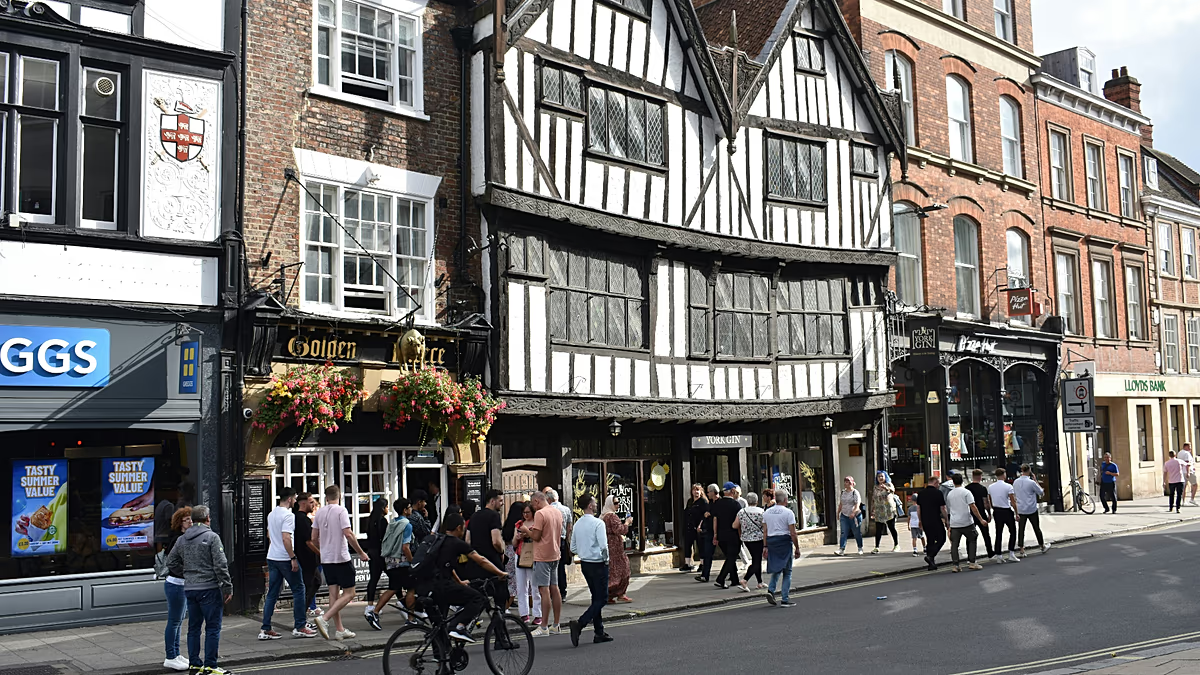
Take the Golden Fleece in York, England, for example. York is a city that practically drips with history, and it bills itself as one of the most haunted cities in Europe. Walk down practically any street and you will find a building with a ghost story attached to it, from ancient Roman soldiers to medieval merchants who still wander the cobblestones. The Golden Fleece, a pub located on a street called Pavement, claims to be the most haunted pub in the city, and for those who are not satisfied with simply enjoying a pint in the company of spectres, you can actually book a night in one of the rooms upstairs. That is the kind of commitment that separates the casual ghost enthusiast from the true believer. Imagine the scene: you have had a hearty meal, you have toasted the Halloween season with a local ale, and then you climb the creaky stairs to a bedroom that has seen centuries of life and death. According to York’s tourism board, the paranormal guests you might encounter during your stay include Lady Alice Peckett, the wife of the pub’s owner from the early eighteenth century, who apparently still keeps an eye on the place. There is also a British airman who fell out of a window here in 1944, a tragedy that apparently did not end his connection to the building. Whether you believe in ghosts or not, there is something deeply human about these stories. They are not just about fear; they are about memory, about lives that ended too soon, and about the places where grief and love leave their mark. The Golden Fleece offers a chance to sit in a room where history is not something you read about in a book, but something you might feel brush past you on the stairs.
If you are willing to go even further into the world of haunted accommodations, there is the Ancient Ram Inn in Gloucestershire, England. This building was originally constructed in the late medieval period, which means it has had an enormous amount of time to accumulate supernatural figures wandering its halls while guests sleep. The owners say it is the most haunted bed and breakfast in the United Kingdom, and they have a roster of about twenty ghosts to back up that claim. Among them is a young girl named Rosie, who is often seen or heard in one of the rooms. There is also, according to one particularly dramatic ghost hunter, a female sex demon that allegedly made an appearance. Now, that is a sentence I never expected to write, but it certainly adds a certain spice to the idea of a countryside bed and breakfast. The Ancient Ram Inn is not the kind of place where you go for a luxurious spa weekend. It is old, creaky, and full of dark corners, and that is exactly the point. When you stay there, you are not just sleeping in a building; you are sleeping inside centuries of history, layers upon layers of human experience. The people who run the place are perfectly honest about what they believe lives there, and guests come from all over the world to test their courage. There is something almost wonderfully absurd about the whole thing, but also something deeply endearing. We want to believe that death is not the end. We want to think that the people who lived before us are still somehow present, still watching, still connected to the places they loved. And so we book a night at the Ancient Ram Inn, climb into bed, and listen to the wind and the floorboards, half hoping that we will wake up with a story to tell, and half hoping that we will not.
Of course, you do not have to stay in a drafty old inn to encounter a ghost. Sometimes, the most unexpected places hide the most unexpected visitors. Take the Shelbourne Hotel in Dublin, a five-star property that is part of the Autograph Collection. When you think about a five-star hotel, you tend to have certain expectations: top-notch service, fantastic bars and restaurants, and preferably a nice wellness area with a spa or swimming pool. You probably do not expect to run into the mischievous spirit of a seven-year-old girl named Mary Masters, who died of cholera in 1791. But according to the Irish Mirror, that is exactly what you might get at the Shelbourne. Sightings of Mary are reportedly as frequent as two or three times a week, which is astonishing for such an elegant and polished establishment. She is said to be particularly active on the sixth floor, where she has been seen by guests and staff alike. The actress Lily Collins even claimed to have seen the ghost during a stay at the hotel while filming The Mortal Instruments: City of Bones. Imagine that: you have just come back from a wonderful dinner, you are wrapped in a plush robe, the city lights are glittering outside your window, and suddenly a small Victorian child appears in the corner of your eye. It is a strange juxtaposition, the height of luxury rubbing shoulders with the chill of the supernatural. But perhaps that is what makes the Shelbourne so fascinating. It reminds us that ghosts do not only haunt crumbling ruins and dark forests. They can also haunt the most refined and comfortable places, because the past does not discriminate. Mary Masters was a real child who died far too young, and if her spirit is still wandering the halls of a grand hotel, then she is a part of the building’s history, woven into its walls like the ornate moldings and the polished marble floors. Staying there is not just about enjoying the comfort; it is about sharing the space with a soul from another time, a reminder that even the most beautiful places carry their own shadows.
Not all haunted hotels are filled with mischievous children or alarming encounters. Some are home to stories of tragic love, and those are often the most haunting of all. At Hotel Union Øye in Norway, the ghost is said to inhabit a room known as The Blue Room. The tale goes that a servant girl named Linda began an illicit affair with one of Emperor Wilhelm’s officers, and The Blue Room was where the two of them would meet in secret. It was a romance that could never end well, and indeed it ended in tragedy. The officer, unable to divorce his wife and be with the woman he loved, took his own life. Linda, unable to imagine living without him, walked into a lake and was never seen again. Now, according to Norway’s tourism board, guests and staff say that Linda’s ghost can be heard weeping in The Blue Room. There is something unbearably sad about that image, the sound of a woman crying in a beautiful room, a heartbroken presence that cannot let go. Similarly, at Toftaholm Herrgård in Sweden, there is another broken-hearted ghost. A servant named Mats fell in love with the daughter of a count, but she was promptly married off to the son of a nobleman, as was the custom in those days. When Mats learned the news, he hanged himself in one of the guest rooms of the mansion. But unlike many ghost stories, his is not described as terrifying or malicious. The team behind Toftaholm Herrgård describe him as a “gentle ghost,” and guests claim to have seen him appearing behind women staying in the hotel, occasionally putting his hand on their shoulder. It is a strangely tender image, a ghost who is still longing for love, still reaching out to the living, perhaps hoping to find in some stranger the connection he was denied in life. These stories of Linda and Mats are not just spooky anecdotes. They are reminders that behind every legend there is a human heart, and that love, loss, and loneliness are feelings that transcend the boundaries between life and death.
So why do we do it? Why do we choose to spend our Halloween nights in places where the dead are said to wander? Perhaps it is because haunted hotels offer us something that ordinary travel cannot. They offer a direct connection to the past, a way to touch history with our own hands and feel the presence of those who came before us. We live in a world that is increasingly fast-paced and disconnected, where the past is often flattened into screens and statistics. But when you sit in a pub that has stood for centuries, or lie in a bed where someone once wept, or feel a cold hand on your shoulder in a Swedish manor house, history becomes personal. It becomes something you can almost touch, something that breathes alongside you in the dark. The stories of Lady Alice Peckett, Rosie, Mary Masters, Linda, and gentle Mats are not just tales to frighten children. They are fragments of real lives, filled with joy and sorrow, love and heartbreak, and they remind us that every building we walk through has its own secret history. This Halloween, if you are brave enough, you could book a room at the Golden Fleece and toast the airman who fell from the window. You could wander the medieval halls of the Ancient Ram Inn and keep an eye out for Rosie. You could sip champagne at the Shelbourne and wonder if a little girl is watching you from the corner. You could listen for weeping in The Blue Room, or feel a gentle hand on your shoulder at Toftaholm Herrgård. It might seem strange to pay money for a sleepless night, but there is a profound beauty in it. We are not just looking for scares. We are looking for meaning, for connection, for a way to feel that the people who lived before us are not entirely gone. And in a world that often feels too real and too rational, there is something wonderfully human about leaving the door open to the impossible. So this Halloween, maybe do not just watch a horror movie. Go somewhere that whispers to you from another century, and let the spectres of Europe keep you company. After all, they have been waiting for you.