


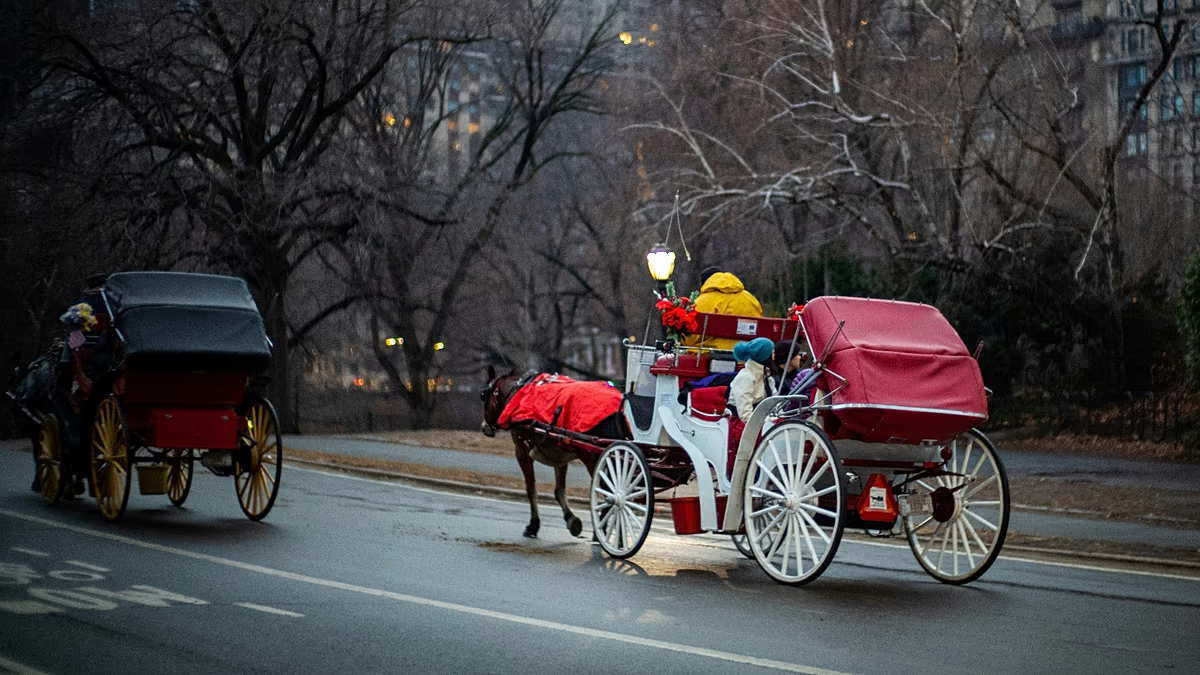
Imagine Central Park in the hush of a late October evening: the leaves have turned, the lamplight is soft, and the familiar rhythm of horses’ hooves echoes along the bridle paths. For more than 150 years, that sound has been as much a part of New York as yellow taxis and subway grates. But on 22 October 2026, the New York City Council took a step that could silence those hooves for good, voting to phase out the horse-drawn carriages that have carried tourists, lovers, and dreamers through Central Park since the mid-1800s. The measure is not an instant end. Mayor Zohran Mamdani must still sign it into law, and if he does, the ban will not take effect until June 2028. That waiting period is deliberate, designed to give the roughly 150 active carriage drivers time to find new work, as City Council Speaker Julie Menin explained to journalists before the vote. But the drivers’ union, the Transport Workers Union, has already vowed legal action, setting the stage for another chapter in a fight that has divided New York for nearly twenty years. To understand why the city council finally voted to end this historic attraction, and why so many people are fighting to save it, you have to look at the layers beneath the clip-clop of the hooves.
The horse-drawn carriage is not merely a tourist ride; it is a piece of living New York folklore. Central Park itself was designed in the 1850s, and carriages were there almost from the beginning, carrying wealthy New Yorkers and later generations of visitors through the only green space in the city that feels both wild and carefully shaped. Over time, the carriages became woven into the cultural imagination. They were the backdrop for Robert Redford and Jane Fonda’s scene in Barefoot in the Park, and the setting for a dramatic, rain-soaked ride in Sex and the City. They appear in wedding photographs, marriage proposals, and childhood memories. A 45-minute ride can cost $150, and on a special occasion, like a proposal or anniversary, the price can climb to several hundred dollars. But the tradition is also a livelihood. The men and women who drive those carriages are not anonymous figures; they are workers who know every street, every tree, every shortcut in the park, and many of them have spent decades building relationships with the horses they care for. The industry supports approximately 150 drivers and close to 200 horses, and for them, a ban is not just a matter of policy—it is the loss of a way of life. Yet for all its romance, the tradition has been shadowed by controversy for nearly two decades, with legislative battles over its future resurfacing year after year.
The heart of the opposition is animal welfare. Critics have long argued that Central Park is no place for horses to spend their lives. They point to the sharp sounds of traffic, the heat of summer, the cold of winter, and the constant pressure of working around cars, bicycles, and pedestrians. Over the years, there have been deadly collapses and dangerous escapes, and the public record is stained with the deaths of several horses. The most recent and most tragic incident came in June 2026, when an 18-year-old tourist from India was killed by a horse that had gotten loose and bolted through the park. That death seemed to change the conversation. It was no longer just a debate about animal comfort; it became, in the words of the Central Park Conservancy, a matter of public health and safety. The Conservancy, which manages the most visited urban park in the United States—a place that welcomes about 42 million visitors each year—threw its weight behind the calls for a ban. Officials and safety advocates argued that no matter how well-trained the animals were, accidents could happen, and those accidents could have devastating consequences. For the families of victims, for the public, and for the horses themselves, the risk was simply too great. The vote on 22 October was therefore the result of years of mounting evidence, tragic incidents, and changing public opinion, not a sudden decision.
But to the carriage drivers and their supporters, the ban is a betrayal of working people. The Transport Workers Union, which represents the drivers, has promised to challenge the law in court, arguing that the city is eliminating jobs and punishing an entire industry for isolated incidents. Mayor Mamdani has supported a ban in principle, but he has also raised concerns about protections for workers in the industry, suggesting that he will not simply sign the measure without considering what happens to the people whose livelihoods depend on it. The bill attempts to address those concerns. It includes a provision for exploring potential compensation for licence holders, and it specifically mandates that the owners of the nearly 200 horses will not be allowed to sell them for slaughter or to sell them to other horse-carriage businesses. That last detail matters enormously, because it is an acknowledgment that the horses themselves are part of this story. They are partners in a human enterprise, and the city is trying to ensure that if the carriages disappear, the horses are not shipped off to a grim fate. Still, the union sees the plan as inadequate. Legal action is almost certain, and the next two years could be consumed by court hearings, appeals, and last-minute attempts to delay or undo the ban. For the drivers, the transition period is not a comfort; it is a countdown to the end of a profession they love.
At its core, the debate over horse-drawn carriages is about what we value more: tradition and work, or safety and animal welfare. The horse-drawn carriage is one of the most enduring images of New York, a nostalgic link to a slower, more graceful era. For the tourists who climb into the carriages, it is a way to experience the city without the usual hurry, to feel the park as it was felt in the nineteenth century, and to create memories that will last a lifetime. For the drivers, it is a craft passed down informally through a community that takes pride in knowing its horses by name and reading the mood of the park like a sailor reads the sky. They say the horses are treated well, that they are retired to farms, and that the bond between a driver and a horse is real and meaningful. The scenes in Barefoot in the Park and Sex and the City are not just movie moments; they are proof that the carriage ride has entered the language of love and longing, romance and escape. But for the critics, no amount of nostalgia can erase the image of a terrified horse running through traffic, or the memory of a young visitor killed simply because she was in the wrong place at the wrong time. They ask whether a tradition that costs a life is worth preserving, and they answer that it is not.
Now the battle shifts to the mayor’s desk, the courts, and the slow ticking of the clock. If Mayor Mamdani signs the measure, the ban becomes law, but it does not take effect until June 2028, leaving more than a year and a half for legal challenges and human drama to unfold. The drivers will not go quietly; they have already made clear that they will fight to protect their jobs, their horses, and their right to work. The union’s promised lawsuit could delay the ban, alter its terms, or even overturn it, and the next few years will be a complicated dance between city hall, courthouses, and the streets of Manhattan. Meanwhile, the horses remain in their stables, the carriages remain parked at their stands, and the tourists still line up for rides, perhaps unaware that they are witnessing the twilight of an era. Whatever happens, the debate has already changed the way New York sees its most famous park. The horse-drawn carriage is not just a vehicle; it is a mirror held up to the city’s conscience, forcing New Yorkers to ask how far they will go to protect animals, workers, and public safety. Some will mourn the passing of that romantic image, while others will celebrate the end of what they believe was a cruel and dangerous practice. And in the end, the horses will not vote, and the drivers will not decide alone. The future of Central Park’s horse-drawn carriages is now in the hands of a mayor, a union, and a court system that must weigh the poetry of the past against the demands of the present. No matter which way the next legal ruling goes, the sound of hooves on the path will never quite feel the same again.