


Choosing a ski holiday is rarely just about picking a beautiful mountain or hunting down the liveliest après-ski scene. If you have a genuine need for speed, a hunger for adventure and a love of long, satisfying days on the slopes, the resort’s character only gets you so far. What really matters, when the alarm goes off at dawn, is whether the snow will be there, whether the lifts will be spinning and whether the terrain you’ve been picturing all year will actually be skiable. We’ve all heard stories of trips ruined by a warm snap, a late-season drought or a mountain that opens only half its lifts. The stress of unreliable snow is so common that it can almost feel like a normal part of winter travel. But it doesn’t have to be. While no destination can completely promise perfect conditions every single day, some resorts have a proven record of dependability. To help skiers make smarter choices, Inghams Ski has analysed more than 100 popular ski resorts and regions in the Northern Hemisphere and created the “Reliable Ski Score,” a ranking out of 100. It is a clever way of answering the question that every snow lover asks before booking: if I take a week off work and spend a small fortune on flights and lift passes, which mountains are most likely to come through for me? The answer involves more than just big snowfalls. It’s about running lifts, open terrain, consistency from season to season and how a resort copes even when conditions get tough. The best resort isn’t necessarily the most glamorous or the most extreme. It’s the one you can count on. That’s the whole idea behind the score, and it’s why the ranking feels so refreshingly practical for anyone planning a ski holiday. There is quiet confidence in choosing a resort that has earned its reputation through repeated winters of dependable service, and that confidence shapes the entire mood of your trip before you even reach the airport.
To build the Reliable Ski Score, Inghams didn’t just look at snowfall totals or listen to marketing hype. They dived deep into historical performance, measuring each destination against five carefully weighted factors. The most important, mountain running, accounts for 35 percent of the score. This measured the average percentage of lifts and slopes actually operating during the core part of the season. In other words, it rewards resorts that don’t leave you staring at closed signs and helpful maps of runs you can’t use. Next came snow adequacy, worth 25 percent, which looked at the percentage of core-season days with at least 30 centimetres of snow at the base station. That’s a useful measure because even a high-altitude resort can feel miserable if lower slopes are grass and gravel. Consistency made up 20 percent of the score, which is all about how steady mountain running was from one season to the next. A resort that is brilliant one year and awful the next is less reliable than one that is always good. Downside protection, worth 12 percent, examined the gap between an average season and the worst season in the record, giving a sense of how much risk remains when things go wrong. Finally, average snow depth of the mountain contributed 8 percent. Taken together, these factors paint a much richer picture than a single marketing claim ever could. The historical performance was studied during the core season period of 5 January to 20 March, across seven Northern Hemisphere winter seasons between 2017-2018 and 2025-2026, with the exception of the seasons impacted by Covid-19. That means the ranking is based on the part of the winter when most skiers are actually travelling, and it deliberately avoids the distortion of pandemic closures. Think of it as checking reviews from thousands of guests rather than trusting one perfect snow day captured on Instagram.
After all the number-crunching, the ranking has a distinctly European feel. Italian, Austrian and French resorts sweep the top ten, and the top spot goes to Italy. At number one, with an impressive score of 93.1, is Ponte di Legno–Tonale, a ski region that clearly knows how to look after its guests. Austria’s Obertauern is close behind at 92.9, followed by Les Arcs in France at 92.2, making the top three a compelling argument for booking a holiday in the heart of the Alps. France continues to shine with Les 3 Vallées at 91.1, Alpe d’Huez at 90.5 and Tignes–Val d’Isère at 89.4, alongside Espace San Bernardo, better known as La Rosière and La Thuile, at 89.2. Austria appears four times in the top ten, with Kitzsteinhorn at 89.6, Filzmoos at 89.5 and Damüls Mellau at 89.1, proving that the country’s alpine valleys are much more than just charming villages and thick winters. The list is worth studying even if you’ve never heard of every name. It shows that reliability doesn’t always belong to the biggest or most famous resorts. Some of these destinations may be smaller, quieter or understated, but they have consistently delivered the sort of conditions that skiers dream about. The top score of 93.1 is especially striking because nobody scores close to perfect. That honesty feels right. Mountain weather is never fully controllable, and the ranking’s best performers are simply the ones that narrow the margin of risk. For anyone planning a trip, the top ten is a strong starting point: these are the places where the mountains have, historically, worked hardest to make your holiday feel effortless and where your carefully chosen holiday dates are far less likely to turn into a frustrating week of waiting for snow.
Let’s start with the winner. Ponte di Legno–Tonale sits in northern Italy, in the mountainous area between Valle Camonica in Lombardy and Val di Sole in Trentino. It is a landscape of glaciers, nature reserves and high-altitude terrain, and according to the Inghams study, it offers skiers “practically hiccup-free exploring alongside snow-sure slopes.” That kind of praise comes from the data: the region performed strongly across every reliability factor, not just one. The ski area is home to 46 slopes, with the highest point sitting at 3,016 metres above sea level, so altitude is very much on your side. The runs themselves take you through dense pine and spruce forest, which makes even ordinary cruising feel immersive and alive. At the heart of the region is Passo del Tonale, which sits at the foot of the magnificent Presena glacier. The glacier helps stabilise snow conditions through the season, and the area’s more than 44 kilometres of slopes offer plenty of variety for intermediate and advanced skiers. One of the area’s most magical quirks is that during selected dates of the season, you can take advantage of something called “Alba in Quota,” or “dawn at high altitude.” Lifts open early so skiers can experience the rare thrill of watching the sunrise while carving a first run of the day, before the slopes officially open to everyone else. Imagine the silence, the pink light spreading over the mountains, the cold air against your face. That is the kind of moment that turns a reliable ski holiday into a truly memorable one, and it’s a perfect example of how a resort can combine dependability with a little romance. For anyone who loves the idea of skiing on crunchy, starry morning snow, this alone is worth the trip.
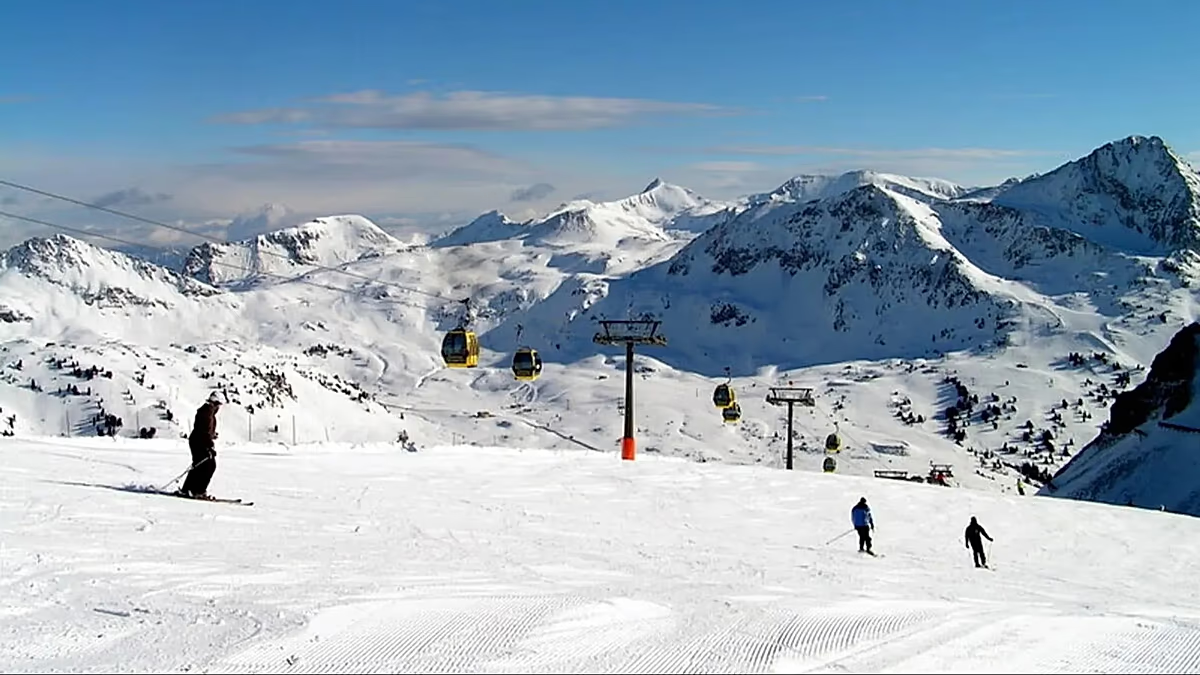
Second place belongs to Obertauern, an Austrian resort in the Salzburg region that sits at 1,752 metres above sea level. It is the kind of place that feels built for skiers who take their mornings seriously. More than 100 kilometres of slopes spread out across a long season that typically runs from November to May, giving you an unusually generous window to find good snow. What sets Obertauern apart, though, is the convenience. The area is made up entirely of ski-in/ski-out hotels, which means visitors can stagger from their breakfast table to a waiting piste without ever bothering with a shuttle bus. You wake up, click into your skis, and glide downhill—or down to the lift—before the first coffee has even cooled. For those who love the rhythm of a week in the mountains, that sense of seamlessness is pure luxury. Obertauern is also a wonderful place for cross-country skiers, with trails ranging from six to 23 kilometres. The medium-difficulty Gnadenalm sits at 1,350 metres, halfway between Obertauern and Untertauern, and it has earned the name “snow basin” because of its sheltered, pocket-like location. That setting means the trail holds its snow better than many exposed routes, making it a reassuring choice when you want to spend a day away from the main pistes. There is something deeply comforting about a resort that makes everything easy, and Obertauern’s high reliability score reflects exactly that quality. It doesn’t need to be the biggest name in the Alps to be among the best; it just needs to give you the best possible chance of skiing, day after day, without friction or frustration. That reliability, in the end, is what turns a good holiday into a great one, especially when the whole point of your trip is to spend as much time on snow as possible.
Rounding out the top three is Les Arcs, a French ski resort nestled in the heart of the Alps. It is set amid alpine meadows and glaciers, with a high point reaching 3,226 metres, and its combination of altitude and varied terrain makes it a magnet for skiers who want dependable conditions without sacrificing excitement. The mountain resort offers a genuinely impressive 200 kilometres of ski trails, and the winter season is already scheduled to start on 12 December and run until 24 April 2027. That long calendar is a good sign for anyone who values flexibility. Les Arcs is part of Paradiski, one of the largest interconnected ski areas in the world, and it is described in the study as an excellent choice for both freestyle enthusiasts and those simply looking for reliable conditions. If you enjoy terrain parks, jumps, off-piste freeriding or simply playful groomed runs, this is a place where the mountains feel geared toward adventure. One of the great joys of Les Arcs is its connection to Peisey-Vallandry and La Plagne via the iconic Vanoise Express cable car. The cable car itself is a marvel, dangling high over a deep valley and carrying skiers between worlds in a matter of minutes. Together, the three linked resorts form Paradiski, which boasts 425 kilometres of slopes and 258 individual runs. That scale means you can wake up in one corner of the region, explore for hours, and still feel like you’ve barely scratched the surface. In the end, the Reliable Ski Score isn’t about promising a perfect snow forecast. It’s about tilting the odds in your favour. Whether you choose Ponte di Legno–Tonale, Obertauern, Les Arcs or any other resort on the list, the takeaway is simple: when a mountain has a history of open lifts, healthy snow depths and steady performance, your holiday is already off to a better start. And in a world where time off is precious and ski holidays are meant to be savoured, that’s exactly the kind of reassurance every skier needs before booking.