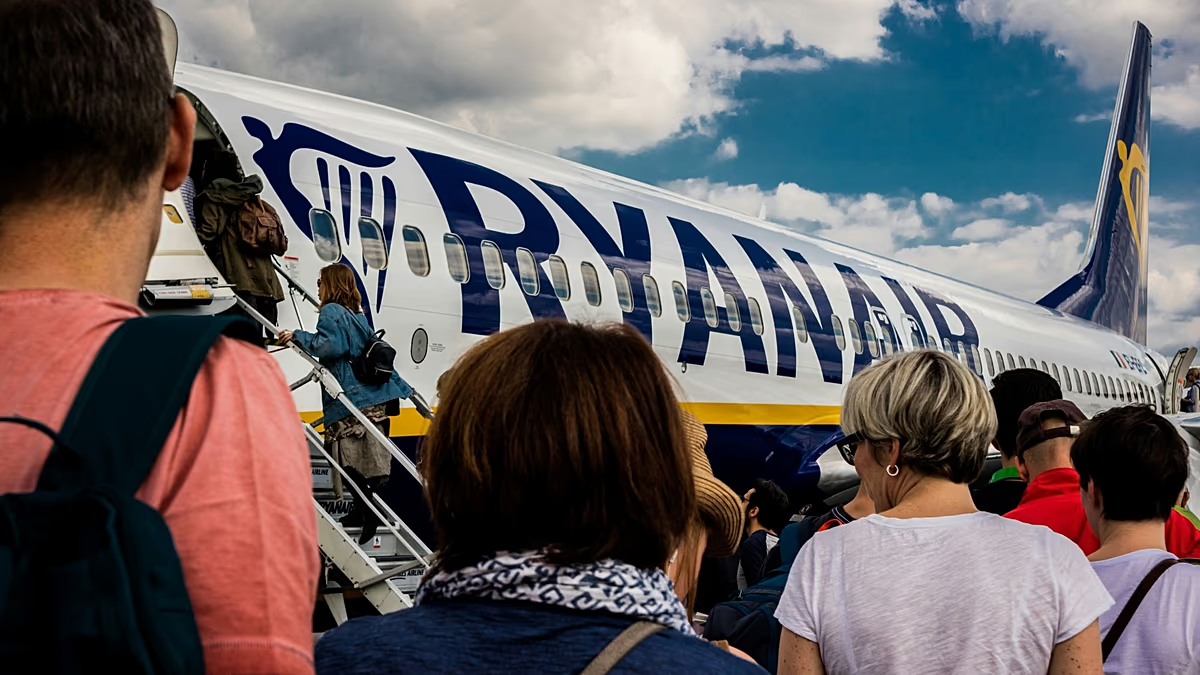



If you’re planning to fly Ryanair this winter with a checked bag, you’ll want to pay close attention to the clock. From 10 November, the airline is extending its bag drop deadline to 60 minutes before scheduled departure, meaning passengers who want to check luggage will have to arrive at the airport much earlier than they might be used to. Until now, Ryanair allowed travelers using its airport bag drop service to check their bags as late as 40 minutes before takeoff. That 20-minute difference may not seem like a lot, but in the busy, unpredictable environment of a modern airport, it can be the difference between catching your flight with ease and being stuck at the check-in desk watching the minutes tick away. The new rule applies at every airport Ryanair operates from, so there’s no exception if you’re flying from Dublin, Marseille, Berlin, Athens, Milan, Barcelona, or anywhere else in the airline’s vast network. It’s a clear signal that Ryanair, long known for its no-frills, get-you-there-cheaply approach, is putting a greater emphasis on punctuality and smooth boarding — even if it means asking passengers to sacrifice a little extra time before their journey begins.
For travelers, the practical impact is straightforward: if you plan to check a bag, you need to build more time into your airport arrival. The 60-minute rule means the bag drop desk will close a full hour before the flight is scheduled to leave, not when boarding begins, so you need to be there even earlier if you want to avoid a stressful rush. That means checking in online beforehand, printing or downloading your boarding pass, and getting to the airport with enough time to find the bag drop area, wait in line, and hand over your luggage before the cutoff. Ryanair’s advice is to arrive in good time, and for good reason: airport queues can be unpredictable, especially during busy travel periods, holidays, or early morning waves of flights. The extra 20 minutes could be the difference between grabbing a coffee and relaxing at your gate versus sprinting through security with your shoes half off. For the 80% of Ryanair passengers who only travel with cabin bags, nothing changes — they can still head straight to security and gate. But for the one in five who checks a bag, this is a meaningful shift in how early you need to be at the airport. If you’re used to cutting it close, this might be the push you need to change your habits. Set your alarm, plan your route, and remember: the bag drop closes 60 minutes before departure, not 40, not 20, not “I’ll just make it.”
The airline first announced this change back in April, and it’s not coming out of nowhere. Ryanair says the decision is designed to give customers more time to clear airport security and passport control queues before they reach their departure gate. In an era where airports are often crowded, understaffed, and subject to unexpected delays, a little extra buffer can go a long way. Ryanair’s Chief Marketing Officer, Dara Brady, explained the reasoning behind the move, saying: “This small change will give the 20% of Ryanair passengers who check in a bag, more time to clear airport security and passport control queues and get to their departure gate before boarding begins, particularly during busy travel periods when airport queues can be longer.” He also reminded passengers to use airport bag drop services and to arrive at the airport in good time, ensuring they have checked in and dropped their bags before the desk closes. It’s a practical, if somewhat inconvenient, change that acknowledges a simple truth: airports have become slower, more complicated places than they used to be. Security checks are more thorough, passport control can be backed up, and gates can be far from the main terminal. For Ryanair, which operates quick turnarounds and tight schedules, getting passengers to the gate on time is essential. For passengers, the change is a reminder that air travel requires patience and planning, especially if you’re checking luggage. It might feel like a hassle, but in the long run, a little extra time at the start of your journey can save you from a much bigger headache later.
But there’s more happening at Ryanair than just a change to bag drop times. Last week, the airline’s CEO, Michael O’Leary, made headlines with a much more dramatic prediction: he believes Europe is about to see the biggest rise in airfare in history over the next 12 months. In an interview with Euronews, O’Leary warned that airlines are largely unhedged against higher jet fuel prices from April 2027, meaning they haven’t locked in lower fuel costs in advance. When fuel prices rise, airlines have to pass those costs onto passengers, and O’Leary suggests the increase could be as much as 20%. That’s not a small bump; it’s a significant jump that could affect millions of travelers across the continent. For anyone who has enjoyed the era of ultra-cheap flights, this is a sobering thought. A €40 round-trip ticket could suddenly cost €48 or more, and for families booking multiple seats, the extra expense adds up quickly. O’Leary is known for his blunt and often controversial statements, but this one is grounded in basic economics: fuel is one of the biggest operating costs for any airline, and when it spikes, ticket prices follow. The fact that he’s predicting the biggest rise in history suggests that the coming months could be turbulent for the travel industry, not just in terms of weather, but in terms of wallets and budgets.
The ripple effects could be even more significant. O’Leary also predicted that there will be fewer seats available as a result of airline bankruptcies and takeovers following the fuel crisis. If airlines go out of business or are absorbed by larger carriers, competition shrinks, routes disappear, and prices rise even further. This is a familiar pattern in aviation: when fuel costs soar, weaker airlines struggle, and consolidation follows. For passengers, that means less choice, fewer direct flights, and potentially higher fares across the board. Ryanair itself has already taken action in response to rising costs and government policies. The airline announced it would be cutting the number of routes to Belgium as a result of the country’s plans to increase its aviation tax from €2 to €7 in January 2027. That may not sound like a huge amount, but for a budget airline operating on razor-thin margins, a 250% tax increase can make routes unprofitable. Ryanair’s response is a clear signal that it won’t simply absorb higher costs; it will adjust its network, drop routes, and focus on markets where flying remains affordable. For passengers in Belgium, this means fewer options and likely higher fares on the routes that remain. It’s also a warning to other governments: tax airlines too heavily, and they’ll take their planes elsewhere. The combination of fuel prices, taxes, and potential bankruptcies paints a challenging picture for European aviation in the near future.
In the midst of all this change, Ryanair remains Europe’s biggest airline, with bases across the continent and a massive network that connects dozens of cities. Its headquarters are in Dublin, but its reach extends far beyond Ireland, with major operations in Marseille, Berlin, Athens, Milan, Barcelona, and many other airports. That scale gives it a certain resilience, but it also means its decisions affect millions of travelers. The bag drop change, the route cuts, and the fare predictions are all part of a broader trend: flying is getting more complex, more expensive, and more demanding of passengers’ time and flexibility. For now, the most immediate thing to remember is the new 60-minute bag drop rule. If you’re checking a bag, give yourself plenty of time. Arrive early, check in online, and don’t assume you can breeze in at the last minute. The extra time might feel inconvenient, but it’s a small price to pay for peace of mind. As for the predicted fare increases, they haven’t happened yet, but the signs are there. Fuel prices, taxes, and airline consolidation are all moving in a direction that suggests cheaper flights may become harder to find. That doesn’t mean you should cancel your travel plans — it just means you should plan ahead, budget a little more, and be flexible. Air travel has always been subject to change, and Ryanair’s latest announcements are a reminder that the only constant is uncertainty. So whether you’re flying next week or next year, keep these changes in mind. Give yourself time, watch your costs, and remember that the journey begins long before you board the plane — sometimes, it begins with a bag drop counter closing 60 minutes before departure. Safe travels.