


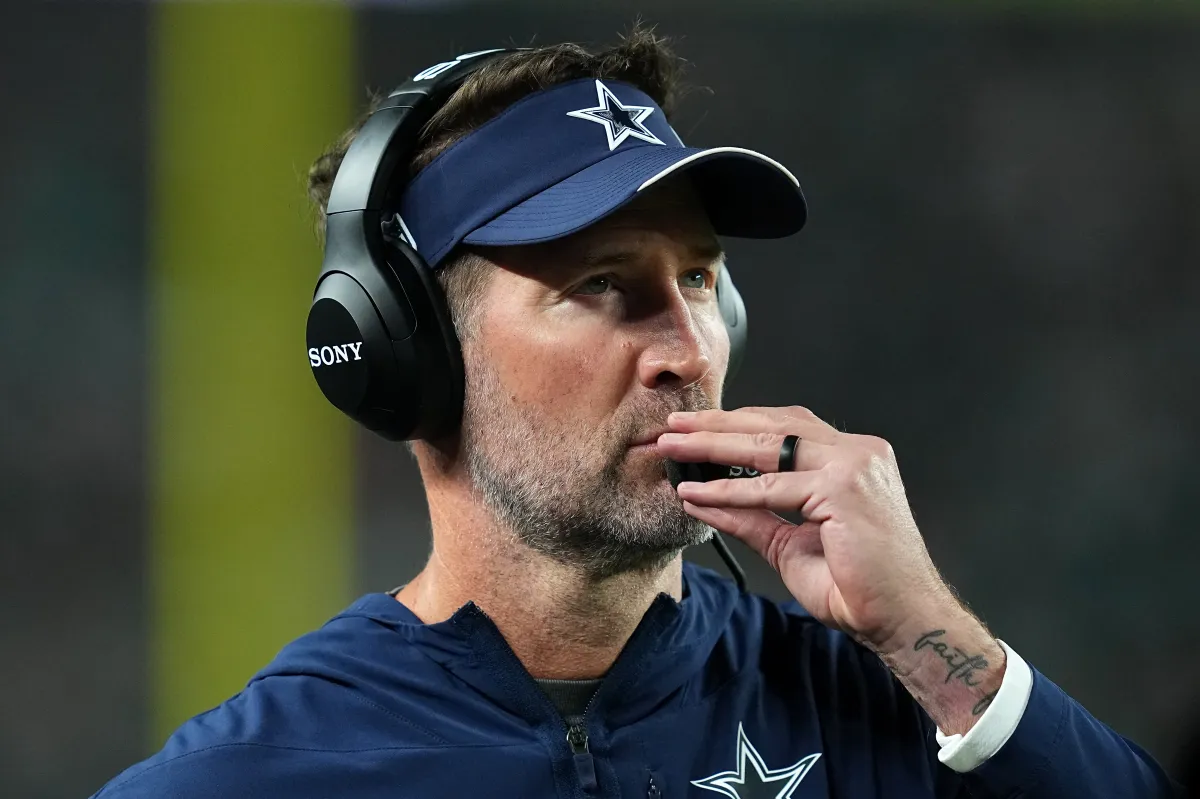
There was something in the air at Lincoln Financial Field on Monday night that went beyond the usual electricity of a prime-time game. The Dallas Cowboys walked into Philadelphia with their 2026 season teetering in the direction of becoming a disappointment, and they left with a divisional win that felt like a deep breath after a long exhale. Beating the Eagles on their own turf is never easy, and in a rivalry as bitter and familiar as this one, the emotion tends to bleed into every corner of the stadium, from the first snap to the final whistle. For Dallas, this was a statement that the season wasn’t slipping away. For head coach Brian Schottenheimer, it was a reminder that his team could still play to the standard he believes they’re capable of reaching. After the game, the hallways of the stadium buzzed with the usual post-victory chatter, players hugging, staff members exhaling, and reporters hurrying to piece together their coverage. The locker room likely smelled of sweat, grass, and relief. But one of the most revealing moments of the night did not happen on a field-goal attempt or a critical third-down conversion. It happened at a podium in the press conference room, where Schottenheimer walked in carrying all the intensity of a man who had just fought a war and was still not ready to put the armor down.
Schottenheimer’s postgame press conference lasted just over four minutes. For context, most postgame press conferences in the NFL run somewhere between ten and fifteen minutes. Coaches typically use that time to talk through game-winning drives, injuries, turning points, and the effort of their players. They offer gratitude to the fans, praise to the opposing side, and enough clichés to fill a highlight reel. Monday night was not that. The Dallas coach gave terse, deliberate, and short responses to the pool of reporters in attendance, which made it abundantly clear that his mind was still locked on the game itself. He wasn’t being impolite exactly, but he wasn’t there to entertain. Every answer seemed measured, as if the words themselves were a part of his broader mission to keep everyone focused on what mattered. The brevity was so noticeable that it created a story of its own. In a league where every gesture is analyzed and every sentence is replayed, a four-minute press conference is a quiet act of defiance. It suggested a coach who had no interest in theater, no desire to give an inch to outside noise, and no patience for being pulled out of the emotional space he had built around his team all week.
When Schottenheimer spoke to reporters again on Wednesday, the question was inevitable. Did anything specific get written about him, said about him, or thrown his way that caused that unusually short tone with the media? It was a fair question, because coaches are human too, and the scrutiny of a Dallas Cowboys season can weigh on anyone. But Schottenheimer was ready with an honest answer. “No, I’ll be honest. I really do a good job of blocking you guys out,” he said, according to Jon Machota of The Athletic. He went on to explain that the moment was simply too big for anything else. The Cowboys needed that game, he needed that game as a coach, and the entire football team was motivated to prove something. He described it as an intense game against a real rival, and in those moments, the outside world disappears. He also reminded everyone that criticism is part of the business. He said he gets paid to deal with it, and that it never plays a role in how he approaches his job. Then he added a line that revealed a lot about who he is: “Remember, you’re talking to a guy that grew up for 25 years in a household with a head coach in the NFL.” In other words, he was raised inside the reality of football’s grind. The highs and lows, the praise and the blame, the chaos and the clarity, none of it is new to him.
That last detail matters more than it might seem at first. Brian Schottenheimer is the son of Marty Schottenheimer, one of the most respected coaches in football history, a man who led teams with discipline, fire, and an unshakable belief in fundamentals. Growing up in that household meant watching a father live through the enormous pressure of professional football every single day. It meant understanding that a coach’s job is not to please everyone, but to make the team the best version of itself. It meant learning that the media, the criticism, the endless questions, and the constant second-guessing are all part of the background noise that cannot be allowed to affect the mission. So when Brian Schottenheimer sat at that podium on Monday night with his answers short and his focus still aimed at the win, he wasn’t being mysterious or petty. He was being exactly what his upbringing made him: a football coach who knows that the only thing that matters is the performance on the field. His brevity was not a sign of anger at the reporters in front of him. It was a sign of a man who had poured every ounce of his energy into preparing his team to beat a rival and was not ready to start spreading that energy somewhere else. He was still in the game, even as the clock had long since hit zero.
The bigger picture is what makes Schottenheimer’s response so compelling. The Dallas Cowboys are not just any NFL team. They are a franchise that lives under a microscope, where every result is magnified, every mistake is dissected, and every head coach has to deal with expectations that can feel impossible. The 2026 season had already given the team plenty to wrestle with, and Monday’s game was more than just another spot on the schedule. It was an opportunity to reset, to remind themselves that they are capable of beating good teams in difficult environments. Schottenheimer knows the standard he expects from his players because he sees the potential in them. He knows what they can do when they are focused, motivated, and not distracted by anything outside the lines. That is why he was so proud of his group after the win. It wasn’t just about the playoff implications or the divisional standings, although those matter. It was about proving that the team could block out the noise just the way he claims to. His postgame presser, in its own strange way, was a small reflection of the discipline he wants his team to demonstrate: control what you can control, don’t get caught up in the chatter, and keep moving forward.
Now the focus shifts, because in the NFL there is never time to savor a victory for long. The Cowboys have a Week 8 matchup with the Arizona Cardinals coming up on Sunday, and Schottenheimer’s attention has almost certainly already turned in that direction. A win against Philadelphia means nothing if it is followed by a flat performance the following week. That is the nature of football and the nature of coaching at this level. Every week brings a new challenge, a new opponent, and a new opportunity to prove that the previous result was not a fluke. Schottenheimer’s human side is visible in how carefully he chooses his battles. He did not hesitate to be brief when he felt it was necessary, and he did not hesitate to explain himself honestly when asked a few days later. He is not a man trying to create a persona. He is a coach trying to win football games while staying true to the lessons he learned growing up in the Schottenheimer household. For fans of the Cowboys, that is something to feel good about. It means their head coach is not easily rattled. It means he understands that the criticism will come and go, but the connection between a coach and his team is built on stability, focus, and trust. Monday night’s four-minute press conference did not tell the whole story of the season. But it did reveal something honest: Brian Schottenheimer is all in on his team, and he expects them to be all in right alongside him.