


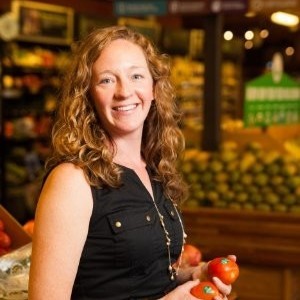
It was a quiet but significant milestone in the world of agricultural technology: Ganaz, a Seattle-based startup that built its name by bringing modern digital tools to farmworkers and the employers who depend on them, has been acquired by Beacon Holdings. Hannah Freeman, the company’s co-founder and CEO, shared the news on LinkedIn on a Wednesday afternoon, writing with a mix of pride and tenderness that the public benefit corporation “is in great hands” as Beacon “builds momentum for our next exciting season.” The tone of her message suggested not corporate celebration but something more personal: an ending, a transition, and a chance to step back from a mission that has consumed her years and heart. She did not say it in direct terms, but the words she chose made it clear that this was not just a business deal to her — it was the culmination of a deeply human story, one rooted in the dignity of workers who often go unseen in America’s food system. The financial terms were not disclosed, but the news marks the next chapter for a company that has always measured its success in more than profit.
Ganaz was founded in 2017 with a deceptively simple problem at its center: farmworkers are among the most essential workers on earth, yet they frequently lack access to the most basic financial and workplace tools. Many are unbanked, meaning they live and labor in a cash-only world where cashing a paycheck costs money and sending money home to family in another country can be both expensive and complicated. Freeman and her team saw an opportunity to fix that by building a digital platform that agricultural employers actually love to use — one that handles employee onboarding, training, communication, and analytics, all in one place. But the signature piece was a Mastercard payroll card that gives workers a secure way to receive their wages without being forced into predatory check-cashing services or losing hard-earned money to high remittance fees. For employers, the system meant less paperwork, fewer errors, and more time saved. For workers, it meant more of their money staying in their own pockets, and a bridge into the digital banking system that most of us take for granted. In that way, Ganaz was never just a tech company. It was a fairness project disguised as a software startup, a way of using innovation to rebalance an uneven world.
The company’s growth reflected both the need for its services and the depth of its vision. By the time it was recognized with GeekWire’s 2023 Geeks Give Back Award, Ganaz was serving more than 250,000 agricultural workers across the United States and Mexico, as well as 100 employers who had come to rely on its tools. Freeman had made the mission personal, saying at the time: “We founded Ganaz to make life better for farm workers, and we do that by building technology that agricultural employers love and can’t live without. We build our tools to help both workers and employers prosper, and that kicks off a virtuous cycle that helps agricultural communities prosper as well.” That philosophy was more than a nice soundbite; it informed the design of every product feature, the character of every partnership, and the company’s very structure as a public benefit corporation — a legal commitment to not only shareholders, but also to the broader public good. Over the years, Ganaz raised more than $10 million in funding, with its last disclosed round in June 2021 valuing the company at around $26 million. To put that in context, that is a modest valuation for the tech world, but a wildly meaningful one for a company focused on one of the least celebrated sectors of the economy.
Now, with the acquisition, Ganaz enters the fold of Beacon Holdings. Based in Toronto, Beacon is not a typical tech conglomerate. It specializes in buying software businesses that serve traditional industries — those not-so-glamorous corners of the economy like construction, manufacturing, and food production — and then providing those businesses with shared technology resources and operational support so they can keep doing what they do best. Beacon had announced in September that its portfolio already included 45 software businesses, and the addition of Ganaz suggests the company sees value in the agricultural niche, not just as a market opportunity but as a sector worth modernizing. Freeman did not specify in her post whether Ganaz would remain a subsidiary or whether its employees would fold into Beacon’s broader operations. At the time of the announcement, Ganaz had about 17 employees, according to LinkedIn — a small but tight-knit team that had apparently accomplished something extraordinarily difficult: building a mission-driven company that could stand on its own financial legs while never losing sight of its purpose. The acquisition offers the kind of runway that startups dream of, a chance to scale while carrying forward the important work that began with a vision in Seattle.
But the heart of the story is Freeman’s own voice. In her note, she spoke not of exits or returns, but of stepping away to “catch my breath, spend more time with my daughter, and dream about what’s next.” There is an undeniable humanness in those words, especially in a startup culture that often glorifies nonstop hustle and constant grinding. Freeman built a company that gave farmworkers more control over their wages; she also gave herself the grace to pause at the end of a chapter. Her admission that she will miss “our team & customers” rings true because it is a relationship that was forged with intentionality, not just transactional efficiency. She closes by saying she’ll be “cheering you on from the sidelines,” and you can almost hear the relief and love in that phrase. It is the language of a founder who started something with meaning, watched it take root, and trusted it to the next set of hands. There is a quiet heroism in that kind of exit: not clinging to power, not forcing a certain outcome, but recognizing that the mission matters more than the founder. Her audience is not just investors and LinkedIn followers; it’s the field workers, the foremen, the payroll managers, and the invisible labor force that keeps dinner plates full.
The bigger story here is about the state of agriculture itself. For all our technological progress, farming remains one of the most vulnerable and challenging industries in the world. Workers move with the seasons, often across borders, often without banking access, sometimes in isolated rural places where digital connectivity and financial services are scarce. Platforms like Ganaz are not luxuries; they are lifelines. The acquisition by Beacon could mean that those tools become even more widespread, more stable, and more deeply integrated into the daily operations of agricultural businesses. It could also mean that innovation continues where it matters most — not in the flashy consumer tech world, but in the quiet fields and greenhouses and packing sheds that feed billions of people. As the industry continues to face labor shortages, supply chain pressures, and extreme weather events, technology that helps workers and employers work better together is no longer optional. It is essential. For now, GeekWire has reached out to Freeman for more details about the future of the Ganaz team and its operations, and she has not yet responded. But whether she answers or not, the legacy is clear: a small Seattle startup, founded by a woman who dared to care about farmworkers as much as about payroll systems, has taken its place in a larger movement to make agriculture more equitable, more efficient, and more human. And the season ahead, as she said, will be a new one — for the company, for its new owner, and for her own life, rested and maybe a bit more spacious, cheering from the sidelines with joy.