


When Anthropic finally opened its books to the public this week, the document read less like a standard IPO prospectus and more like a gas receipt for the entire AI gold rush. The S-1 filing, submitted Monday to the SEC, lays out more than $750 billion in computing deals — a staggering web of firm commitments and projected future spending that reveals exactly who stands to profit as the company races to build ever-larger AI models. Anthropic, the startup behind the Claude family of AI assistants, plans to list on the Nasdaq under the ticker symbol ANT, and the filing paints a vivid picture of an industry where the real winners may not be the AI companies themselves, but the infrastructure giants supplying the chips, data centers, and cloud capacity that make modern AI possible. The Seattle region’s tech titans, Amazon and Microsoft, have poured billions into Anthropic and secured marquee cloud contracts from the company. But the paperwork makes one thing clear: they are not at the top of the pay scale. Instead, Google, chipmaker Broadcom, and Elon Musk’s SpaceX lead the queue for Anthropic’s computing dollars, a striking twist for two of the most powerful companies in the Pacific Northwest tech economy.
The single largest technical winner in Anthropic’s computing plans is Google, and more specifically, Google’s custom-designed AI chips, known as tensor processing units, or TPUs. According to the filing, Anthropic has lined up roughly $400 billion in computing capacity over the next seven years, and the vast majority of that capacity is built on Google’s chip architecture. That total includes $114.5 billion paid directly to Google through July 2033, plus $161.2 billion in equipment leases arranged through Broadcom, and an estimated $125 billion to $150 billion in additional TPU capacity expected between 2028 and 2031. Broadcom’s piece is the largest single arrangement in the entire filing: five-year leases that provide TPU-based hardware for data centers operated by other companies on Anthropic’s behalf. It is a complex structure, but the bottom line is simple: Google designed the chips, Broadcom helps manufacture and lease the hardware, and Anthropic is betting that TPUs will remain competitive with Nvidia’s market-leading GPUs for years to come. Then there is SpaceX — Elon Musk’s space and satellite company, which now houses his AI venture formerly known as xAI. Anthropic agreed to spend up to $120.5 billion through 2029 for computing capacity from SpaceX’s AI subsidiary, a rival lab that Musk has positioned as a direct competitor to OpenAI and Anthropic. The arrangement is breathtaking in scale: payments will reach about $3.1 billion a month once all the capacity is delivered, which Anthropic expects in December, and the agreements run into 2029, though either side can cancel with 90 days’ notice after early 2027. In other words, one AI company is paying another AI company’s parent a mountain of cash for the privilege of renting compute, while simultaneously competing for the same customers and talent.
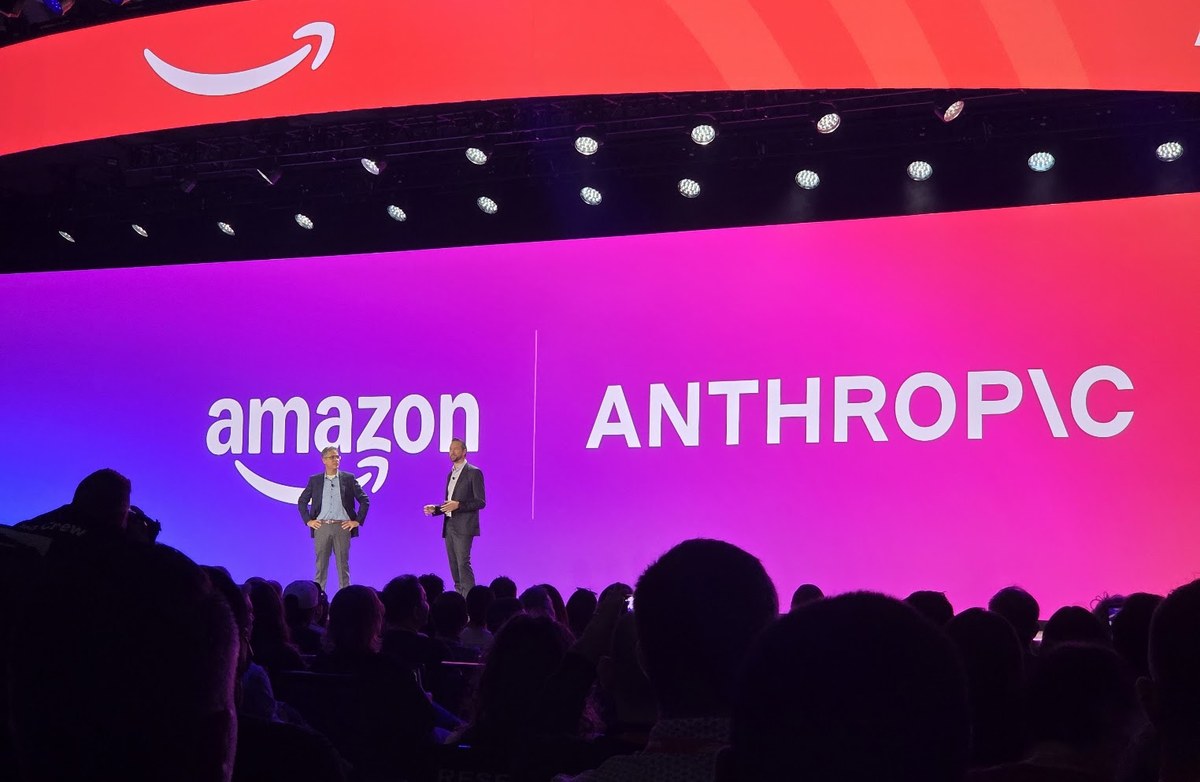
Amazon and Microsoft remain deeply embedded in Anthropic’s story, but their roles are more complicated than their early investments might suggest. Amazon committed in April to spend at least $110 billion with Amazon Web Services over ten years, through April 2036, and AWS Trainium chips are one of four chip families Anthropic uses to train and run its models. That is a huge commitment, but it is still less than Google’s direct TPU payments and far less than the combined Google-Broadcom-SpaceX juggernaut. Microsoft’s slice is smaller still, reflecting its later start after years of being closely aligned with OpenAI. Anthropic has committed to spend at least $44.9 billion on Microsoft’s Azure cloud from November 2026 through May 2033, up from the $30 billion Azure deal announced in November 2025. That deal has been amended twice, most recently this month, and the partnership has deepened in other ways: Claude is now built into Microsoft 365, and former Microsoft CFO Chris Liddell joined Anthropic’s board in February. Below the giants, two smaller infrastructure providers have signed deals in the same range as Microsoft. Anthropic agreed to spend up to about $44.6 billion with Nscale, a UK-based AI infrastructure company, and about $41.3 billion with Lambda, a GPU cloud provider, both for capacity powered by Nvidia chips. Taken together, these commitments paint a picture of a company that is not simply renting servers on demand, but assembling a sprawling, multi-cloud, multi-chip empire to protect itself against supply shortages and locked-in dependence on any single vendor.
But will Anthropic actually need all that computing power? The filing offers a clear warning: most of these commitments cannot be canceled, and the deals with Microsoft, Google, and Amazon require Anthropic to pay “regardless of actual usage.” That means the company is making enormous fixed payments, month after month, for years into the future, based on the assumption that its customer demand will keep expanding to fill the available compute. So far, the numbers support that assumption. Anthropic’s revenue hit $11.6 billion in the second quarter, up from just $787 million a year earlier, and the company posted its first operating profit of $974 million. That is a remarkable surge for a company that was once viewed as a scrappy underdog to OpenAI. The net loss, however, was a dizzying $66.3 billion, though the filing says that loss is mostly the result of accounting charges tied to the company’s soaring valuation — a paper number driven by the rising value of its own stock, not by cash burning in normal operations. Anthropic says it has “consistently operated in a compute-constrained environment where customer demand exceeds available compute,” which is a polite way of saying it cannot buy chips and data-center capacity fast enough. Still, the mismatch between current spending and future commitments is stark. In the second quarter, Anthropic spent less than $2 billion a month on compute and infrastructure. The SpaceX deal alone is expected to cost about $3.1 billion a month at full capacity. That is a leap of faith, not just in AI adoption, but in Anthropic’s ability to keep winning enterprise customers and launch products that monetize Claude before all those bills come due.
The computing contracts are only part of the story. The filing also reveals the paper fortunes at stake for Anthropic’s founders and its largest corporate investors. Amazon’s stake is the most visible: the Seattle giant valued its Anthropic holding at $190.4 billion as of June 30 in its quarterly SEC filing. That includes convertible notes with $6.2 billion in principal that Amazon valued at $97.9 billion — a stunning return on paper, driven by Anthropic’s rising valuation. Those notes would convert into stock, subject to a 12% ownership cap that Amazon can waive, meaning Amazon has the option to maintain a much larger stake if it wants. Amazon is scheduled to report third-quarter results Thursday, its first earnings report since Anthropic’s filing, and it has updated the value of its Anthropic holdings in each of its quarterly filings this year, so a fresh number could come this week. Google, meanwhile, put $10 billion into Anthropic’s latest funding round and can invest up to $20 billion more under a March financing deal. The filing does not give ownership percentages for Amazon, Google, or Microsoft — it only says that all three have made “significant equity investments” — but the market value of those holdings is clearly massive. For the founders, the numbers are almost absurd. Anthropic’s seven co-founders hold roughly 230 million to 245 million shares each, worth about $14 billion apiece at the latest private funding price. The company also gave its own Public Benefit Fund about 847 million shares, or 5% of fully diluted stock as of June 30, worth about $50 billion at that price. That fund is designed to use Anthropic’s profits to serve the public good, but even a charitable arm of this company is worth more than most Fortune 500 companies.
The final chapter is the IPO itself, and the timeline is suddenly very short. Anthropic could begin formally marketing its IPO to investors as soon as the week of November 9, according to Bloomberg, and it is aiming to go public the following week, according to the Wall Street Journal. The company expects the offering to match or beat the size of SpaceX’s IPO — which itself raised $75 billion in June, the largest IPO on record. If Anthropic succeeds, the listing will be a landmark moment not just for the company, but for the entire AI industry, crystallizing the enormous transfer of wealth from investors and customers into the hands of founders, employees, and infrastructure giants. The filing makes it clear that Anthropic is no longer a research lab with a friendly chatbot. It is a capital-hungry machine, consuming chips and data-center capacity at a pace that would have been unimaginable a decade ago, and it is willing to sign hundreds of billions of dollars in contracts to keep growing. The story of Anthropic’s IPO is thus not just a story about one company. It is a story about how the AI boom actually works: a core group of model builders, surrounded by an even larger circle of cloud providers, chip designers, and infrastructure financiers, all feeding one another in a high-stakes loop of spending, raising, and spending again. For the tech giants of Seattle, the IPO is a welcome payday, but for Google, Broadcom, and SpaceX, it is something larger — a guaranteed stream of revenue that does not depend on whether Anthropic ever turns a meaningful profit. The AI gold rush has many miners, but the people selling picks, shovels, and, most importantly, rent, may be the true billionaires of this era.