


1. The Magic of Halloween and the Money Behind It
There’s something truly magical about Halloween. It’s one of those rare nights when adults get permission to be kids again, and kids get permission to be whoever or whatever they want to be. You can be a superhero, a ghost, a beloved movie character, or something completely ridiculous, and no one bats an eye. The air gets crisp, the pumpkins glow from every porch, and for a few hours, the ordinary world feels a little bit enchanted. And let’s not forget the candy. Halloween is essentially a national celebration of sugar, imagination, and community, and millions of people look forward to it all year long. But all that fun comes with a real price tag. The National Retail Federation expects Americans to spend something like $13.5 billion on Halloween this year, which is even slightly more than last year. To put that number in perspective, think about this: about $4.1 billion of that is pure candy. That’s enough to fill an awful lot of jack-o’-lantern buckets, pillowcases, and plastic pumpkin pails. On a per-person basis, the average American shopper is expected to shell out about $115.14 for the holiday, and a whopping 96 percent of shoppers say they plan to buy sweets. That means nearly everyone you know is stocking up on bite-sized chocolates and fruity chews. It’s a massive, sugar-fueled economic event disguised as a fun night of dress-up. But behind all that candy and costume excitement, there’s a quiet question that every trick-or-treater has asked at some point: will my neighborhood actually deliver a good haul? It can feel like luck of the draw, but as it turns out, there’s a lot more going on beneath the surface. Some states are simply better built for trick-or-treating than others, and a new ranking from Spokeo digs into the data to show exactly which places are most likely to send you home with a bucket full of treats.
2. What Makes a Neighborhood Trick-or-Treat Friendly?
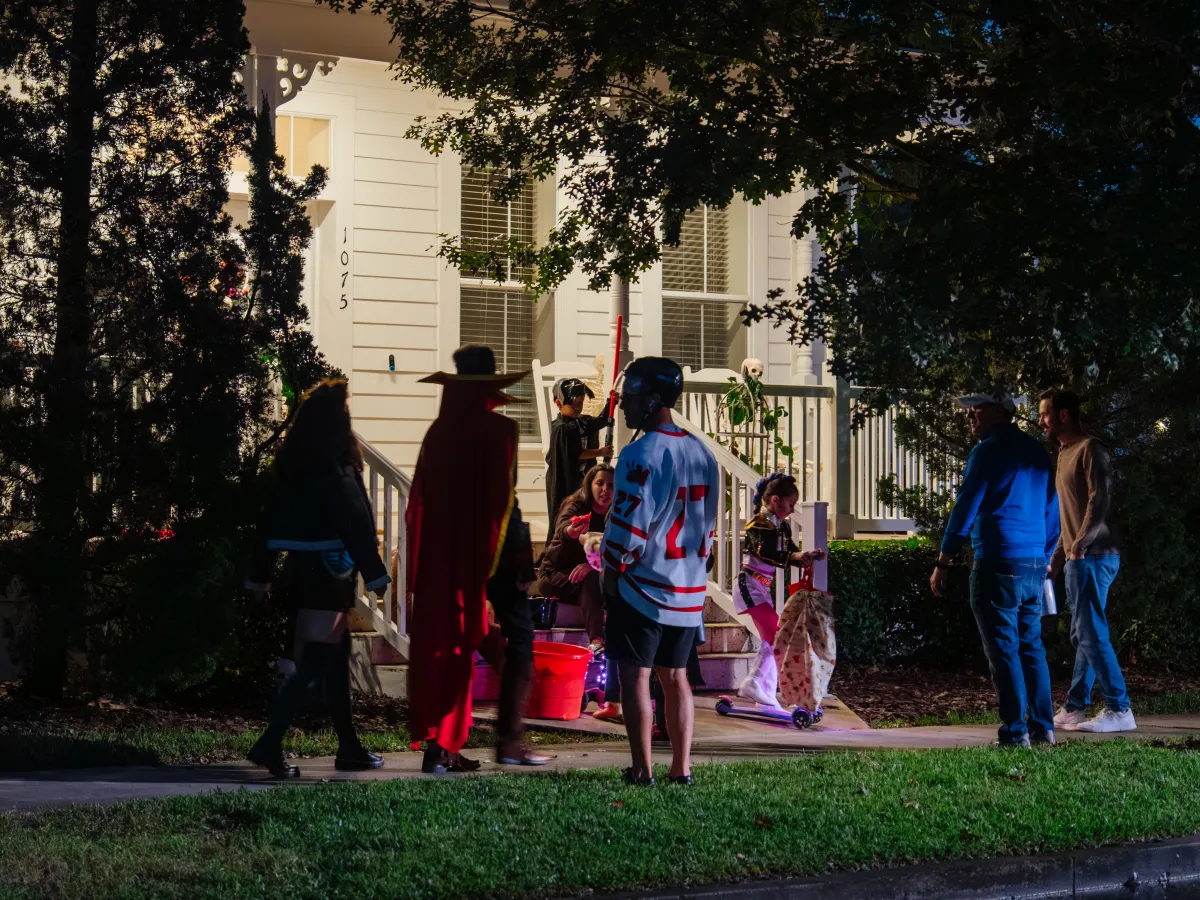
If you’ve ever wandered through a neighborhood on Halloween night, you know that not all streets are created equal. In some areas, it feels like every single house is handing out full-size candy bars, while in others, you might walk for blocks and see nothing but dark porches and empty driveways. It’s tempting to think this is just random chance, but there are actually a bunch of hidden factors at play. The most important thing to look for is a neighborhood with plenty of children. Kids are the driving force behind Halloween, after all. If a community is full of families with young ones, there’s a much better chance that the whole street is in the Halloween spirit. Dense neighborhoods matter too. When houses are packed closely together, trick-or-treaters can cover a ton of ground without getting exhausted, which means more doors knocked on and more candy collected. Think about it: a neighborhood with houses sitting right next to each other offers far more opportunities than a rural road where the next mailbox is half a mile away. The classic image of Halloween, the one from movies and memory, often includes a detached house with a front walkway, a glowing porch light, and a comfortable, safe distance from traffic. That kind of setup is the picturesque ideal for trick-or-treating. And then, of course, there’s the weather. Nobody wants to drag a princess gown through the rain or shiver in a superhero suit while the wind howls. Mild, dry weather is a huge blessing on October 31st. So when researchers at Spokeo set out to rank all fifty states on their trick-or-treat quality, they knew they needed to combine all these ingredients into one clear picture. They used data from the National Retail Federation, the Census Bureau, and the National Centers for Environmental Information to build an index that scores every state based on four main conditions. It’s a smart way to understand why some places are just naturally better suited for a successful Halloween night than others.
3. How the Index Was Built
The ranking isn’t just a random list thrown together by someone’s gut feeling. It’s actually a carefully designed index that takes four specific factors into account, each scored on a scale from zero to one hundred. The top states in each category score a perfect one hundred, and then all four scores are weighted and combined into a single aggregate number. The first factor is the percentage of households with children under eighteen. This makes perfect sense because kids are the whole engine behind trick-or-treating. The researchers used data from the Census Bureau’s 2020 to 2024 American Community Survey five-year estimates, specifically Table B11005, and they used percentages rather than raw numbers so that big states wouldn’t automatically win just because they have more people. The second factor is housing density in populated areas. This means the number of housing units per square mile, calculated for each census tract that actually has households, and then averaged out within each state. Having more doors within walking distance means more chances to score candy, and this measurement is limited to populated tracts so that empty wilderness or farmland doesn’t unfairly drag down a state’s score. The data for this came from Table B25001 and TIGER/Line tract geography data. The third factor is the share of single-family detached homes. There’s just something about a classic front door and a short walkway that feels right for Halloween. This was calculated by dividing the number of single-family detached housing units by the total number of housing units in each state, using Table B25024. Finally, the fourth factor is weather. This one is crucial because rain can absolutely ruin a Halloween night, and some states have a pretty rough track record in late October. The index used NOAA’s 1991 to 2020 daily climate normals for October 31st, combining the normal average temperature with the probability of rain. The goal was to find places where conditions are most likely to be pleasant, dry, and comfortable enough for kids to walk around in costumes and still enjoy themselves. All four factors work together to create a comprehensive look at where Halloween magic is most likely to happen.
4. The Top States for Halloween Hauls
So, which states came out on top? The heatmap is pretty revealing, and the results might surprise you. Utah took the number one spot, followed by Texas, Oklahoma, California, and Mississippi. Each of these states earned its place in the top five in a slightly different way. Utah, for example, has the highest share of households with children in the entire country, at an absolutely stunning 38 percent. That means nearly four out of every ten households in Utah likely have kids under eighteen running around, which is basically a recipe for a lively and candy-filled Halloween. Texas comes in close behind with about 35 percent of households containing children, so it’s no surprise that the Lone Star State ranks near the top. California earned its spot by performing well in three of the four categories. It has a solid population of children, high housing density in many areas, and weather that is often mild and pleasant in late October. Oklahoma, meanwhile, ranked second in the country for single-family housing, with about 73 percent of its housing units being detached homes, which fits the classic Halloween ideal beautifully. And Mississippi rounds out the top five thanks to its weather, which hovers close to a lovely 60-degree target, perfect for wearing a heavy costume without overheating or freezing. Idaho is an interesting case study too. It actually leads the entire nation in single-family housing at 74 percent and ranks fourth for households with children, but it just barely missed out on the top five. It’s a reminder that the final ranking is a mix of all the factors together, and a state can be amazing in one or two areas but still fall short when everything is combined. Still, if you live in one of these top states, there’s a good chance your Halloween night is filled with glowing porch lights, eager little trick-or-treaters, and more candy than you know what to do with.
5. What the Index Can’t See
Of course, no ranking system can ever perfectly capture the full experience of Halloween night, and the researchers behind this index would be the first to admit it. There are so many things that can’t be measured by census data or weather averages. For starters, the index doesn’t take into account how many households in a given neighborhood actually give out candy. You can have a densely packed street full of beautiful single-family homes, but if half the residents are away or simply not participating, the haul is going to be disappointing. It also doesn’t consider how safe a particular street feels, and that matters a lot for parents deciding whether to let their kids walk around after dark. Traffic patterns are another big factor. A neighborhood might look perfect on paper, but if it’s bordered by a busy road or has cars zooming through, it’s not going to be the ideal trick-or-treating destination. Then there’s the question of organized events. Some towns host trunk-or-treats in parking lots or community centers instead of traditional door-to-door trick-or-treating, and the index can’t account for those local traditions. It also can’t show the massive difference between living in a dense city like San Francisco and living in a sprawling suburb or a rural town in the same state. State-level figures naturally gloss over all that local variation. A state might rank in the middle overall, but still contain individual neighborhoods that are absolutely perfect for Halloween, just as a top-ranked state might have pockets where you’d be lucky to get any candy at all. That’s just the nature of trying to boil something as personal and community-driven as Halloween down into a single score. But even with those limitations, the four factors chosen for this index tell a surprisingly strong story about what makes a state likely to deliver a fun, memorable Halloween evening.
6. The Sweet Takeaway
So what should you take away from all this? If you live in a state like Utah or Texas, where kids are everywhere, or California, where homes are close together and the weather is usually temperate, you’re probably in a good position to bring home a serious stash. Areas with more children, closer doors, and drier weather really are a recipe for Halloween success. That’s just the natural combination that makes the night work. But if your state didn’t rank high on the list, please don’t despair. Halloween is about so much more than the final candy count. It’s about the joy of seeing your neighbors, the thrill of showing off a costume, the laughter of kids running from house to house, and the simple pleasure of being part of a community on one of the most imaginative nights of the year. And remember, Halloween spending is expected to top last year’s numbers, which means there will certainly be plenty of candy to go around no matter where you live. Even in a low-ranked state, you might find a neighborhood that defies the data and delivers a legendary haul. The index is a fun and fascinating way to understand the patterns behind the holiday, but it’s not the final word on your Halloween experience. So this year, whether your porch light is glowing or you’re out there with a costume and a pillowcase, take a moment to enjoy the magic. Talk to your neighbors, admire the creative decorations, and savor a piece of candy or two. Because in the end, Halloween isn’t just about the statistics or the spending. It’s about the feeling of being a kid again, even if only for one spooky and sweet night. And that’s something no ranking system can measure.