





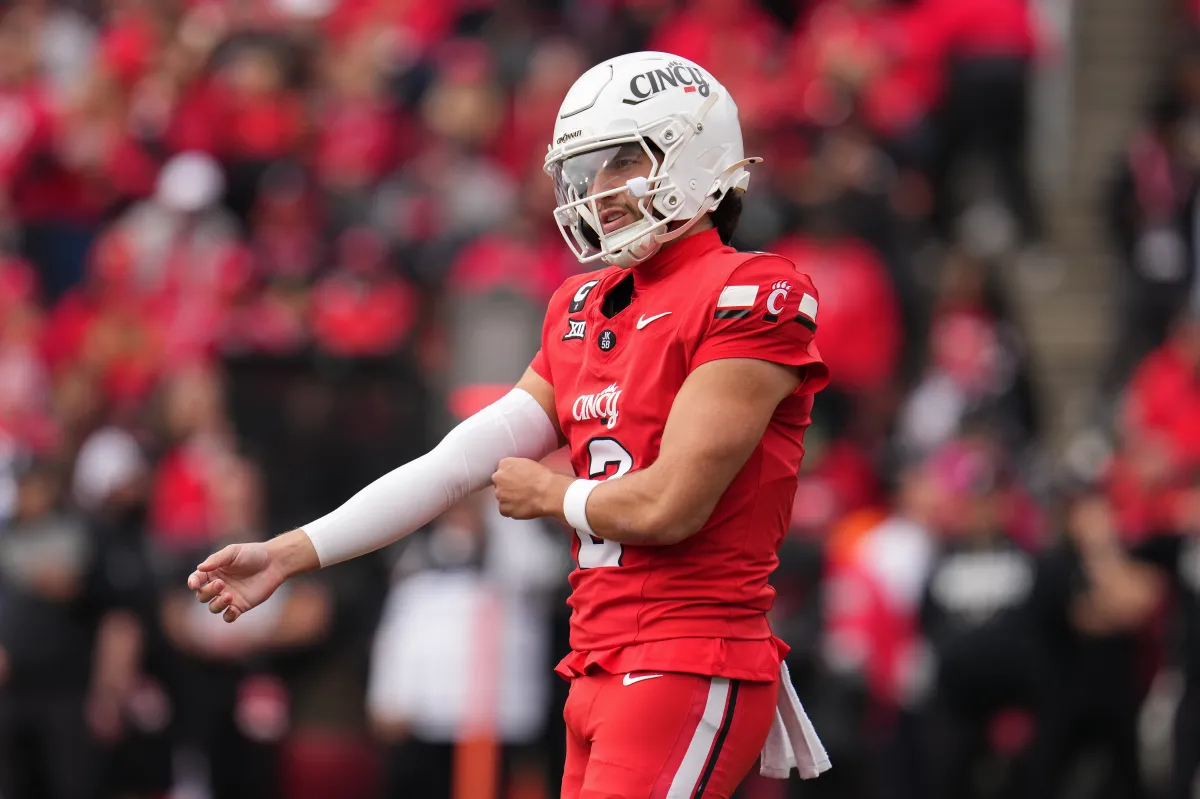
In the hyper-competitive and often unforgiving world of college athletics, few names have generated as much complex conversation recently as Brendan Sorsby. The twenty-two-year-old quarterback, who has worn the jerseys of prominent programs like Cincinnati and Texas Tech, currently finds himself at the center of a national media storm—not for a game-winning touchdown drive or an impending Heisman trophy campaign, but for a deeply human struggle that cost him his collegiate eligibility. Having recently admitted to a severe gambling addiction, Sorsby represents a tragic modern archetype: the immensely gifted young athlete whose personal demons collided head-on with the rigid rules of NCAA governance. Yet, despite being barred from playing on Saturdays, his football journey is far from over. Instead, his gaze is fixed on next month’s NFL supplemental draft, an avenue that could offer him a lifeline and a roster spot before training camps open, provided the league office approves his petition to enter. It is a high-stakes transition that highlights both the fragility of athletic success and the possibility of professional redemption.
To understand how Sorsby arrived at this pivotal intersection of disgrace and opportunity, one must look at his brief, turbulent tenure with the Indiana Hoosiers. It was during his early collegiate days in Bloomington that the young signal-caller succumbed to temptation, making the critical error of placing wagers on his own team. In the rapidly evolving landscape of college sports, where mobile betting applications are aggressively marketed directly to university-aged demographics, Sorsby fell into a destructive cycle that ultimately compromised his amateur standing. Rather than retreating into anonymity or offering defensive excuses, however, Sorsby chose a path of radical honesty. At the end of April, he publicly announced that he was stepping away from the game to check himself into a professional treatment facility specialized in combating gambling addiction. This level of transparency and accountability is exceedingly rare for an athlete under intense public scrutiny, signaling a mature realization that saving his life and preserving his mental health had to take precedence over protecting his immediate athletic reputation.
In a sport that frequently discards compromised players, Sorsby received an unexpected and powerful ally in Curt Cignetti, the current head coach of the Indiana Hoosiers. During a Friday appearance on the nationally syndicated “Rich Eisen Show,” Cignetti chose to build a bridge of compassion rather than distance himself from the scandal. Although Sorsby was only in the Indiana program for a mere week and a half after Cignetti was hired—and never actually played a snap under his direct supervision—the coach spoke of the young quarterback with profound respect and genuine affection. Cignetti described Sorsby as an “outstanding quarterback and a great kid,” emphasizing his belief that the young passer possesses all the physical tools necessary to succeed at the professional level. Crucially, Cignetti did not shy away from Sorsby’s personal battles, stating that with the right support system, the young athlete could absolutely overcome his addiction and evolve into a standout NFL player. This glowing endorsement did more than just boost Sorsby’s draft stock; it served as a compassionate reminder that a single mistake, no matter how severe, should not permanently define a young person’s entire future.
Cignetti’s empathetic perspective stands in stark contrast to the swift condemnation often voiced by fans and cynical front-office executives. The reality of Sorsby’s current situation is that his immediate NFL evaluation should not be focused solely on arm talent, pocket presence, or read-option mechanics; rather, it must center on identifying a franchise willing to prioritize his holistic rehabilitation. The team that ultimately calls Sorsby’s name must be prepared to offer a low-stakes, highly structured environment where he can continue his recovery away from the intense pressure of immediate expectations. For Sorsby to thrive, he needs an organization with a progressive approach to player wellness—one that views him as a human being in recovery first and a developmental asset second. By placing him in a stable environment surrounded by experienced clinical staff and veteran mentors, a franchise can insulate him from the external triggers of his addiction, allowing his undoubted athletic gifts to slowly and safely mature in the background.
Of course, the path to redemption is rarely free of consequence, and Sorsby must still pay a steep price for violating the fundamental competitive integrity of the sport. Betting on one’s own team is considered a cardinal sin in athletics, and the NFL’s historic disciplinary record suggests that a severe suspension is looming on the horizon for the rookie, potentially ranging from a six-game ban to an entire calendar year. The league has repeatedly demonstrated its commitment to punishing gambling infractions with absolute severity to protect the credibility of its games. A long list of professional athletes stands as a testament to this strict approach: players such as Josh Shaw in 2019, Calvin Ridley in 2022, and a massive wave in 2023 including Quintez Cephus, C.J. Moore, Demetrius Taylor, Eyioma Uwazurike, Shaka Toney, Isaiah Rodgers, and Rashod Berry were all handed devastating season-long suspensions. Meanwhile, other players like Jameson Williams, Stanley Berryhill, and Nicholas Petit-Frere were forced to sit out six games for lesser violations of the league’s strict policy. Sorsby will almost certainly have to serve a similar penance, entering the NFL under a cloud of suspension that will test his resolve even before he can participate in a regular-season practice.
Ultimately, Sorsby’s unfolding narrative is a compelling test case for how the modern sporting world navigates the delicate intersection of addiction, accountability, and forgiveness. In an era where sports betting has become fully integrated into the media and entertainment fabric of the game, stories like Sorsby’s serve as a cautionary tale about the human collateral of this multi-billion-dollar industry. Yet, the overwhelming sentiment surrounding the young quarterback remains one of cautious optimism. If he can utilize his time in treatment, embrace the stern disciplinary measures heading his way, and find a professional home that values his humanity as much as his physical talent, his journey could become an inspiring blueprint for recovery. Brendan Sorsby’s career is undoubtedly paused, but with the support of advocates like Coach Cignetti and the courage to face his vulnerabilities head-on, he has a genuine opportunity to write a triumphant second act that transcends the football field.