






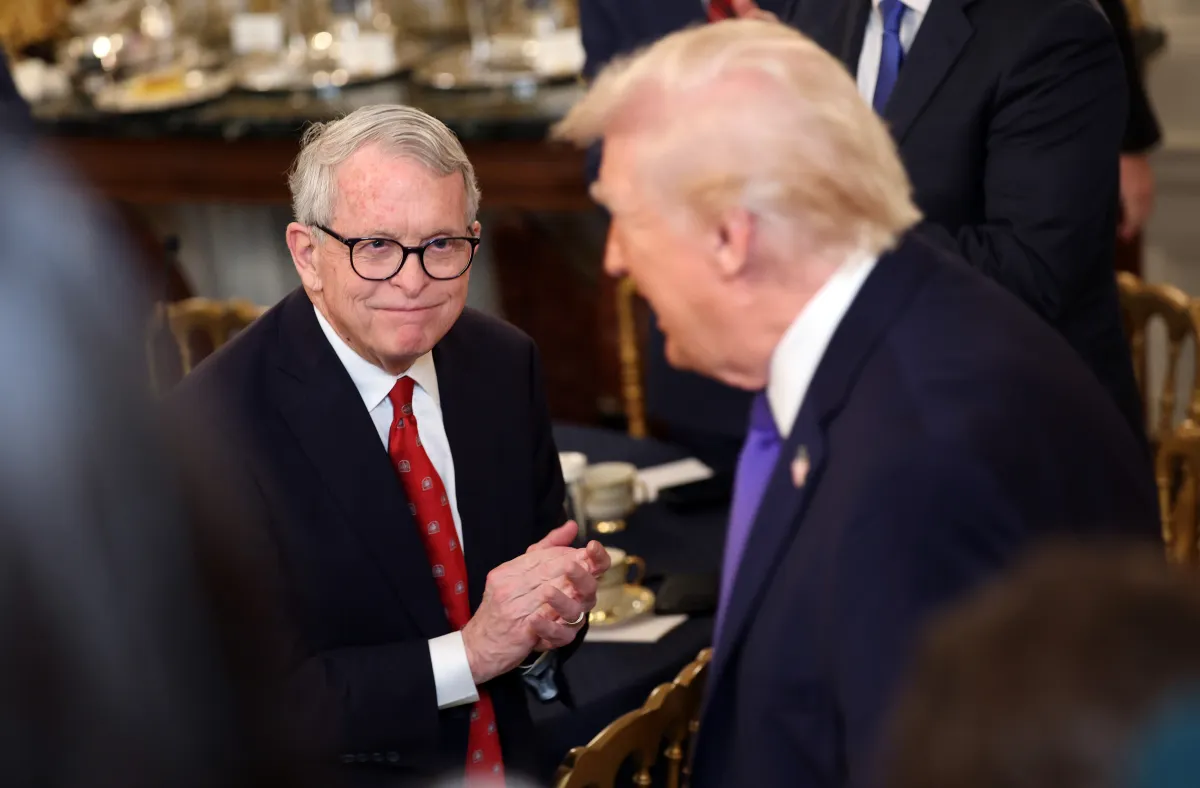
For decades, the quiet Rust Belt city of Springfield, Ohio, wrestled with the slow, painful sting of deindustrialization, showing the familiar scars of hollowed-out neighborhoods, shuttered storefronts, and a dwindling population. Yet, in recent years, a quiet and remarkable renaissance began to unfold as thousands of Haitian migrants, arriving under the federal Temporary Protected Status (TPS) program, breathed new life into the community by moving into vacant homes, opening vibrant local businesses, and filling critical labor shortages in local factories. This fragile but successful experiment in civic revitalization found an unexpected and powerful defender on Sunday when Ohio’s Republican Governor, Mike DeWine, stepped onto the national stage during CNN’s State of the Union. Breaking sharply with the hardline immigration rhetoric of the incoming Trump administration, DeWine delivered a poignant, clear-eyed warning that plans to deport these individuals would be a devastating and short-sighted “mistake.” For DeWine, this issue rises far above the abstract political posturing of Washington; it is a matter of basic human decency and local survival. He spoke passionately about neighbors who wake up every single day to work, support their families, pay taxes, and lovingly restore historic homes. To suddenly and forcibly uproot these families, the governor argued, would not only destroy the lives of people who have built deep roots in American soil but would also inflict self-inflicted economic wounds on the very communities that have finally begun to thrive once more.
The debate over the future of these families is punctuated by the chaotic and terrifying reality currently unfolding in Haiti—a crisis so severe that any attempt at mass repatriation is viewed by human rights advocates as a potential death sentence. The U.S. State Department’s travel advisory for Haiti remains at a bleak and uncompromising “Level 4: Do Not Travel,” placing the country on par with active, war-ravaged conflict zones. Port-au-Prince, the nation’s capital, is currently paralyzed by absolute lawlessness, with heavily armed gangs controlling vital supply lines, hospitals, and critical infrastructure, while daily life has descended into a desperate struggle against violence and food insecurity. Governor DeWine highlighted this reality by pointing out that it is currently impossible to even fly into the capital city due to severe airline restrictions sparked by routine gang gunfire targeting commercial planes. This extreme instability is precisely why the TPS program was created by a bipartisan Congress in 1990; it serves as a vital humanitarian safety valve designed to protect foreign nationals in the United States when their home countries are ravaged by armed conflict, environmental disasters, or extraordinary crises. For many Haitians, their journey to the U.S. began after the catastrophic 2010 earthquake, and subsequent extensions of their status have been a direct response to Haiti’s continuous descent into state collapse. To dismantle these protections now is to ignore the foundational moral purpose of the program, forcing families who have lived peacefully in America for over a decade back into a region where physical safety cannot be guaranteed.
This urgent humanitarian plea has now collided head-on with a radically transformed legal landscape, following a landmark 6–3 ruling by the Supreme Court of the United States. The high court’s decision effectively stripped away key legal shields by declaring that federal courts largely lack the authority to review executive branch decisions regarding the termination of Temporary Protected Status. By granting the administration sweeping, unilateral power to end these protections, the ruling has cleared a path that instantly threatens the legal standing and daily security of over 350,000 Haitians and thousands of Syrians who have spent years building lawful lives in America. This legal battle played out against a highly charged political backdrop, shadowed by false campaign claims that Haitian residents in Ohio were harming local pets—hostile rhetoric that was raised in court but ultimately dismissed by the conservative majority as insufficient proof of racial bias behind the policy shift. The systemic impact of this judicial ruling is profound and far-reaching; by shifting the ultimate battleground out of the courtrooms and directly into the hands of federal policymakers, the Supreme Court has transformed TPS from a reliable shield of humanitarian refuge into a highly vulnerable political chip, leaving hundreds of thousands of hard-working families with virtually no legal recourse to protect their homes and livelihoods.
The federal government’s vision for this post-ruling era was articulated on the very same Sunday broadcast by Homeland Security Secretary Markwayne Mullin, who made it clear that the administration expects a decisive end to long-term temporary stays. Mullin delivered a stark, uncompromising ultimatum, emphasizing that the word “temporary” in Temporary Protected Status must be taken literally, and that recipients must either secure a rare path to permanent legal residency or prepare to leave the country. Recognizing the immense logistical, financial, and ethical challenges associated with executing forced mass deportations, Mullin outlined a transitional strategy designed to encourage voluntary self-deportation. Under this initiative, the Department of Homeland Security is prepared to offer financial incentives, including a government-funded plane ticket and a cash stipend of approximately $2,100, to help departing migrants “reestablish” themselves in their home countries. While federal policymakers view this program as an orderly and economically efficient mechanism to reduce the migrant population, the offer feels devastatingly disconnected from reality for families on the ground. For a parent who has spent over a decade paying a mortgage, leading a local church choir, and watching their children excel in American schools, a one-way ticket to a war-torn country and a modest cash payment is not a transition plan; it is the systematic dismantling of their entire life.
Beyond the immediate human tragedy, the push to end TPS threatens to trigger a quiet but severe economic crisis across the American heartland, where Haitian immigrants have become deeply integrated into essential industries. These workers do not exist on the fringes of society; they have become the literal backbone of industries facing persistent, structural labor shortages that domestic workers have long deserted. In Ohio and across the country, they are the compassionate aides caring for elderly Americans in nursing homes, the agricultural laborers keeping food supply chains moving, and the reliable assembly-line workers driving manufacturing lines. In revitalized towns like Springfield, local business owners, school administrators, and chamber of commerce representatives have warned that a sudden loss of this workforce would be devastating. Without these dedicated employees, factories would be forced to scale back production, elder-care facilities would face critical staffing shortages, and local real estate markets could experience a destabilizing wave of vacancies and foreclosures. Governor DeWine’s vocal defense of his constituents underscores a fundamental, pragmatic truth that often gets lost in the noisy political theater of Washington: the economic health of the American heartland is now deeply interdependent with the safety and stability of the immigrant families who have chosen to make it their home.
Ultimately, this unfolding crisis exposes a widening ideological rift within the Republican Party, pitting the nationalistic, enforcement-first agenda of federal leadership against the practical, growth-oriented realities managed by state and local officials. While federal policymakers view the termination of TPS as a vital execution of rule-of-law campaign promises, governors like DeWine are left to grapple with the tangible on-the-ground consequences of these decisions. DeWine’s respectful but firm plea for the administration to “reconsider” representing a brand of conservatism that values community preservation, local economic stability, and the moral duty of protecting one’s neighbors. As the physical and legal safeguards that once protected these families are systematically dismantled, the nation stands at a critical policy turning point where abstract political victories in Washington threaten to tear apart concrete human achievements in local communities. The months ahead will determine whether the United States will remain a place where hard work and community integration can secure a family a permanent home, or whether the shifting winds of political expediency will pull up the deep and beautiful roots planted by those who came to America seeking nothing more than safety and a chance to contribute.