






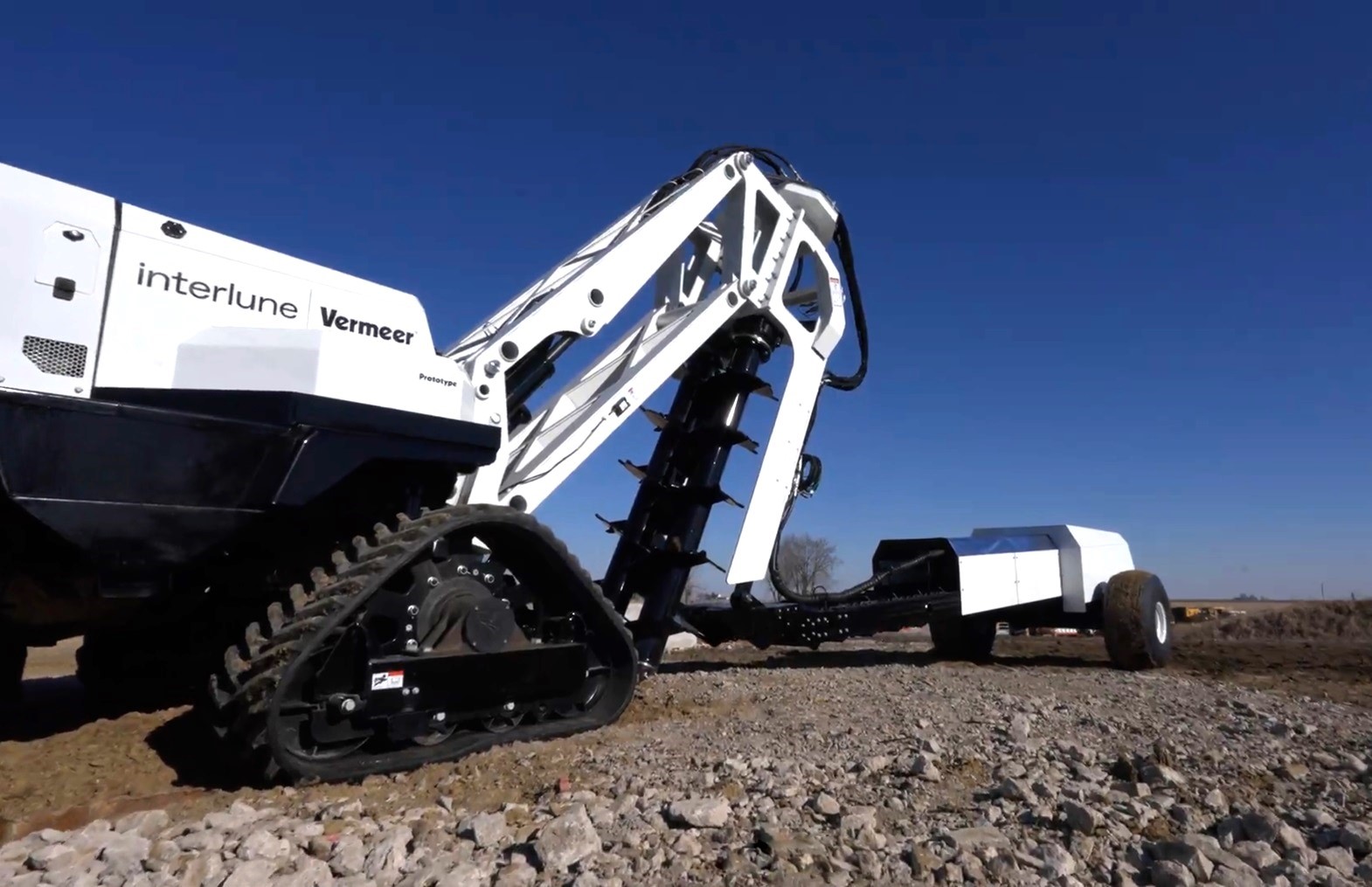
The strategic partnership between Interlune, a forward-thinking Seattle-based space technology startup, and Vermeer, a storied industrial manufacturing powerhouse headquartered in the heartland of Pella, Iowa, represents a deeply compelling fusion of two vastly different American industries. Historically, the pursuit of space exploration has been dominated by highly specialized aerospace giants and government laboratories operating in pristine, climate-controlled cleanrooms. However, as humanity edges closer to establishing a permanent off-world presence, the nature of outer space exploration is undergoing a radical transition from mere scientific observation to heavy, physical labor. This industrial shift necessitates the rugged, reliable engineering expertise that Vermeer has spent nearly eighty years developing on Earth, crafting heavy machinery designed to withstand the harshest terrestrial job sites. Their collaborative journey began with an ambitious, shared vision to conquer one of the most formidable challenges in the modern space race: harvesting helium-3 from the lunar regolith, the abrasive layer of dust and fragmented rocks that blankets the Moon. Helium-3, an incredibly rare isotope on Earth but abundant on the lunar surface due to eons of solar wind bombardment, holds immense promise for revolutionary applications. It is envisioned as a non-radioactive fuel source for future nuclear fusion reactors, an essential component for cooling quantum computers to near absolute zero, and a powerful medium for advanced medical imaging. Unveiled to the world a little over a year ago, their initial physical collaboration manifested as a full-scale prototype of a lunar excavator. Designed to navigate the ultra-fine, electrostatic, and glass-like lunar dust that readily destroys standard machinery, the excavator represents a crucial bridge between visionary aerospace theory and the grit of classical mechanical engineering, paving the way for a sustainable off-world resource economy.
While Interlune’s initial business model focused almost exclusively on mining this precious lunar resource and hauling it back to Earth for high-tech applications, a massive structural shift in the federal space landscape dramatically reshaped the startup’s corporate horizon in March. It was then that NASA formalised its grand vision for the next decade, announcing a sweeping, ten-year, $30 billion initiative designed specifically to lay down the critical infrastructure required for a permanent human moon base. This ambitious federal blueprint instantly signaled to Interlune’s leadership that the immediate future of lunar commerce would not just be about extracting and exporting helium-3, but also about the physical, structural preparation of the Moon itself. Rob Meyerson, the co-founder and chief executive officer of Interlune, quickly realized that the heavy-duty machinery expertise they were cultivation with Vermeer was perfectly positioned to answer NASA’s call. He and his team understood that building a permanent habitat on an alien world requires the same foundational civil engineering tasks that exist on Earth: leveling rough ground, compacting loose soil to create stable landing pads, digging deep trenches to bury vulnerable utility lines safely away from radiation, and constructing massive soil barriers to shield habitats and nuclear reactors from micro-meteorite strikes. Meyerson promptly returned to Vermeer to pitch a formal expansion of their partnership, transitioning their collaborative focus from a single-focus mining venture to a highly adaptable suite of lunar construction implements capable of transforming the wild, hazardous lunar surface into a habitable outpost.
For Jason Andringa, the president and chief executive officer of Vermeer, this expanded partnership represents far more than a lucrative business pivot; it is the deeply emotional realization of a lifelong personal dream. Long before taking the helm of the massive manufacturing legacy founded by his grandfather Gary Vermeer in 1948, Andringa pursued his passion for space as a staff engineer at NASA’s legendary Jet Propulsion Laboratory in Pasadena, California. When he eventually left Pasadena to return to Pella, Iowa, to join the family business, he carried with him a persistent hope that he would one day find a way to merge his deep-seated love for the human colonization of the Moon and Mars with Vermeer’s world-class capability in manufacturing heavy, earthmoving machinery. Under Andringa’s enthusiastic leadership, Vermeer is now translating its decades of experience in designing surface miners, trenchers, and agricultural balers into rugged tools capable of operating in the vacuum of space, where temperatures swing wildly by hundreds of degrees, and traditional lubricants fail. This collaboration bridges the high-frontier imagination of aerospace engineering with the practical, blue-collar manufacturing methodologies that have kept Vermeer at the forefront of the global industrial equipment market. By applying Earth-proven, heavy-industry philosophies to the lunar environment, Andringa is fulfilling a multi-generational legacy, demonstrating that the tools needed to build the future of humanity on other planets are deeply rooted in the hardworking values and proven fabrication techniques of America’s industrial heartland.
The tactical roadmap of this expanded alliance is already in active motion, supported by key academic collaborations and federally funded research and development programs. Interlune has partnered with the prestigious Colorado School of Mines on the preliminary design of a specialized digging implement, a project facilitated by a $150,000 contract awarded by NASA earlier this year. With Vermeer formally integrated into the design cycle, the partnership is rapidly moving past theoretical concepts and basic prototyping toward the creation of rugged, space-hardened systems engineered for operational longevity. The immediate goal is to build an advanced, functional site-preparation tool that can be seamlessly integrated onto a lunar vehicle flight scheduled to land on the Moon between 2028 and 2029. This ambitious timeline is intentionally aligned with NASA’s scheduled Artemis 5 mission, which plans to deploy next-generation Lunar Terrain Vehicles (LTVs) to help astronauts navigate the south polar region of the Moon. Vermeer’s engineering team, taking requirements and design parameters provided by Interlune, is focusing its expertise on a surface-mining drum attachment. This rotating mechanism will be engineered to mount directly onto an LTV, allowing it to mill the top layer of abrasive regolith, remove dangerous surface rocks, and compact the loose lunar dirt in a single, highly efficient pass. Soil compaction is notoriously difficult in the Moon’s one-sixth gravity and complete lack of atmospheric pressure; therefore, Vermeer’s Earth-derived mechanical solutions for stabilizing surfaces must be radically adapted to ensure that future astronaut landing pads do not generate catastrophic, high-velocity dust storms during spacecraft descent and liftoff.
Even as Interlune dramatically expands its focus into lunar construction and infrastructure tooling with Vermeer, the company remains steadfastly committed to its foundational mission of harvesting helium-3. The company’s long-term business strategy is structured as a series of progressive, high-risk space missions designed to systematically de-risk their extraction technologies and prove the economic viability of lunar mining. Their maiden voyage to the lunar surface, a highly anticipated mission aptly named “Crescent Moon,” is scheduled to launch later this year, carrying a sophisticated, proprietary multispectral camera. This advanced optical payload will analyze the soil compositions around the landing site, providing unprecedented data on the exact distribution and density of helium-3 locked within the crystalline lattice of the regolith. Building directly on the insights gathered from Crescent Moon, Interlune’s ambitious second mission, “Prospect Moon,” recently secured a substantial $6.9 million developmental contract from NASA. Scheduled for launch in 2028, Prospect Moon is designed to serve as a physical demonstration of the extraction process itself, actively heating lunar soil to extract volatile gases, including hydrogen and helium-3, in the harsh natural lunar environment. This dual-track approach ensures that Interlune and Vermeer are co-developing the heavy equipment necessary to build the physical infrastructure of the Moon, while simultaneously nurturing the highly lucrative resource extraction ecosystem that will economically justify and fund long-term human settlements on the lunar surface.
While the prospect of building off-world machinery is undeniably spectacular, both Interlune and Vermeer maintain a highly disciplined, pragmatic approach to their joint venture, understanding that their cosmic ambitions must deliver grounded benefits to Earth. For Vermeer, off-world development accounts for only a minor fraction of its massive, multi-faceted operations; only about ten engineers out of their robust workforce of 4,500 employees are directly assigned to lunar projects, and even those individuals split their working hours with traditional terrestrial machinery design. Yet, the cultural and technological impact of this select space task force reverberates powerfully throughout the entire company, serving as an unmatched beacon of inspiration and bringing a sense of pride to the factory floors of Iowa. Designing machinery that can survive the absolute vacuum of space, resist cosmic radiation, and function flawlessly amidst highly abrasive, razor-sharp lunar dust forces engineers to think outside conventional design boundaries, fostering a level of creative problem-solving that cannot be easily replicated through standard terrestrial projects. As Jason Andringa emphasizes, the extreme engineering disciplines, innovative lightweight materials, and advanced wear-resistant coatings developed to survive the brutal, unforgiving craters of the Moon will inevitably flow back into Vermeer’s commercial product lines. This continuous feedback loop ensures that the technological breakthroughs achieved while building the gateway to the stars will directly translate into stronger, more efficient, and incredibly durable machinery for construction workers, farmers, and miners back home on Earth, enriching human lives on our home planet while preparing our first steps into the cosmos.