






Here is a humanized summary of Bungie’s recent announcement, told in six paragraphs.
—
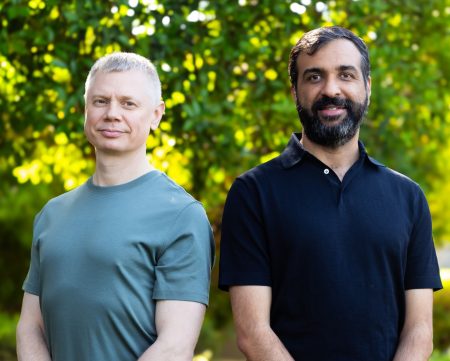
There’s a particular kind of silence that falls over a community when it feels abandoned by the people who once gave it life. For the millions of players who have poured thousands of hours into the worlds of Destiny and Marathon, that silence has felt deafening over the past few years. Bungie, the Bellevue-based studio that once stood as a beacon of ambitious, heartfelt game development, seemed to lose its way, and its audience felt every misstep. So when the studio’s new leadership team stepped forward on a Monday morning with a video and blog post titled “The Next Chapter for Bungie,” it wasn’t with triumphant fanfare or grand promises. It was with something far more vulnerable: an apology. New studio head Poria Torkan and head of product Josh Deane looked directly into the camera and acknowledged what so many players had been feeling for years. “For more than 30 years, Bungie has built these amazing worlds, and communities have been formed around them,” Torkan said. “Over the last few years, we lost sight of that. The consequences have been real. We lost trust. We lost incredible colleagues. And our ambitions as a studio stalled.” It was a rare moment of corporate honesty, a recognition that the magic that once defined the studio had been overshadowed by missteps, layoffs, and a growing distance between the creators and the people who played their games.
To understand how Bungie arrived at this moment of reckoning, you have to look back at the dizzying highs and crushing lows of the last three years. In 2022, Bungie was riding a wave of unprecedented success. Sony had just completed its $3.6 billion acquisition of the studio, and Destiny 2 was thriving as one of the most popular live-service games on the market. The future seemed limitless, with talk of expansion, new projects, and a growing universe that could rival any entertainment franchise. But the Western games industry was about to face a brutal correction, and Bungie was not immune. Multiple waves of layoffs swept through the studio, each one chipping away at the talent and morale that had made the company special. The most recent cuts came in June, when at least 290 employees were dismissed in what the studio described as “a reduction in force as we reorganize.” That same month, studio head Justin Truman departed, and reports began to circulate that development on Destiny 2 had effectively come to an end. For many industry analysts, the writing seemed to be on the wall: Bungie would either be reduced to a support studio for other PlayStation projects or shuttered entirely. The studio that had once been the crown jewel of the live-service genre appeared to be on its last legs, and the community that had once championed it was left wondering if there was anything left to save.
Instead of fading away, however, Bungie’s new leadership chose to face the music. Torkan and Deane didn’t try to spin the past or deflect blame. They acknowledged the skepticism head-on, understanding that words alone would not be enough to win back a wounded audience. “We’re not asking for your trust,” Torkan said. “We know we have to earn it, and to do that, we need our games to deliver in ways that exceed your expectations of what you’ve come to love about the games that we make.” It was a humble admission that Bungie had spent too much time trying to do too much, and that ambition had come at a real cost. The first step on the long road back, according to the new leadership, is addressing one of the most controversial decisions in Destiny 2’s history: the content vault. Starting in 2020, Bungie began routinely removing older parts of the game from the live service, including the original launch campaign and several early raids. In theory, this was meant to make the game easier to update and maintain, allowing the team to focus on the newest content. In practice, it felt like deleting the first episodes of a beloved television show every time a new season premiered. New players were thrust into a world with no context, forced to rely on wikis and lore videos to understand what was happening. And veterans who wanted to revisit the moments that made them fall in love with the game were simply out of luck. The first third of Destiny 2, despite being part of a live-service game, had effectively become lost media.
Now, Bungie is promising to bring that vaulted content back. It’s a monumental undertaking, one that will require rebuilding and remastering years of lost levels, campaigns, and raids to fit into the modern version of Destiny 2. But for Torkan and Deane, it’s a necessary foundation for the future. They didn’t use the phrase “Destiny 3,” but they made it clear that the franchise is far from over. “That restoration will hopefully lay the foundation for how we reforge new Destiny stories and games that you all deserve and that we want to create,” Deane said. The message is clear: before Bungie can move forward, it has to honor the past. It has to restore the world that players once called home, and it has to prove that the studio still understands what made those worlds so special in the first place. It’s a promise that carries weight precisely because it’s so difficult. Rebuilding the content vault isn’t just a technical challenge; it’s a symbolic act of contrition. It’s Bungie saying, “We hear you. We know we took something away from you. And we’re going to try to give it back.” Whether that will be enough to restore the trust of a skeptical community remains to be seen, but it’s a start.
Bungie isn’t putting all its hopes on the past, however. The studio also addressed the future of Marathon, its extraction shooter that launched earlier this year to surprisingly positive critical reception. While the game had already established a roadmap for its evolution, Deane, who serves as Marathon’s general manager, revealed that the vision is expanding. The game will continue to evolve into what he described as a “deeper survival experience,” giving players more agency in both PvE and PvP modes. The goal is to make Marathon a world that more players can enjoy, not just a niche experience for the most hardcore fans. But the most striking part of the announcement wasn’t the specific plans for Marathon or Destiny. It was the language that Torkan and Deane used to describe their philosophy going forward. “How we build this new Bungie… has to be through the spirit of putting players above everything else,” Deane said. “We have to find a way back to making games that we want to play, but with you at the center. We have to meet you where you are, build what you want, and reforge our creative soul to prove that Bungie is still capable of building worlds that are part of your life, your time, your stories, and most importantly, your communities.” It’s a powerful sentiment, one that echoes the studio’s earliest days, when it was a small team of dreamers making games that felt impossibly ambitious and deeply personal.
Ultimately, this apology tour is only the beginning of a long and uncertain journey. Torkan and Deane know that trust cannot be declared; it must be demonstrated through actions, not words. They acknowledged the skepticism that has grown around Bungie, and they didn’t try to wave it away with empty promises. “We’ve made commitments like these before,” Torkan said. “We understand the skepticism. We spent too much time trying to do too much, and that came at a real cost.” The road ahead is steep. Restoring the content vault is a massive undertaking, and evolving Marathon into a deeper, more inclusive experience will require time, resources, and a level of focus that has been sorely missing in recent years. But there is something hopeful in the fact that Bungie is willing to try. The studio that once defined the live-service genre is humbling itself, listening to its players, and committing to a future that puts community at the center. Whether it can reclaim its place as one of the most beloved developers in the industry remains to be seen. But for the first time in a long time, it feels like Bungie is genuinely trying to find its way back home. And for the players who have stuck with it through the highs and lows, that’s a reason to pay attention, if not yet a reason to fully believe.