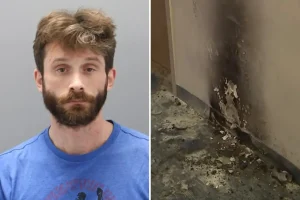






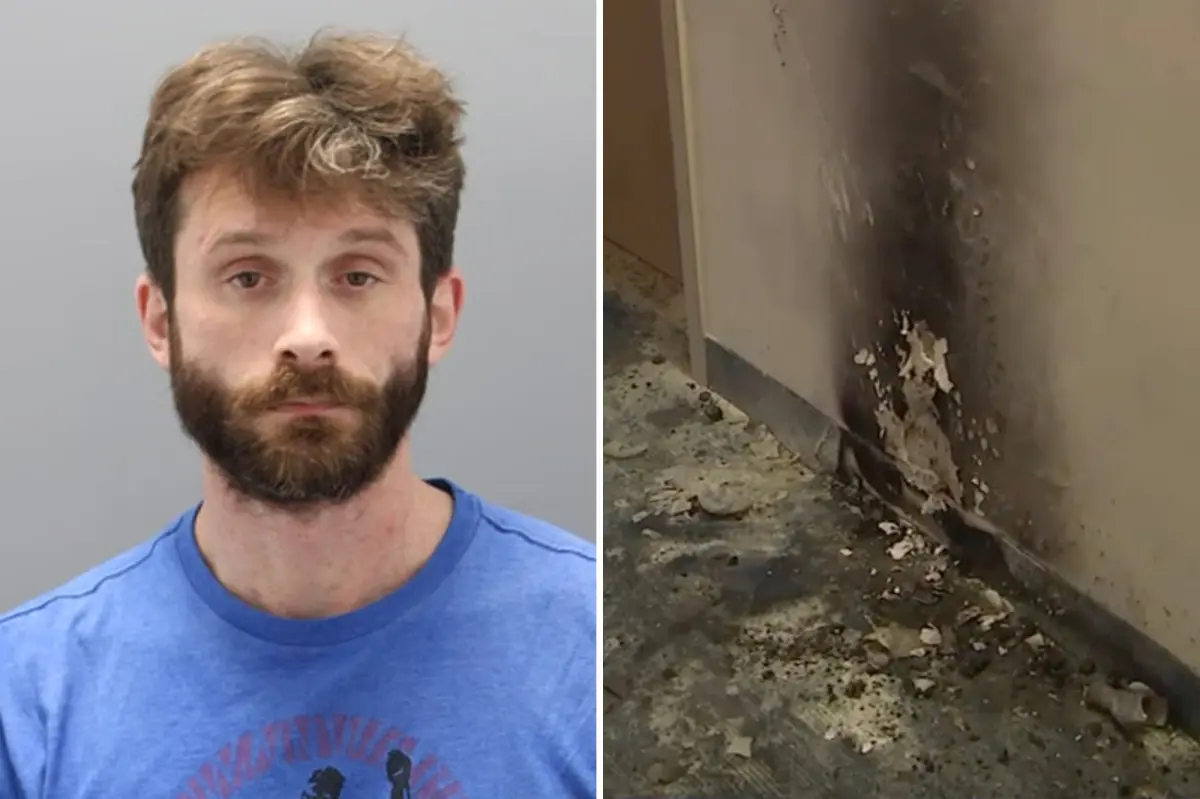
The clock had barely struck 2:30 a.m. on a quiet Sunday when the mundane silence of a Mineola apartment building was violently shattered. Inside one of the units, a 34-year-old man named Nolan Gaugler was not asleep, not watching television, but hunched over a precarious collection of glass beakers, burners, and an alarming array of unmarked bottles. Police would later describe him as a “wannabe mad scientist,” a term that drips with a certain dark irony, for in his attempt to play god in his cramped Long Island kitchen, he had mixed a volatile cocktail of dangerous chemicals for an “unknown chemistry experiment.” The mixture, unstable and fuming, reacted violently against the containment of his glassware. In a moment of pure, adrenaline-fueled panic, Gaugler snatched the bubbling, hissing concoction and tossed it out into the shared hallway of his building. The act was a desperate attempt to expel the danger from his immediate surroundings, but it had the opposite effect. Freed from its original confines, the chemical mixture erupted into a searing ball of flame, licking up the walls and scorching the floor of the common corridor, transforming a residential space into a scene of immediate, life-threatening jeopardy.
The chaos that followed was a tidal wave of sirens and flashing lights. As the flames chewed at the drywall and paint, the residents of the building were jolted from their beds by shrieking fire alarms and the frantic pounding of first responders. They stumbled out into the cold, pitch-black early morning, dressed in whatever pajamas or hastily grabbed coats they could find, herded into the street while smoke billowed from the structure they called home. It was a deeply disorienting experience—the mundane safety of sleep violently replaced by the harsh glare of emergency floodlights and the acrid, chemical smell of burning materials that hung thick in the air. For hours, these residents stood shivering on the sidewalk, watching the fire department work, their minds racing with questions and a creeping sense of vulnerability. They were eventually evacuated, forced to wait outside for a prolonged period, not just for the conventional firefighters to douse the flames, but for a far more specialized and sinister response. The presence of hazardous materials necessitated the arrival of the Nassau County Police Arson Squad and the Bomb Squad, transforming what was initially a frightening house fire into a full-blown hazmat operation. The neighbors, now wrapped in emergency blankets, could only stare in disbelief at the unit belonging to the quiet tenant, wondering who the man was and what on earth he had been doing.
When the bomb squad technicians finally gained access to Gaugler’s apartment, they were confronted with a sight that belonged more in a low-budget sci-fi film than a suburban rental unit. The home was not simply a living space; it was a makeshift laboratory, cluttered with intricate lab equipment, condensers, flasks, and a foreboding arsenal of chemicals stacked haphazardly on counters and shelves. The sheer volume of substances was staggering, far exceeding anything that could be justified as a casual hobby. As the investigators carefully navigated the hazardous environment, their professional assessment revealed a terrifying truth: some of the compounds found within were classified as unstable and explosive. This was not merely a messy amateur setup; it was a potential ticking time bomb waiting for the wrong catalyst. The environmental and forensic teams had to meticulously catalog the substances, taking extreme precautions to avoid triggering a secondary, catastrophic blast. Ultimately, the most volatile of these dangerous materials had to be delicately extracted from the building, transported away from the residential area, and safely detonated in a controlled environment. This technical process prolonged the neighborhood disruption, leaving the street cordoned off for hours, but it was a necessary measure to ensure that no other innocent residents became collateral damage in Gaugler’s reckless pursuit of scientific thrill.
Following the removal of the explosives, the focus shifted from fire suppression to law enforcement, and Gaugler’s fate took a stark turn. He was formally arrested and charged with a suite of serious felonies, including reckless endangerment, arson, and criminal possession of a weapon. The latter charge often surprises the public, but in legal terms, the dangerous chemicals he was hoarding and reacting together became a destructive mechanism, effectively functioning as a weapon capable of causing mass harm. The charge of arson, typically reserved for those who intentionally set fires, was applied due to the premise that his negligent and willful actions caused the blaze, regardless of his intent to burn down the building. For Nolan Gaugler, the night of scientific curiosity had transformed into a legal nightmare, carrying the potential for years behind bars. He was processed, fingerprinted, and held, forced to spend his days and nights contemplating the consequences of his actions in a cold holding cell, a far cry from the warm glow of his laboratory experiments.
On Monday morning, the system moved with a swift, impersonal efficiency. Gaugler appeared before a judge, his face likely pale, his expression a mixture of exhaustion, fear, and perhaps lingering confusion over how his obsession had spiraled so far out of control. In a courtroom packed with disgruntled residents and watchful reporters, he entered a plea of not guilty to all charges. The judge, after assessing the facts, made the decision to release him on his own recognizance, albeit with a stringent condition: he was to be fitted with an ankle monitor. This electronic tether would track his every movement, a constant, humiliating reminder of his brush with disaster. As he walked out of the courthouse, the distinct device clasped around his leg, he returned to a building that had almost been destroyed by his own hand, a neighborhood that now viewed him with a mixture of contempt and suspicion. The moniker “mad scientist” is often romanticized in fiction, picturing a brilliant but misunderstood man. But Gaugler’s story highlights the tragic reality of that archetype. He was a man alone with his chemicals at 2:30 a.m., a hobby that lacked the essential guardrails of professional supervision, proper safety training, or even basic common sense. His curiosity was not inherently evil, but it was dangerously unguided, a testament to how aspiration without discipline can curdle into a public menace.
The story of Nolan Gaugler serves as a bizarre, cautionary tale that lingers in the mind long after the smoke has cleared. It is a reminder of the razor-thin line that separates intellectual pursuit from reckless endangerment. Every day, people tinker, create, and experiment—building computers, brewing beer, or mixing perfumes—but there is an implicit contract that the most volatile of human curiosity remains tethered to the safety of others. Gaugler broke that contract in a spectacularly dumbfounding way, jeopardizing the lives of his neighbors for a fleeting chemical reaction. The impact on the residents of that building will not fade quickly; the smell of smoke, the sight of the scorched hallway, and the terrifying memory of being locked out of their homes will linger in their psyches. Insurance claims, repair crews, and increased security will become temporary features of their daily lives. And for Gaugler, the path forward is fraught. He faces a lengthy legal battle, the possibility of prison, and the enduring stigma of being the man who brought a bomb squad to his block. Perhaps, in time, he will find a legitimate outlet for his scientific interests, guided by people who can teach him the difference between a spark of genius and a towering, destructive inferno. Or perhaps, the ankle monitor and the shame of his arrest will extinguish his passions entirely. Regardless, his story stands as a warning to every budding amateur enthusiast: when you play with fire, especially in the dead of night, the entire building might just end up holding the match.