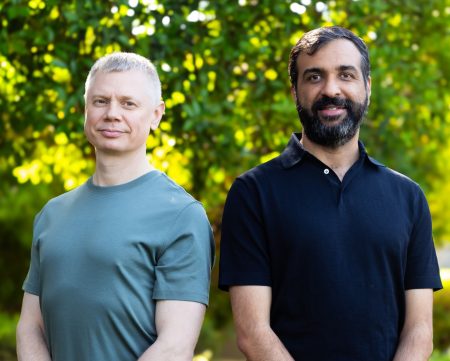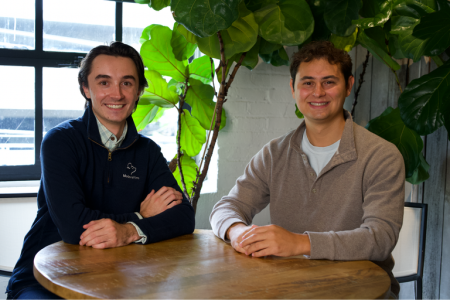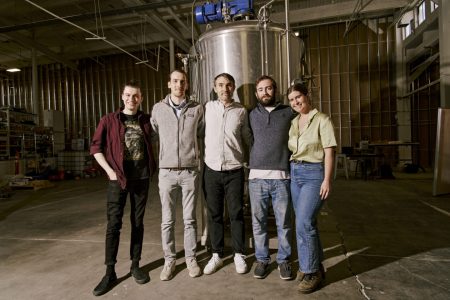







Every week, the tech world throws a little bit of everything at us—breakthroughs that feel like science fiction, deeply human stories about health and generosity, and plenty of behind-the-scenes corporate moves that quietly shape the future. This past week was no exception. In the world of manufacturing, a young Seattle-founded company called Neuramill is tackling one of the most stubborn problems in modern industry: the loss of skilled machinists’ knowledge. Founded by two engineers in their twenties, Neuramill builds software that captures how experienced machinists make decisions when creating a part, then applies that hard-won knowledge to new jobs in aerospace and defense machine shops. It’s a beautiful idea when you think about it—before the old guard retires and takes a lifetime of intuition with them, their expertise gets encoded into something a machine can learn from. Speaking of machines, Agility Robotics also made waves with the unveiling of Digit 5, a humanoid robot designed to work safely alongside people in warehouses and factories. The company, which is preparing to go public through a SPAC merger, says the new robot can lift 50 pounds, reach shelves nearly seven and a half feet high, and keep working for more than twenty hours a day. Of course, robots like Digit aren’t about replacing humans entirely—they’re about handling the repetitive, physically demanding work so people can focus on tasks that require judgment and flexibility. Together, these two stories capture a fascinating tension: we’re preserving human craftsmanship in one corner while inviting automated labor into the other, all in the name of building things better, faster, and with more resilience.
On the healthcare front, this was a week of remarkable generosity and quiet leadership transitions. Providence announced it will receive $1.1 billion from Nike co-founder Phil Knight and his wife, Penny—one of the largest gifts ever pledged to a U.S. healthcare institution. The money will go toward building Oregon’s first women’s hospital and expanding cardiovascular services at Providence St. Vincent Medical Center and the Providence Heart Institute in Portland. That’s more than just a headline number. It’s the kind of gift that will quite literally save lives, create new treatment options for women, and leave a lasting imprint on the community for generations. It also builds on the Knights’ earlier $200 million gift to the heart institute, showing a sustained commitment to health, not just a one-time splash. Meanwhile, there was a noteworthy changing of the guard at Truveta, a health data company that grew out of a pandemic-era idea into a serious enterprise with 500 employees and 30 member health systems. Co-founders Jay Nanduri and Ryan Ahern are stepping in as interim co-CEOs after the departure of the leader who helped build the company from its earliest days. Truveta’s mission is ambitious: harness de-identified patient data from major health systems to improve medical research and patient outcomes. Leadership transitions like this are always a little delicate, especially in health tech where trust and stability matter so much, but having the original founders back at the helm—even temporarily—sends a reassuring signal that the company’s vision remains intact. In an industry defined by high stakes and long timelines, a steady hand matters more than ever.
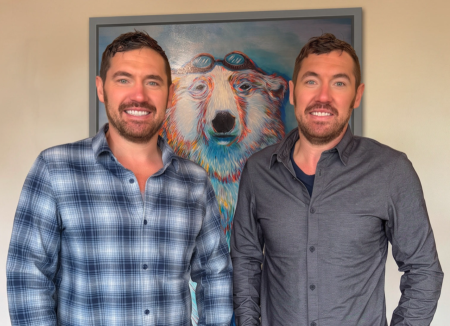
There was also a distinctly existential thread running through the week’s news: the uneasy relationship between artificial intelligence and the human stories we tell ourselves. Tune, a company founded by serial entrepreneurs and twin brothers Lee and Lucas Brown, is setting its sights on something bold—replacing the traditional newsroom with artificial intelligence. The Browns, who left Seattle’s startup scene years ago to build a “tech outpost” in the Alaskan wilderness, are no strangers to reinvention. But this one feels different. Newsrooms are not just factories for words; they are institutions built on trust, judgment, and community relationships. The idea of AI writing local news can feel cold and a little unsettling, especially for those of us who care deeply about journalism. Yet there is no denying that local news is struggling, and perhaps an AI-powered approach can fill some of the gaps—covering school board meetings, city council sessions, and high school sports—that many communities have lost entirely. The challenge will be doing it with integrity, nuance, and a respect for the people whose lives are being reported on. Meanwhile, a Bellevue-based open-source platform reached an extraordinary milestone, with its annualized revenue run rate surging past $250 million and growing more than 200 percent year-over-year. That kind of growth is rare in the enterprise software world, and it speaks to a broader truth: even as AI threatens to disrupt traditional content creation, the demand for open, flexible, community-driven software tools has never been stronger. In a strange way, both stories are about democratizing access—one to information, the other to software infrastructure—but they raise very different questions about what we value and what we’re willing to trade away.
In the legal world, a lone software engineer’s fight reached the steps of the U.S. Supreme Court. Jeff Kohler is asking the justices to clarify the Alice patent standard after his patent was invalidated and his infringement case against Google was dismissed—without the court even examining the C++ source code he submitted as evidence. The Alice standard, established in a 2014 Supreme Court ruling, has been notoriously difficult for software inventors to navigate. Many patents have been struck down as abstract ideas, and critics argue the standard has become unpredictable and overwhelmingly hostile to software innovation. Kohler’s case is a compelling example: here is someone who claims he wrote actual code that was used without permission, only to be told his invention wasn’t patent-eligible, period. He didn’t get his day in court, his evidence wasn’t even reviewed, and now he’s hoping the highest court in the land will step in. Legal experts and even some federal judges have called for the Supreme Court to revisit the standard, warning that the current approach is causing chaos in the patent system and discouraging inventors from pursuing meaningful software breakthroughs. For startups and independent developers, this is more than an abstract legal debate—it’s about whether small innovators can protect their work against deep-pocketed tech giants. If the Supreme Court takes the case, the decision could reshape software patent law for decades, for better or worse. But for now, Kohler is doing what many dream of but few actually do: fighting the system, one motion at a time, with an unlikely ally in the judiciary itself.
The corporate side of the week was a mix of fresh faces, new roles, and sobering reminders that the tech industry is never static. Microsoft announced that Silvia Candiani has been promoted to Corporate Vice President of the recently launched Microsoft Frontier Company, a sign that the company is looking to broaden its reach and explore new markets. At Microsoft Elevate, the company hired a former UNICEF leader as vice president—a move that suggests a focus on social impact and global partnerships. Amazon Web Services promoted Alexis Bateman to Director of Global Sustainability, underscoring the growing importance of climate commitments within the cloud computing giant. Closer to the startup world, Gradial added a Chief Marketing Officer, while Yoodli and Kestra each named a vice president, filling out their leadership teams as they look to scale. These are the kinds of announcements that don’t always make the biggest headlines, but they matter tremendously to the people in those companies and to the communities they serve. Leadership changes introduce new energy, new strategies, and sometimes new anxiety, especially when they come alongside layoffs. And this week came with a sharp reminder of that too: an enterprise software giant announced broad nationwide layoffs that heavily impacted technical engineering and management roles. For the employees affected, this is a profoundly stressful and destabilizing time, and no amount of corporate messaging about “restructuring” or “optimization” softens the blow. The tech industry has always been cyclical, but each wave of layoffs still lands hard on real people with families, mortgages, and dreams. It’s a good reminder that for all the talk about innovation and disruption, the human cost of this industry’s constant churn is often the quietest story of all.
Finally, the future of energy took another bold step forward—and a controversial one. Helion Energy, the fusion startup that has captured headlines before, added $35 million to its latest funding round, bringing the round to $500 million and its total war chest to more than $1.5 billion. That’s an enormous amount of capital for a venture built around a concept many scientists consider perpetually ten years away. Helion’s goal is no less than powering a Microsoft data center with fusion energy by 2028, a timeline that sounds audacious to some and outright unrealistic to others. The company has faced skepticism about both its technical approach and its schedule, but investors keep doubling down. Fusion has long been the holy grail of clean energy—the promise of essentially limitless, carbon-free power that could solve climate change and energy inequality in one fell swoop. Yet the history of fusion is littered with broken promises and missed deadlines, which is why the skepticism is understandable. Still, the money flowing into Helion represents a bet worth watching. If they succeed, even partially, the implications for the data center industry, cloud computing, and the global energy grid would be immense. If they fail, the lessons learned will still inform the next generation of researchers. Either way, this is the kind of ambitious, almost science-fictional endeavor that keeps the tech world interesting. It’s also a fitting way to end the week’s roundup: a reminder that some of the most important stories aren’t just about gadgets and apps, but about the audacious human imagination that keeps pushing the boundaries of what’s possible—sometimes brilliantly, sometimes messily, but always forward. And that’s a story worth following every single week.