






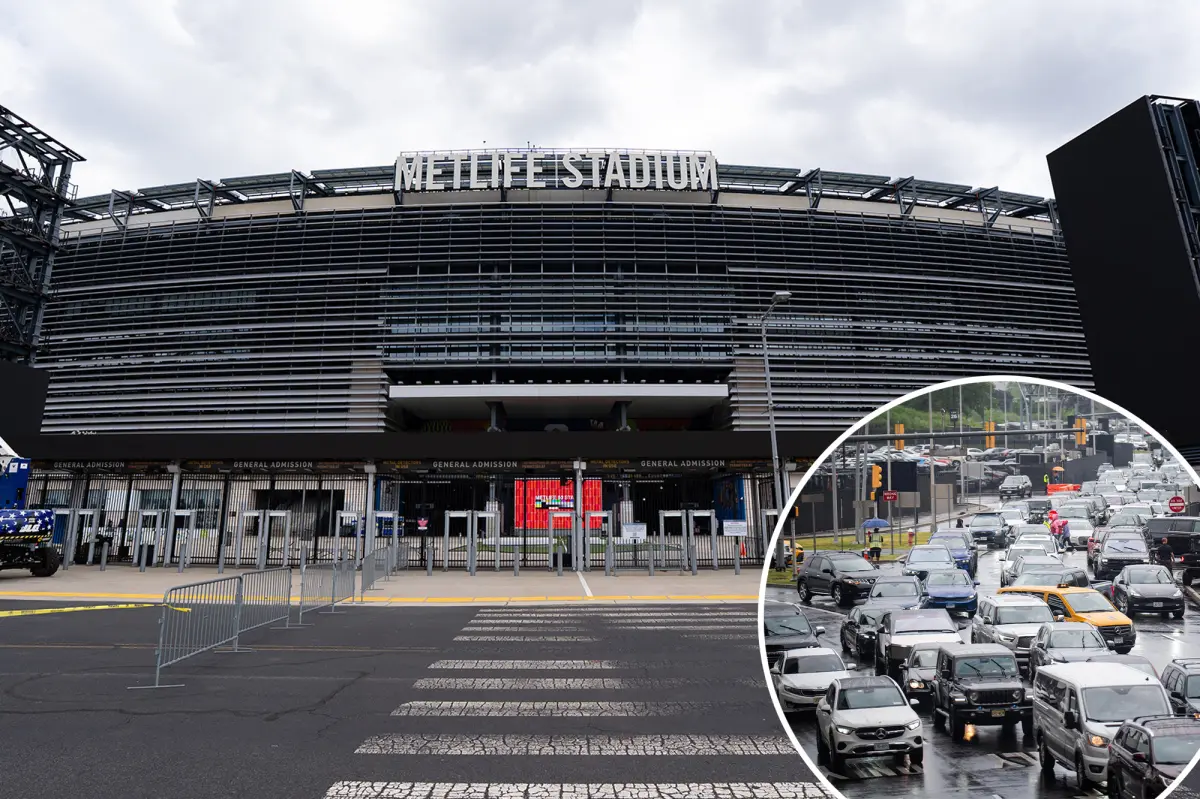
Heading to MetLife Stadium on game day is supposed to feel like the start of something great. You’ve got your tickets, your jersey, your tailgate snacks, and that electric anticipation of watching your team play in person. But for anyone who has actually made the trip to East Rutherford, New Jersey, there’s another emotion that often overshadows all the excitement: dread. The parking lots are chaotic, the surrounding roads turn into a sea of brake lights, and what should be a short final approach to the stadium becomes a slow, grinding crawl. It’s a familiar complaint, but new research confirms that this isn’t just bad luck or a few unfortunate afternoons. The gridlock around MetLife Stadium is statistically among the worst in the entire National Football League. Since the New York Giants and the New York Jets both call the venue home, that means double the opportunities for fans to experience the same frustrating ritual. A recent study from Betpack dug into real traffic data around all 30 NFL stadiums, and the results place MetLife near the top of the congestion rankings—not in a way that flatters anyone who has ever sat fuming in a car near the Meadowlands.
The study took a close look at how traffic behaves within a one-kilometer radius of each stadium on game days, measuring three things: congestion level, average driving speed, and the travel time it takes to cover roughly six miles of local roads. These metrics were combined into a single Congestion Score out of 100. When all the data was processed, MetLife Stadium earned a score of 72.4, making it the sixth-most congested NFL venue in the country. That number might sound abstract, but the real-world breakdown makes it painfully clear. On a typical game day, congestion around the stadium surges by 212.7 percent above normal baseline traffic. That isn’t just a little extra delay. It means the area around the stadium becomes two to three times harder to move through than on an ordinary day. Average speeds drop to just 13.4 miles per hour, which is barely faster than a decent jog. To put it into perspective, trying to drive just six miles of surrounding roads at that pace takes nearly 28 minutes. That’s not a pleasant Sunday drive. That’s bumper-to-bumper frustration, where every intersection seems to eat up precious time and every mile feels like two. For anyone who has ever glanced at their phone’s map app and watched the estimated arrival time keep creeping later and later, those numbers will feel all too real.
What makes MetLife’s traffic situation even more painful is that this isn’t a one-time fluke or a single bad survey. A separate ranking from Pickswise, published for the fall 2025 season, painted an even harsher picture. That analysis rated MetLife as the second-worst stadium in the NFL for game-day traffic, handing it a low score of 30.3 out of 100. The data from that study found that fans in East Rutherford endured the longest peak travel times of any NFL market. Getting to the stadium on a busy day could take 38 minutes and 56 seconds just to drive ten kilometers. That might not sound monumental until you realize it’s nearly ten minutes longer than the second-slowest stadium on that list. In other words, fans aren’t imagining it. The commute to MetLife is genuinely worse than just about anywhere else in pro football. It’s a shared agony that crosses team loyalties. Whether you’re wearing Giants blue or Jets green, you’re all stuck in the same parking lots, staring at the same endless line of red taillights, watching the same clock tick away. It almost becomes a bonding experience—if you can smile through the frustration. Fans have been venting about the ordeal for years, and their reviews often capture the reality better than any spreadsheet. One TripAdvisor reviewer who had been to eight NFL stadiums described MetLife as the worst to get in or out of, calling the parking “awful and disorganized.” Another fan, attending a Barcelona–Real Madrid soccer match at the venue, had an even more scathing take. They called it the worst stadium they had ever visited and explained that after the final whistle, it took nearly an hour and a half just to get from the parking lot to the highway—a distance of less than one mile. No exaggeration, they insisted. For anyone who has ever tried to leave a big event at the Meadowlands, that’s not hard to believe.
The traffic nightmare, however, is not unique to football. MetLife Stadium hosts all sorts of major events, from soccer friendlies to concerts to international tournaments, and the surrounding road network struggles every single time. During major events and the World Cup, officials have had to issue formal traffic alerts and strongly urge fans to use public transit, especially NJ Transit, as a way to avoid the worst of the delays. Even with those warnings, many people still choose to drive, and they often end up paying the price in lost time and frayed nerves. It’s a classic case of the infrastructure simply not matching the scale of demand. The stadium sits in a relatively tight area, with major highways funneling cars into a handful of access points. When tens of thousands of people try to arrive or leave at roughly the same moment, the system backs up in a hurry. It’s not just an inconvenience; it actively shapes the entire game-day experience. Some fans build in extra hours just to make sure they don’t miss kickoff, and even then, they cross their fingers. Others choose to park far away and walk, or they rely on trains, buses, and ride-shares just to avoid the most soul-crushing parts of the trip. Yet no matter what strategy you choose, the volume of people is unavoidable. The result is a stadium that may have impressive size and modern amenities, but its surrounding environment makes every visit feel like a logistical test.
The Betpack study also looked beyond MetLife to identify the worst traffic offenders across the entire league, and the Meadowlands wasn’t even at the top. That dubious honor went to Nissan Stadium in Nashville, home of the Tennessee Titans, which posted the worst overall traffic score. There, crawling through just six miles of game-day congestion takes an astonishing 60.5 minutes. Imagine driving for an hour and barely getting anywhere. Joining Nissan Stadium in the top five were Soldier Field in Chicago, Empower Field at Mile High in Denver, Huntington Bank Field in Cleveland, and Bank of America Stadium in Charlotte. Each of those venues has its own unique traffic headaches, whether it’s narrow city streets, limited parking, or the convergence of multiple event types on the same weekend. But what’s interesting is that some of the biggest, most famous stadiums in America are also the ones that leave fans stranded in their cars long after the final play. The problem isn’t just about how big the stadium is or how many seats it has. It’s about location, road design, public transit access, and how well the whole system can absorb a sudden flood of people. A stadium in a wide-open area with good highway access and ample parking can still fail if the traffic signals and intersections aren’t designed to handle the load. On the flip side, a stadium in a dense urban area can sometimes be easier to reach if there are solid transit options that keep cars off the road.
On the completely opposite end of the spectrum, the study found that Arrowhead Stadium, home of the Kansas City Chiefs, recorded the lowest traffic score of any NFL venue, with a remarkably low 2.0 out of 100. That means the area around Arrowhead stays relatively free-flowing on game days, speeds remain reasonable, and fans can actually get in and out without making a nightmare out of it. There’s no doubt Chiefs fans appreciate that convenience, especially when compared to the horror stories shared by fans in New York, Chicago, Denver, and Cleveland. But for those who follow the Giants or the Jets, the traffic headache is just part of the deal. And here is the tough part: things might only get worse before they get better. Both New York teams entered the new season with rare, promising 1-0 records, sparking renewed hope and enthusiasm among their fan bases. That kind of optimism tends to bring more fans to the stadium, more people parking in the surrounding lots, and more cars clogging the roads. In a weird way, a winning season could be a double-edged sword. The victories would feel great, the atmosphere would be electric, and the tailgates would be lively. But the ride home would likely stretch even longer, testing the patience of even the most devoted fans. Still, there’s a certain charm in the shared suffering. Every fan who braves the traffic knows they’ve earned their seat. The long crawl to MetLife has become a local rite of passage, a testament to loyalty that can’t be measured in stats alone. So next time you’re sitting in that long line of cars, inching toward the highway, remember that you’re not alone. Thousands of other fans are right there with you, doing the same thing, all for the love of the game.