


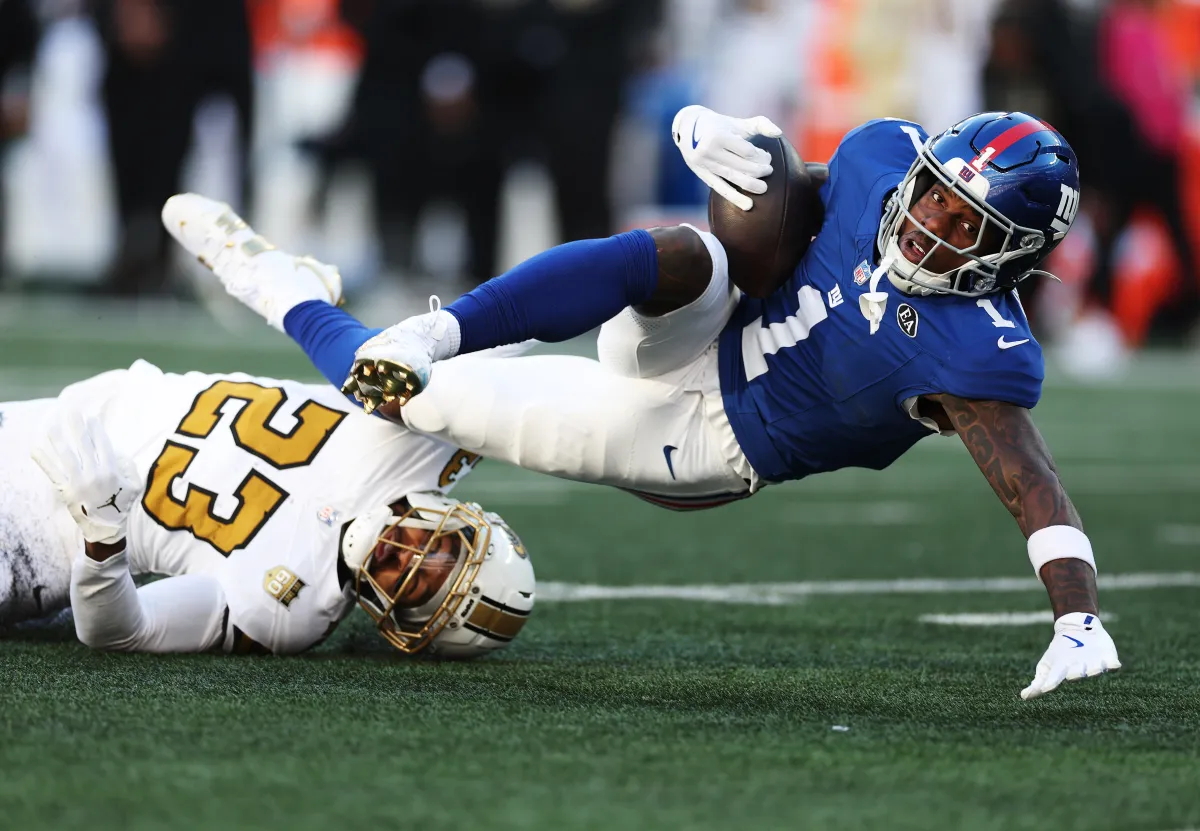
In the gray, fading light of a Sunday afternoon that had long since slipped away from the New York Giants, a flicker of something unexpected began to glow. It wasn’t the kind of light that comes from a blowout victory or a last-second miracle; it was the quiet, tentative spark of a new beginning. With the team trailing and the game seemingly out of reach, JJ McCarthy—a name that had been whispered about in hushed tones since the trade that brought him to East Rutherford—finally got his chance. It wasn’t a full game, and it wasn’t a promise of a permanent job, but for one extended stretch in the fourth quarter, McCarthy reminded everyone why the Giants had been willing to take a chance on him. He didn’t just hand the ball off and manage the clock. He stepped into the pocket, let the ball fly, and gave a lifeless offense a pulse. The final score still showed a loss, but the feeling in the building was different. The feeling was of a door creaking open.
The circumstances that led to McCarthy’s entrance were messy, as they so often are in football. Jameis Winston, the veteran quarterback acquired to steady the ship and provide a bridge for the future, had spent the afternoon alternating between flashes of brilliance and gut-wrenching mistakes. The final straw came early in the fourth quarter, when Winston threw his second interception of the game, a careless pass that seemed to hang in the air for an eternity before settling into the hands of a New Orleans Saints defender. The Giants’ sideline, already quiet and frustrated, went silent. Head coach Brian Daboll (a detail often muddled in the chaos of a late-season slide) had seen enough. With the offense stuck in neutral and the defense exhausted, he made the call that had been brewing in the minds of fans and analysts all week: give the kid the ball. McCarthy, the recent trade acquisition who had spent his early months in New York learning the playbook, absorbing the system, and waiting for a moment exactly like this, grabbed his helmet and trotted onto the field. There was no grand speech, no dramatic moment—just a young quarterback jogging out to face a defense that had been feasting on the Giants’ mistakes all afternoon.
What followed was a jolt of raw, unpolished electricity. McCarthy wasn’t perfect, not by any stretch. He completed just over half of his passes, threw an interception of his own, and took sacks that a veteran might have avoided. But he also did something that Winston hadn’t been able to do all game: he moved the chains. Methodically, play after play, he started to piece together drives. He used his legs to escape pressure, scrambling for 26 rushing yards and leading the team on the ground in a single quarter. He stood tall in the pocket, looked off safeties, and fired strikes to open receivers. When he found the end zone for his first touchdown as a Giant, the crowd erupted—not because the game was suddenly tied, but because they had seen something real. McCarthy’s final stat line read 11 of 21 for 243 yards, a touchdown, and an interception. Those numbers, while modest, were transformed by the context. In the span of one quarter, he had nearly erased a deficit that had seemed insurmountable. The improbable comeback fell short, but the narrative was no longer about a loss. It was about the kid who almost pulled it off, the kid who made the offense exciting again.
No one was more impressed than Malik Nabers, the Giants’ superstar wide receiver who had spent the entire afternoon being the one bright spot on a struggling offense. Nabers was already having a monstrous day, reeling in 12 catches for 165 yards, but McCarthy’s arrival seemed to inject him with a fresh dose of energy. After the game, Nabers was candid and generous in his assessment of the young quarterback. “I think he did a great job. Going out there and doing a great job and delivering the football, I think we have to give him credit for that,” he said. Those words, simple as they were, carried a weight that went beyond the stat sheet. Nabers is a player who commands attention, a receiver who demands throws, and when a quarterback earns his trust with a single quarter of fearless play, it means something. The connection between the two was palpable on the field; McCarthy was looking Nabers’ way, and Nabers was rewarding him with contested catches and athletic brilliance. A quarterback-receiver duo isn’t built in a day, but the seeds were sown in that frantic fourth-quarter stretch. The chemistry felt real, the kind of thing that could blossom into something special with more reps.
To understand the significance of McCarthy’s debut, you have to understand the context of the Giants’ season. The team had been mired in inconsistency, injuries, and the kind of quarterback carousel that has haunted franchises for decades. Winston was brought in as a veteran presence, a safe pair of hands to mentor younger players and keep the offense afloat. But the offense was sinking. Every interception, every stalled drive, every missed opportunity seemed to deepen the sense that the Giants were stuck in a cycle of mediocrity. McCarthy’s emergence, even if just a one-quarter sample size, offered a different narrative. He brought a mobility, a willingness to improvise, and a fearless attitude that the offense had been lacking. He didn’t look like a rookie playing not to make mistakes; he looked like a competitor playing to win. That distinction is crucial. In a league defined by momentum and confidence, giving a young quarterback the reins can be the difference between a team that grinds and a team that believes. The Giants are a team that desperately needs to believe in something, and in one quarter, McCarthy gave them what they had been searching for all season.
All eyes now turn to the future. After the game, head coach Brian Daboll didn’t offer a definitive answer about who would start in Week 7 against the Houston Texans. The public silence was deafening, the sort of calculated non-answer that leaves the door open for debate. On one hand, a veteran like Winston brings experience, familiarity with the offense, and a track record of winning games. On the other, McCarthy brings the unknown—the tantalizing possibility of a star being born. The decision will define the remainder of the Giants’ season, and possibly the trajectory of the franchise. There is no easy answer. The safe move is to return to Winston, to protect the young quarterback from the pressure and chaos of a losing season. The bold move is to let McCarthy run free, to let him learn through trial by fire, to see if he can be the franchise’s future. The fans already know what they want; the roar that greeted McCarthy’s touchdown was evidence enough. But in the cold calculation of coaching, the decision is never simple. What is certain is that the Giants have a prodigy waiting in the wings, a player who turned a meaningless fourth quarter into the most compelling football they’ve played all year. The question now is whether the team has the courage to give him the keys.