


Paragraph 1
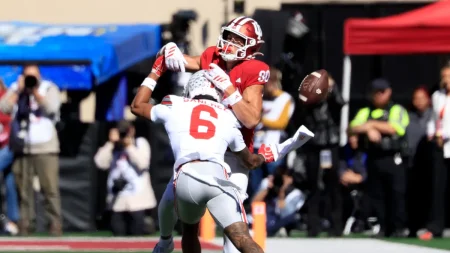
Let’s just be honest about what happened on Saturday night in that BYU–Notre Dame game, because pretending otherwise does nobody any favors. There was a moment in the final minute of the fourth quarter that should have been simple. The clock, the most basic and sacred instrument in all of sports, was telling everyone in the building and everyone watching at home the same thing: there was still time on the board. A replay official looked at that evidence, the kind of evidence that is supposed to be undeniable, and somehow cleared it. And just like that, a game that should have continued—that should have given Notre Dame a legitimate chance to snatch victory from the jaws of defeat—was allowed to end. The whistle blew, the clock hit zero, and BYU walked off the field with a 28–24 win that felt less like a triumph and more like a glitch in the system. It was the kind of moment that makes a casual fan feel gaslit. Did I really just see that? Yes. Yes, you did. There was time on the clock, and the people whose entire job is to get that call right—the people who sit in booths and stare at monitors and review replays precisely so that human error doesn’t decide the outcome—got it wrong. Or, at least, they got it wrong in a way that was very, very convenient for one team, one conference, and one enormous pile of money sitting in the distance like a pot of gold at the end of a very corrupt rainbow.
Paragraph 2
Now, here’s where the story stops being just another blown call and starts being something much more troubling. There is real money at stake here—at least $4 million, by some estimates—tied directly to whether the Big 12 can secure an additional spot in the College Football Playoff. That’s not chump change. That’s the kind of money that funds athletic departments, pays coaches, builds facilities, and keeps the entire financial machinery of a conference humming. And so, when the Big 12’s officiating crew “incorrectly cleared” a replay showing that time remained on the clock, and when they also somehow swallowed their whistles on what looked an awful lot like defensive pass interference in the closing moments, the conspiracy theories started writing themselves. It wasn’t just a mistake. It was a mistake with a beneficiary. It was a mistake that happened to gift BYU a road win over one of the most storied programs in college football history, a win that looks fantastic on a résumé, a win that gives the Big 12 a stronger argument that they deserve multiple invitations when the playoff committee sits down to make its selections. And let’s be clear: this isn’t about whether BYU is a good team or whether Notre Dame played poorly or any of the usual football analysis. This is about process. This is about the fact that officials are human and humans make mistakes—but when those mistakes consistently and conveniently align with institutional incentives, the word “mistake” starts to feel pretty hollow.
Paragraph 3
The Big 12, like every other conference in this modern era of college football, finds itself in a desperate race for relevance and revenue. The playoff has expanded, which means more chances at earning bids, which means more chances at earning payouts, which means more chances at surviving the chaos of conference realignment and the shifting tides of television contracts. Every game matters. Every win matters. And unfortunately, this creates a perverse incentive structure where conferences are financially rewarded for their teams winning, period. Nobody says that out loud, of course. The official line is always about integrity and sportsmanship and doing what’s right. But then you watch a replay official look at footage of a clock ticking down and somehow conclude that there’s nothing there, and you start to wonder if the official line is just that—a line, a script, a carefully rehearsed statement to be read after the damage is done. What really stings is that this isn’t isolated. We just saw something similar in the Big Ten, where Michigan’s game against Western Michigan produced its own officiating head-scratcher, followed by the now-familiar pattern of conferences releasing statements the day after, offering apologies that read like they were written by a press release generator, promising to “review” the “procedures” and “make improvements.” But here’s the thing: an apology doesn’t give Notre Dame a chance to run another play. An apology doesn’t put those seconds back on the clock. And an apology certainly doesn’t get that $4 million back from whatever account it ended up in.
Paragraph 4
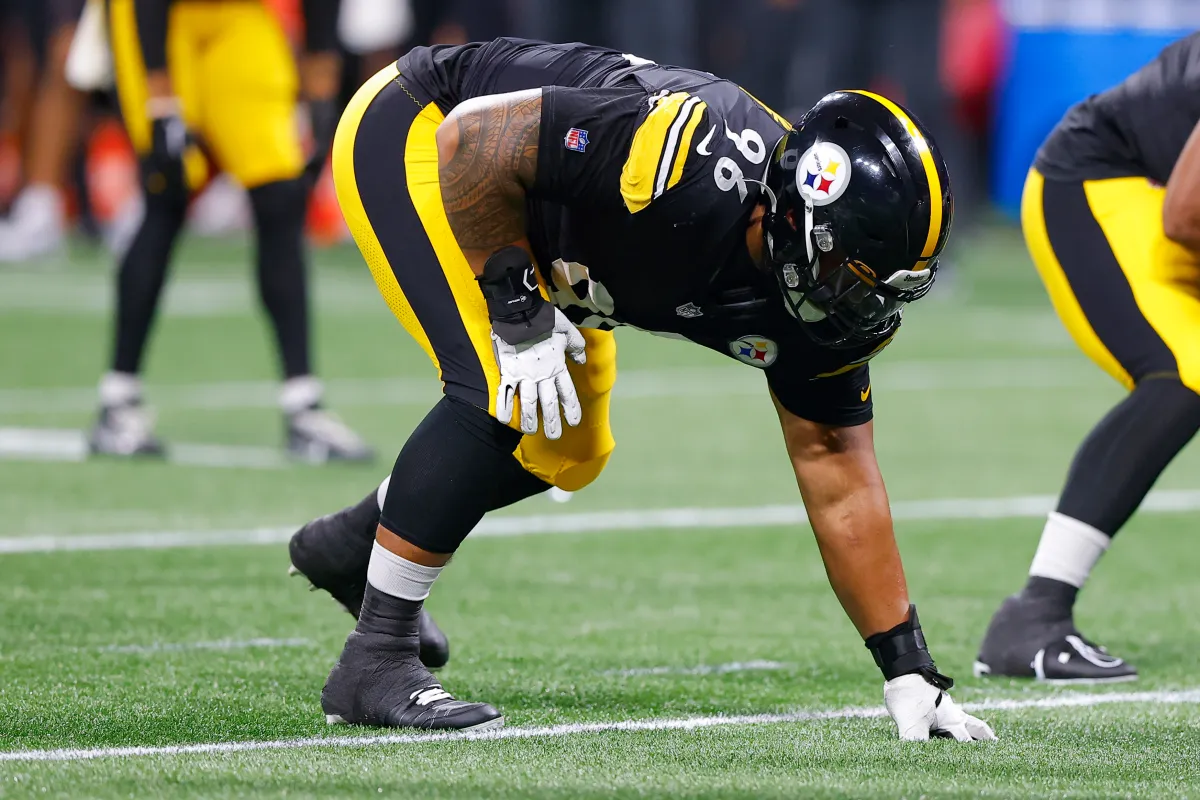
Former Pittsburgh Steelers defensive lineman Breiden Fehoko, a guy who won a national championship at LSU in 2019 and knows a thing or two about the pressure cooker of elite football, is one of the voices calling this out. He’s not holding back. He’s saying the quiet part out loud—that officials in football, at every level, have been manipulating games in ways that are visible to the players but invisible to the public. You can hear the frustration in his words. He claims that when he put the NFL on blast last year with similar accusations, the league responded not with a conversation or a correction but with a threat to pull his pension. His pension. The money he earned through years of putting his body on the line. That’s the kind of intimidation tactic that makes people shut up, and frankly, it says everything about the power dynamics at play here. Fehoko is done with that though. He’s speaking up anyway, which takes real courage, because it’s easy to say you’d be brave from the comfort of your couch but another thing entirely to put your livelihood on the line. He says he’ll never be quiet about it again. He’s telling fans to wake up, to understand that the games they love are being shaped by forces that have nothing to do with the players fighting on the field and everything to do with the people sitting in suites counting money.
Paragraph 5
It’s tempting to call Fehoko a conspiracy theorist and move on. It’s tempting to say that officials are just imperfect humans, that the game moves too fast, that there’s no grand plot. And maybe that’s true. Maybe it’s all just a series of coincidences. But here’s what’s undeniable: the incentives are structurally broken at the collegiate level. Conferences stand to gain millions of dollars from their teams’ success in the playoff, and the officials who work those games are affiliated with those same conferences. That’s not a judgment on any individual referee’s character; it’s a statement about systemic design. When you design a system where a conference profits directly from its teams winning, and when you staff the officiating crews from within that same conference, you create a conflict of interest that cannot be reasoned away. Throw in the expanded playoff and the astronomical sums of money involved, and you’ve created a pressure cooker where human beings—imperfect, fallible, susceptible to pressure—are being asked to make split-second decisions with life-changing financial consequences. The fact that mistakes happen should surprise no one. The fact that mistakes keep happening in the same direction, benefiting the same kinds of programs and conferences, is what should worry us. Because at some point, a pattern stops being a coincidence and starts being a scandal.
Paragraph 6
So where does this leave us? It leaves us with fans who are losing faith, players who are feeling cheated, and a sport that is supposed to be about fair competition becoming increasingly hard to trust. The moment that replay official cleared that clock, whether it was out of incompetence or something worse, it crossed a line. It sent a message that the game on the field is less important than the games being played off of it. And that’s a tragedy, because college football is one of the last great American pastimes. It’s the pageantry, the rivalries, the unpredictable magic of Saturday afternoons. But that magic dies a little every time a call like this happens with no real consequence. Fehoko is right to be angry. College football fans should be angry too. The answer isn’t just apologies or internal reviews or vague promises to do better. It’s structural change—independent officiating bodies that aren’t financially tied to conferences, transparent processes for holding officials accountable, and consequences that match the magnitude of the mistakes. Because if we don’t fix this, we’re essentially admitting that the outcome of games is for sale, that the only thing that matters is which conference gets the bigger slice of the pie. And that’s not football. That’s just business wearing a jersey. The whistle should mean truth. When it stops meaning that, we’ve lost something far more valuable than $4 million. We’ve lost the game itself.