

Here is the content summarized and humanized into a flowing, six-paragraph narrative that expands on the events with context, depth, and a focus on the human stories behind the headlines.
—
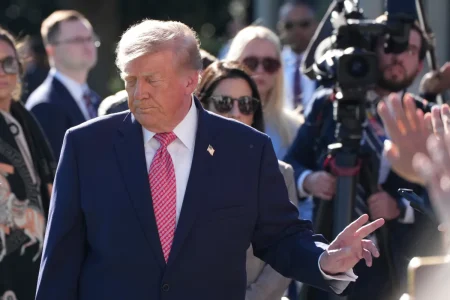
The skies above Houston, Texas, hummed with a rare, electric intensity on Friday. Known worldwide as the heart of American space exploration, the city was playing host to two seemingly opposite yet profoundly interconnected realities: the gravitational pull of political power and the boundless reach of human ambition. Airspace over the metropolitan area had become a high-security envelope, a temporary flight restriction (TFR) zone designed to protect the President of the United States during his visit. Within that invisible bubble of security, the quiet hum of private planes posed a potential threat, while just miles away, inside the hallowed halls of NASA’s Johnson Space Center, a group of astronauts were being celebrated as the architects of humanity’s next giant leap. It was a day that demanded vigilance from those who guard the skies and bold vision from those who seek to explore them. The juxtaposition was stark, yet entirely fitting—a reminder that the security of our nation and the expansion of our frontiers are twin pillars of the American spirit.
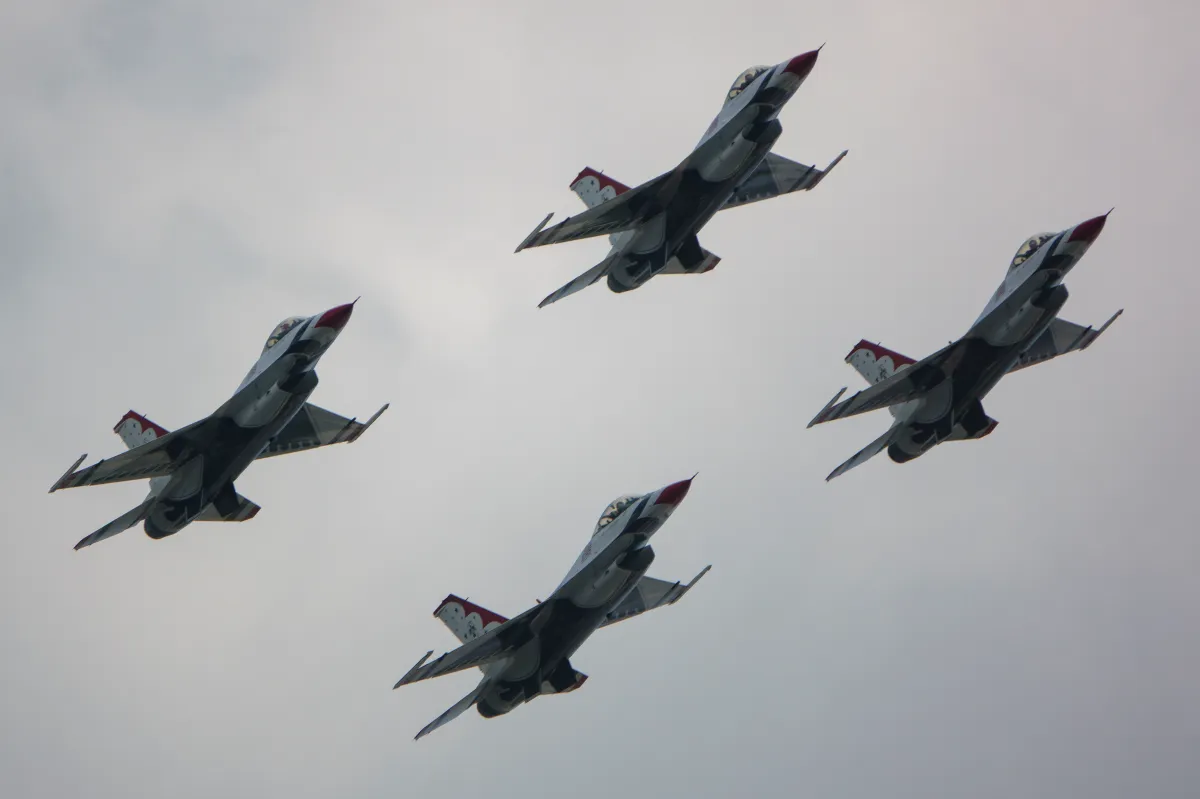
As the President’s schedule unfolded on the ground, the North American Aerospace Defense Command (NORAD) was executing a carefully choreographed dance of defense in the air above. In a routine yet critical operation, NORAD fighter jets—specifically F-16s—were scrambled to intercept no fewer than five general aviation aircraft that had inadvertently strayed into the protected TFR zone. For the fighter pilots, this was a mission executed with cold, professional precision; their aircraft armed not for combat, but for the purpose of escort. Their role was to close the distance, establish visual contact, and steer these civilian planes away from the restricted perimeter. For the pilots of those small Cessnas and Pipers, the sudden appearance of a multi-million-dollar fighter jet off their wingtip was undoubtedly a heart-stopping moment—a sharp lesson in airspace awareness learned at the cost of sheer adrenaline. The interception was remarkably smooth, devoid of any violent maneuvering, serving as a silent but potent testament to the ever-present guardianship of NORAD, a binational command that watches the continent’s skies around the clock, ensuring that a routine stroll on a weekend flight does not escalate into a national security incident.
This wasn’t an isolated event. The incident over Houston was the latest in a string of recent airspace violations that have repeatedly punctuated the President’s travels. Similar incidents occurred over Bedminster, New Jersey, near Trump’s golf club, and previously over Norfolk, Virginia, during a visit to the Naval Station. Each incursion triggers the same resource-intensive response: scrambling jets, disrupting air traffic, and escalating tensions. Behind these repeated occurrences lies a critical, and deeply human, flaw: the failure of pilots to consult the Federal Aviation Administration’s (FAA) Notices to Air Missions (NOTAMs). These notices are the aviation world’s bulletin board, detailing temporary hazards and restrictions, and they are legally required reading before any flight. Major General David Moar, Director of NORAD Operations, addressed the situation with a tone that blended firmness with a plea for common sense. “Safeguarding our shared airspace is a mission where every single aviator has a vital role to play,” he said. His words weren’t just a bureaucratic statement; they were a heartfelt call to the weekend hobbyist or the corporate pilot, reminding them that a few minutes of forgotten paperwork can put them in the path of a fighter jet, and more importantly, within a lethal envelope surrounding the Commander-in-Chief.
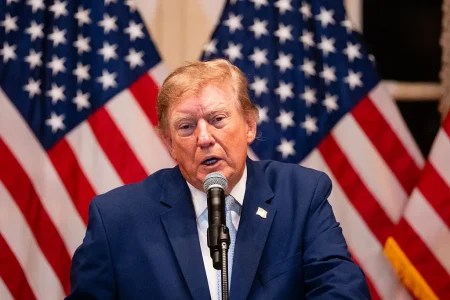
Meanwhile, inside the Johnson Space Center, the atmosphere was one of unbridled triumph and starry-eyed wonder, a stark contrast to the airborne drama unfolding outside. President Trump was on hand to bestow the prestigious Congressional Space Medal of Honor upon the crew of Artemis II, the historic mission that had recently circumnavigated the Moon and returned safely to Earth—a monumental achievement marking the first crewed lunar flight in over five decades. The heroes of the hour were Commander Reid Wiseman, Pilot Victor Glover, Mission Specialist Christina Koch, and Canadian Space Agency astronaut Jeremy Hansen. As the President placed the heavy, gleaming medals around their necks, the ceremony transcended mere politics. It became a celebration of the human spirit. Victor Glover stood as a symbol of diversity, a Black man journeying farther from Earth than any before him. Christina Koch embodied the breaking of glass ceilings, having flown the longest single spaceflight by a woman. Beside them, Jeremy Hansen represented the spirit of international collaboration, the first non-American to venture on such a path. In that room, they were not just pilots; they were living proof that courage, intellect, and perseverance can carry humanity beyond the confines of our home planet.
Yet, the President’s visit wasn’t solely about honoring past achievements; it was about igniting the future. In a bold executive action, Trump signed an order to establish the United States Space Academy, a landmark initiative aimed at institutionalizing the training of the next generation of cosmic pioneers. The academy, slated to be headquartered at the sprawling Johnson Space Center campus in Houston, is envisioned as a premier federal institution dedicated to producing astronauts, scientists, engineers, operators, civil servants, and military personnel. It represents a merging of the military, civilian, and commercial space sectors. To oversee its creation, the President assembled a powerhouse commission: NASA Administrator Jared Isaacman, a civilian astronaut and tech billionaire; Defense Secretary Pete Hegseth; White House Chief of Staff Susie Wiles; and science and technology adviser Michael Kratsios. Their mandate is clear—within 120 days, they are to craft the foundational guidelines for a “Harvard of the Cosmos.” The executive order explicitly states that the academy will “attract, train, and graduate the very best that our nation has to offer,” serving both the United States Space Force and NASA, and seamlessly integrating with the booming private spaceflight industry.
As the F-16s touched back down and the medals were safely secured in their cases, the dual narrative of the day came full circle. Friday in Houston was a microcosm of the modern American odyssey. On one level, it was a stark reminder of the fragile security of our daily lives, where protocol, vigilance, and the quick reaction of NORAD pilots keep our leaders safe from unwitting aerial intrusions. On another, it was a soaring vision of tomorrow, where the heroes of tonight are honored for voyages past, and where a new institution is born to forge the pioneers of the distant future. The security officers guarding the skies and the astronauts pushing the boundaries of space are, in the end, serving the same nation. One group ensures we remain safe to dream, while the other ensures our dreams can become reality. For the aspiring young students in Texas who watched the fighter jets streak overhead and listened to the astronauts’ tales, the message was clear: the sky is not the limit, but the beginning—a frontier guarded by the brave and explored by the bold.