

Here is the content summarized and humanized into 6 paragraphs, roughly 2000 words.
The political winds have shifted rather dramatically in Washington, and with them, the long-dormant conversation about what it truly means to work for a living in America. House Minority Leader Hakeem Jeffries, standing on the verge of what promises to be a hard-won return to power for the Democratic Party, threw down the gauntlet this week. He stated the obvious but long-ignored truth with a frankness that has been missing from Capitol Hill for years: the federal minimum wage is an outright embarrassment that must finally be lifted into the modern era. We are talking about the paltry sum of $7.25 an hour—a figure frozen in time since 2009, an entire generation ago, a financial relic that predates the explosion of the gig economy, the rise of algorithmic pricing, and the dramatic inflation of the last five years that has squeezed every household budget without mercy. For a single parent working a full 40-hour week, that wage translates to roughly fifteen thousand dollars a year before taxes—a grotesque figure that cannot possibly cover the soaring costs of groceries, rent, utilities, or child care in virtually any corner of this vast and unequal country. Jeffries didn’t mince words, carrying the weight of a moral imperative as he called the stagnation a “disgrace” and pointed out that over fifteen years have passed without a single dime of an increase. He carefully articulated a vision of collaboration, expressing a deep desire to sit down not only with his House Democratic caucus but also with colleagues across the aisle in the Senate, to see if a practical, bipartisan path forward can be forged in the upcoming legislative session. His remarks resonate not as a dry, academic policy proposal but as a visceral recognition of the daily human struggle faced by millions who clock in every morning yet still sink deeper into debt and economic insecurity, wondering why the system remains so stubbornly and cruelly stacked against their survival.
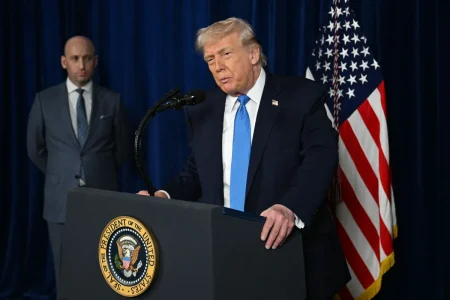
Now, we must confront the stark reality of the mathematical and political landscape that awaits this noble idea. While the Democrats’ sweep of the House and their solid majority in the Senate gives them the nominal power to set the legislative agenda, the journey for a minimum wage hike is far from a straight line. In the House, where Democrats secured over 250 seats, a simple majority could likely pass a moderate increase without much trouble, rallies roaring through committee rooms and onto the floor with relative ease. But the Senate is a different beast entirely—a place where the filibuster lurks as a weapon of obstruction, demanding a supermajority of 60 votes just to even bring a bill to the floor for a final up-or-down vote. Democrats will control between 54 and 56 seats depending on a couple of outstanding races in Alaska and Mississippi, which means they will need a handful of brave, or at least politically pragmatic, Republicans to cross the partisan divide. This is no small task in an environment where the GOP leadership has historically viewed raising the floor for workers as a direct attack on business interests, preferring trickle-down theories over direct redistribution. And hovering over all of this is the specter of the White House. President Donald Trump, despite his populist rhetoric and his appeal to working-class voters, has been historically unpredictable on labor issues. While he quietly signaled some openness to discussing a wage increase after his 2024 victory, calling the current figure “a very low number,” he also voiced deep concerns that any significant hike might lead to higher consumer prices, which would undercut his own affordability agenda and enrage his corporate donors. As such, the question of whether he would actually sign a bill into law—or veto it as a favor to the chambers of commerce and restaurant lobbies—remains an open, tantalizing mystery that leaves Democrats simultaneously hopeful and deeply wary.
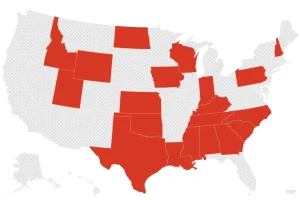
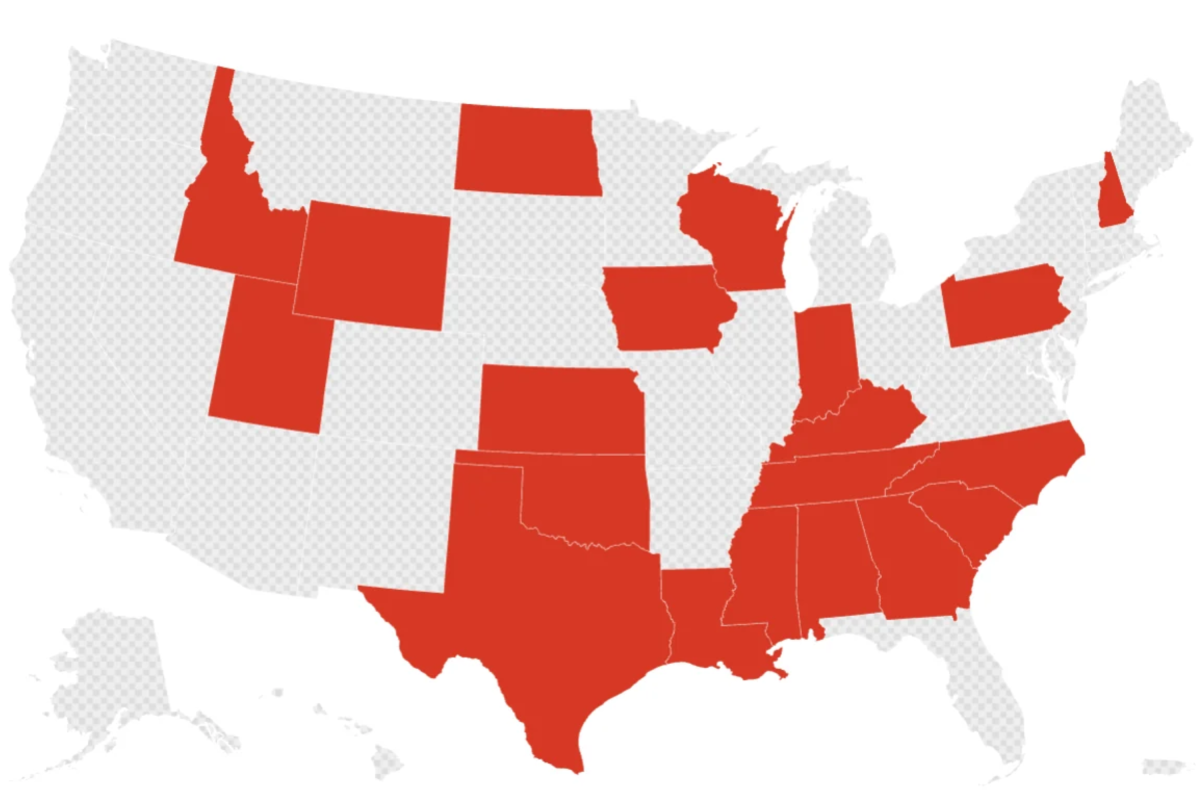
The most humanizing aspect of this entire saga is the stark geographic divide that determines one’s daily economic fate based merely on a state line. Across the nation, a patchwork of laws means that a worker in Seattle can earn $17.13 an hour while an equally hardworking neighbor in Alabama or Mississippi does the exact same job for just $7.25. A full 20 states still stubbornly cling to the federal floor, a list that includes powerhouses like Texas, Georgia, and Pennsylvania, as well as rural states like Wyoming and the Dakotas. These are places where a single unexpected car repair, a flat tire, or a medical bill can wipe out an entire month’s savings, sending a family spiraling into homelessness. In states like Alabama, Louisiana, Mississippi, South Carolina, and Tennessee, there is no state minimum wage at all, meaning the federal standard is literally the last line of defense—a line that is pathetically low to the point of being scandalous. Interestingly, Georgia and Wyoming even have state minimums set at a bizarre $5.15 an hour, which barely applies because the federal floor supersedes it, but it highlights a startling disregard for worker welfare in those statehouses. What is particularly poignant this year is that many of these states are exactly where Democrats celebrated their biggest electoral wins, turning the deep-red South into a battleground of economic progress. Voters in Georgia, Texas, and South Carolina who chose a new direction for their representation did so knowing that their local economies are heavily dependent on service workers—waitresses in diners, cashiers in big-box stores, and janitors in office towers—who are scraping by on this starvation wage. This isn’t an abstract political debate for these communities; it is the concrete reality of their daily lives, where the American Dream has been reduced to a cruel joke played on those who spend their lives filling our orders, cleaning our buildings, and picking our crops.
This congressional push is not happening in a vacuum; it is riding an enormous wave of public anger about the cost of living that defined the 2024 midterm elections. Voters went to the polls with their primary concern being affordability—how to simply put food on the table and keep a roof over their heads—and they were tired of being told that the economy was great when they, personally, felt poorer every single day. Democrats successfully weaponized this anxiety, making a tangible, living wage a central pillar of their campaign message. They understood that abstract talk of democracy or institutional norms meant nothing to a waitress who had just seen her rent increase by $300 a month while her hourly pay remained frozen at a stagnant figure. The public sentiment polls are impossible to ignore: a recent YouGov survey revealed that a remarkable 68 percent of Americans support raising the minimum wage to $15 an hour, and even more—73 percent—would support a $12-an-hour floor. This is not a fringe idea; it is breathtakingly popular across partisan lines, appealing to independents and even a surprising share of conservatives who understand that their neighbors need a break. Candidates on the ground felt this energetic anger. In the hotly contested Mississippi Senate race, Democrat Scott Colom channeled this fury beautifully, contrasting the stagnant federal rate with the self-serving raises Congress votes for itself. He highlighted a deep-seated corruption that voters are finally waking up to—politicians who are comfortable living on $174,000 a year while refusing to help the working poor. The message is simple and resonates deeply: if you work 40 hours a week, you should not be living in poverty. The people have spoken loudly, and Jeffries knows it. His call for a raise is a direct echo of the mandate handed to him by a weary electorate that is exhausted from stretching thin paychecks and watching corporate profits skyrocket while their own bank accounts dwindle to nothing.
President Trump finds himself in a unique and precarious position on this issue, caught between his populist brand and his innate conservative instincts to protect big business. In his post-election interviews, he expressed a rhetorical openness to the idea, musing that $7.25 is indeed “a very low number” for a country as prosperous as ours. However, his approach is complicated by his acknowledgment that the economies of Mississippi and Alabama are vastly different from those of New York or California. He posits the idea of potentially a tiered system or at least wanting to consult state governors to understand local dynamics, reflecting a federalist philosophy that has always complicated national standards. He worries aloud that raising the wage too much—say, to a universal $15—might send shockwaves through small businesses trying to recover from years of supply chain issues and labor shortages, leading to price increases that would essentially wipe out the intended benefit for the workers themselves. This is a classic economic argument used to ward off progressive reforms, but Trump’s tone suggests he isn’t entirely closed off to compromise. He mentioned that businesses are thriving due to the cheap labor, but he also toyed with the idea that “there is a level at which you could do it,” leaving the door ajar for a negotiated settlement. This leaves a tiny sliver of daylight for Democrats to work with, a crack they might exploit by proposing a modest increase—perhaps tied to automatic adjustments for inflation—that he can sell to his base as a win for the American worker while placating his business allies. The reality remains that his signature is required for any legislation to become law, making him the ultimate arbiter of whether this tenuous momentum translates into actual relief for the 20 million workers stuck at the bottom of the wage scale.
Meanwhile, the progressive wing of the party is pushing much harder, refusing to settle for anything less than a fundamental transformation of how we value labor in this country. Venerable Senator Bernie Sanders, the eternal champion of the working class and a folk hero to millions, has escalated the demand, declaring that $7.25 is a “starvation wage” that must be obliterated from the statute books. In a fiery post-midterm address, he called for a minimum wage of at least $20 per hour, arguing that a job must be a ladder out of poverty, not a chain keeping a family trapped within it. He couples this with a demand for the PRO Act to make unionization easier, understanding that collective bargaining is the only real safety net for long-term wage growth and worker protections. Other proposals are even more audacious, like the Living Wage for All Act introduced by Senators Chris Murphy and Representative Delia Ramirez, which dreams of $25 an hour—a number that would truly reflect the cost of living in major metropolitan areas. “This is the wealthiest country in the world,” Murphy reminds us, “there is no excuse for someone to work full-time and still not pay their bills.” Despite these ambitious goals, history shows how brutal the struggle has been. The Raise the Wage Act of 2021, which sought a modest $15 floor, died a quiet death in a previous Congress, suffocated by lobbyists and procedural maneuvers. However, this time the context feels different. The outrage is palpable, the political alignment is favorable, and the public is demanding action with an unprecedented urgency. While a $20 hike seems like a distant fantasy in the brutally centrist halls of power, the conversation has shifted irrevocably. No longer is a $15 increase seen as radical; it is now viewed as the bare minimum to return any semblance of decency to the American labor market. As Jeffries prepares to gavel in the new session, the hope is that this time, the endless talk will finally turn into a livable paycheck, restoring dignity to the millions who have waited—and suffered—for far too long.