

There is something uniquely painful about watching a football team that simply cannot get out of its own way. For Michigan fans, that pain has become a familiar companion this season. Every Saturday, they tune in with a little bit of hope, expecting an offense that finally clicks—a crisp throw, a clean pocket, a drive that ends in the end zone instead of another punt or a field goal. Instead, they have watched the Wolverines struggle to find any kind of rhythm no matter who is under center. Bryce Underwood and Tommy Carr have each had their moments, small flashes of the kind of playmakers they might one day become. But those moments have been too few, too scattered, and too often undone by a penalty, a blown assignment, or a play call that leaves everyone scratching their heads. The result has been an offense that feels broken in a way that a single heroic play cannot fix. It is the kind of frustrating, stop-and-start football that wears on a fanbase and, eventually, on the people paid to fix it. For much of the season, that frustration has been directed at offensive coordinator Jason Beck. Every conservative third-down call, every stalled drive, every wasted quarter has been laid at his feet. And while it is never fair to pin an entire season on one person, the sheer weight of the evidence has been hard to ignore. Michigan has been one of the least productive offenses in the Big Ten, and that is not a label any coach wants to carry. So when the Wolverines stumbled again in an ugly rivalry game, the question was not whether changes would come—it was how soon.
The loss to Michigan State was not just another loss. It was an ugly, grinding, deeply frustrating afternoon that left everyone in maize and blue feeling sick. The final score, 15-6, told the story of an offense that could not reach the end zone and a defense that was left to carry a team that kept shooting itself in the foot. In a rivalry game, where emotion and pride are supposed to overcome talent gaps and tactical issues, Michigan came up empty. The head coach did not mince words afterward. Speaking to reporters on Saturday night, he said that the game was perhaps the most disappointed he had ever been in a team he had coached. That kind of statement is not made lightly. Coaches say a lot of things after losses, but this felt different—raw, honest, and heavy. It was the sound of someone who had poured everything into preparing a team, only to watch it unravel on the biggest stage. For the players, that message must have landed like a punch. There is nothing worse than knowing your coach believes you have more to give, and yet somehow, when the lights were brightest, the team could not find it. The loss to Michigan State was not just a blemish on the record; it was a mirror held up to everything that had been wrong all season. It forced everyone connected to the program to ask hard questions. And the hardest of those questions had to do with the man in charge of the offense. By Sunday, the answer had arrived.
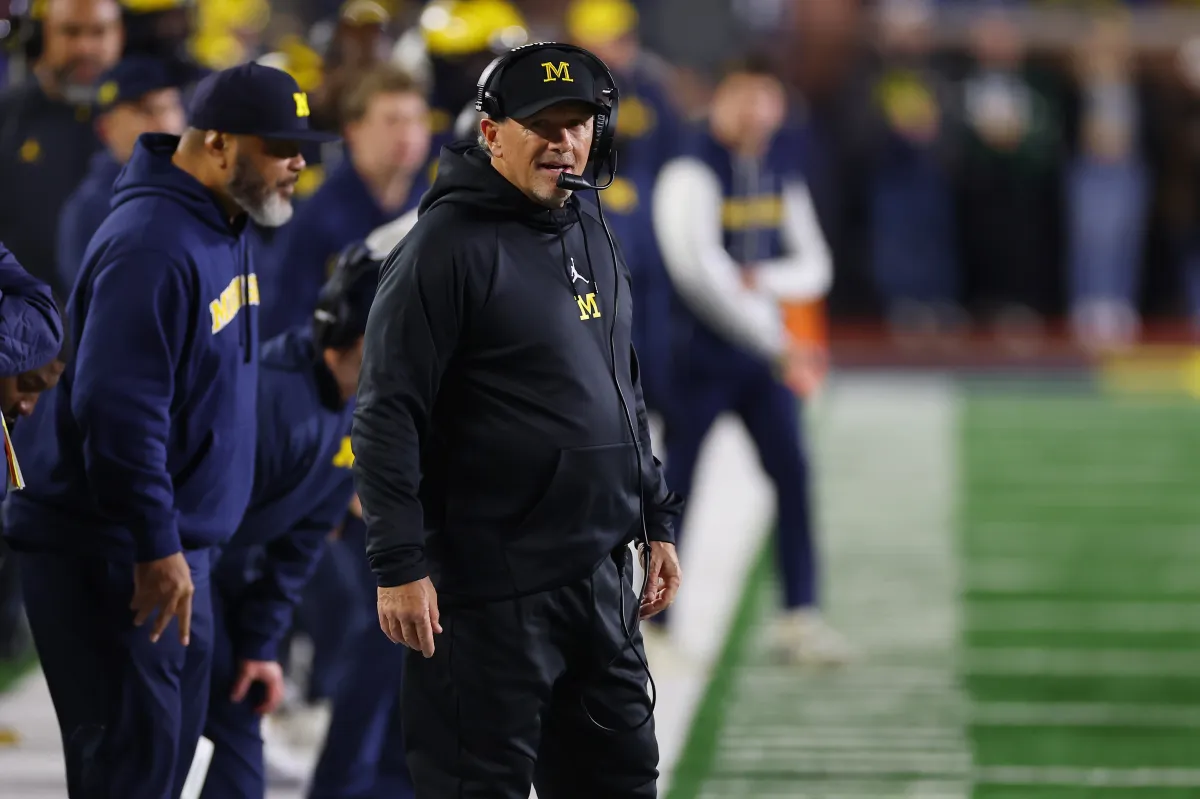
One day after the loss, with emotions still raw and the sting of another disappointing offensive performance still fresh, Michigan made a decision. According to ESPN college football insider Pete Thamel, the Wolverines have fired offensive coordinator Jason Beck. It is the kind of move that feels inevitable in hindsight, but that does not make it any less significant. Behind every coaching change is a person, and Beck was not just a name on a press release. He was a coach who spent hours in meeting rooms, who believed in his system, who pushed players to be better and who, like everyone around the program, wanted to win. College football is a brutal business, and the reality is that when a team underperforms, the people in charge are the ones who pay the price. Sometimes that is fair, and sometimes it is simply the way the sport works. The decision to let Beck go was not made in a vacuum. It was a response to months of frustration, to statistics that ranked Michigan among the worst offensive teams in the Big Ten, and to a loss that seemed to crystallize all of the program’s problems in one miserable afternoon. For fans, it was the move they had been calling for. For the players, it was a reminder that nothing in football is guaranteed. And for whoever will replace Beck, it is a monumental challenge. The interim offensive coordinator, whoever that may be, will have to walk into a complicated situation and try to bring some kind of order to an offense that has spent the season searching for an identity. It is not an easy job, but someone is going to have to do it.
The numbers behind Beck’s dismissal are impossible to ignore. Michigan ranks in the bottom two of the Big Ten in nearly every major offensive category, including total yards per game and points per game. That is not a matter of bad luck or a couple of tough matchups. It is a season-long pattern of inconsistency, missed opportunities, and a general inability to sustain drives. There have been moments when the offense has looked capable—a well-designed screen, a scrambling quarterback picking up a key first down, a receiver making a contested catch—but those moments have been too few and far between. Watching Michigan play offense this season has been like watching a car sputter down the highway: every once in a while it hits a stretch of smooth road, but sooner or later it sputters again and everyone in the car holds their breath. The blame cannot be placed entirely on Beck. There have been missed blocks, dropped passes, and bad decisions by players at crucial moments. But the coordinator is the one who sets the tone, who calls the plays, and who is expected to put players in positions to succeed. When the offense repeatedly fails to do even the basic things well, the coordinator’s seat starts to get very warm. And by the time the Michigan State game ended, that seat was on fire. The decision to make a change was less about one game and more about the weight of an entire season. It was about the frustration of watching a proud program struggle to move the ball against anyone with a pulse. It was about looking at the remaining schedule and realizing that, without a change, things were only going to get worse.
Now comes the hard part. It is unclear who will serve as Michigan’s interim offensive coordinator for the rest of the season, but whoever takes over will have their hands full immediately. The schedule does not offer any mercy. Waiting for Michigan are matchups against the No. 23 Oregon Ducks, the No. 8 UCLA Bruins, and the No. 12 Ohio State Buckeyes. Those are not the kind of teams you want to face when you are trying to install a new system, calm a nervous fanbase, and rebuild a broken offense. They are the kind of teams that punish every mistake, that expose every weakness, and that can turn a bad situation into a complete disaster. But this is college football, and there is no time to feel sorry for yourself. The interim coordinator will have to find a way to simplify things, to focus on the fundamentals, and to give the players something to believe in. It is not about completely reinventing the offense in a few weeks; it is about finding a few things that work and building from there. It is about giving the quarterbacks a clear vision, giving the offensive line a plan they can execute, and giving the playmakers a chance to make plays. The players themselves still have a lot to prove. They have not given up, and they should not be expected to. But they are going to need leadership that can guide them through the chaos. Whether that leadership comes from a familiar face on the staff or from someone with fresh eyes, the challenge is enormous. The season may already feel lost to some, but for the people inside the building, there is still pride to play for and a future to build.
In the end, this is a story about more than football. It is about what happens when expectations meet reality, when plans fall apart, and when people have to decide how to respond. Michigan is a program with a proud history, and its fans expect championships. When the offense fails to deliver, the disappointment is not just about wins and losses. It is about the feeling that the team is not living up to its potential. Firing a coordinator is a dramatic move, but it is not the end of the world. It is a chance to hit the reset button, to take a hard look at everything that has gone wrong, and to try something different. For Jason Beck, this is a painful moment, but it does not define his entire career. For the players, it is a reminder that football is unpredictable and that every day matters. For the fans, it is another chapter in a season that has been full of frustration. But there is still something valuable in this moment. Adversity reveals character. How Michigan responds to this setback will say more about the program than any win or loss. The rest of the season is not just about trying to salvage a record. It is about finding a way to finish with dignity, to develop young players, and to remind everyone that the Wolverines are still capable of fighting. The road ahead is brutal, and there are no easy answers. But in football, as in life, sometimes the only way out is through. And Michigan is about to find out exactly what it is made of.