


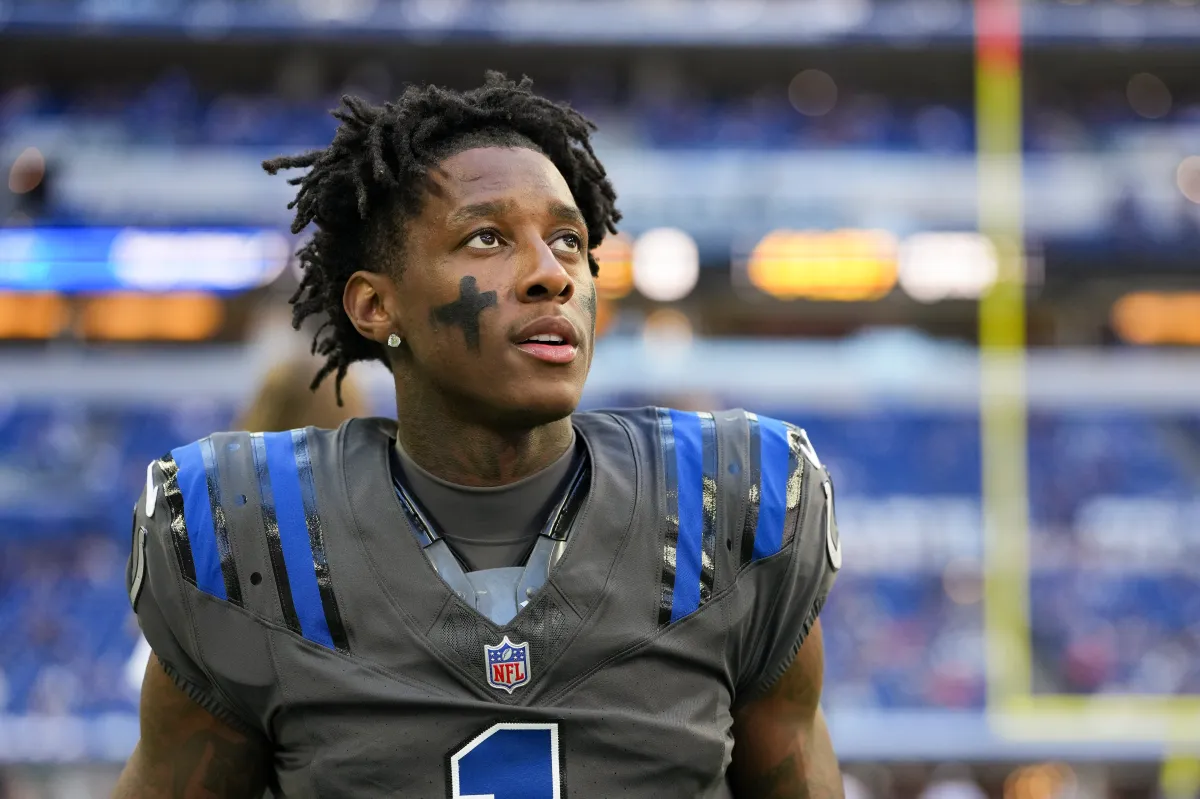
There are moments in sports when the bottom falls out so suddenly that it leaves everyone dizzy. The Indianapolis Colts have gone from AFC contender to full-blown sellers in the span of a single year. Just one season ago, this was a franchise with real ambition, a team that believed it was knocking on the door of the AFC’s elite. They were 7-2, sitting at the top of the conference, and making aggressive, win-now moves. Now, after a humbling 42-7 loss to the Jacksonville Jaguars, the same franchise is 2-6 and openly tearing itself apart. That game wasn’t just another loss. It was an unraveling, a day when the gap between where the Colts thought they were and where they actually are became impossible to ignore. The front office has already responded with sweeping changes. General manager Chris Ballard is gone. Guard Quenton Nelson and defensive tackle DeForest Buckner have been traded away. And with the trade deadline set for Tuesday, the team is open for business. This is not a reset with a positive spin. This is a full surrender. Ownership, according to reports, wants to tear the roster down to the studs. That phrase is brutal, but it’s also honest. It means no player is untouchable, no contract is too complicated, and no relationship is too precious. It also means the Colts have admitted, in the most public way possible, that the vision they sold to fans was broken. It’s tempting to say they were never real contenders, but that’s not quite fair. They were real contenders at the time. Then injuries happened, momentum faded, losses piled up, and the whole thing caved in. For the people who bought tickets, who argued online, who believed the timeline was real, it’s a gut punch. But in the NFL, apologies come in the form of trades, and the Colts are preparing to write a lot of them.
When news first leaked that the Colts might be sellers, most fans probably assumed running back Jonathan Taylor would be the headline name. Taylor has been the heartbeat of the offense for years, and trading him would be painful, but not entirely shocking. The NFL is a business, and when a team is 2-6, every valuable player becomes a potential asset. But according to NFL insider Jason La Canfora, Taylor isn’t the only big name on the block. The Colts are expected to make another three or four trades, and one of those trades could involve Sauce Gardner. That is a stunning twist. Gardner was the player who symbolized the Colts’ win-now push. He was supposed to be the missing piece, the final evidence that Indianapolis was serious about winning a championship. At last year’s trade deadline, the Colts sent their 2026 and 2027 first-round picks, along with wide receiver Adonai Mitchell, to the New York Jets to bring Gardner to Indianapolis. At that moment, the Colts were 7-2 and leading the AFC. The trade felt like a declaration. The front office was not playing it safe. They were all in. But football doesn’t care about declarations. Gardner hurt his calf and only managed to play three games with his new team. Indianapolis lost its final seven games, finished 8-9, and missed the playoffs entirely. The dream collapsed before it even had a chance to breathe. Now the price of that bold move is becoming painfully clear. The 2027 first-round pick the Colts owe the Jets is looking like it could be a very high pick. They mortgaged their future for a run that never happened, and the true cost of that gamble is now impossible to hide. And now the Colts are back in a familiar place, looking at a trade deadline that will define the franchise for years to come.
Let’s take a step back and think about the human side of this story, because it’s easy to get lost in draft picks and salary cap numbers. Sauce Gardner didn’t ask to be traded from the Jets. He was building something in New York, and then suddenly he was on a plane to Indianapolis with enormous expectations resting on his shoulders. He didn’t get hurt on purpose. He didn’t plan to disappoint anyone. But injuries and bad timing turned a dream acquisition into a cautionary tale. The cruelest part is that Gardner is exactly the kind of player teams dream about. He is in the first season of a four-year, $120.4 million extension that runs through 2030, a deal that made him the highest-paid cornerback in NFL history when he signed it. He should be the future of the Colts defense, the guy who locks down the opposing team’s best receiver for years to come. Instead, he’s now being discussed as a trade chip. La Canfora reports that a high-ranking official told him, “Oh, I think they want to move a corner.” That’s not how any player wants to hear his name discussed. It takes a promising young star and turns him into inventory. For a player like Gardner, this must feel both humbling and surreal. He went from being the symbol of a team’s bright future to being a problem to solve in a spreadsheet. That transition is never easy. And it’s even harder when the reason has as much to do with money as it does with football. It’s one thing to trade a player because he can’t play anymore. It’s another to trade him because he’s too expensive to keep. That’s the paradox of the NFL, and it’s one that Gardner never chose to live inside.
The financial realities make this decision messy, another reminder that NFL rosters are built on math as much as passion. La Canfora notes that Gardner is likely to return from a more minor injury in Week 8, but that doesn’t mean he’ll be on the Colts much longer. His contract, after all, comes with real consequences. Gardner is guaranteed $26 million next season. That’s a massive commitment for any team, especially one that is about to enter a rebuild. To facilitate a trade, the Colts would have to be willing to absorb some of that salary or find a trading partner willing to take on a big number for a player who has missed significant time. That’s not impossible, but it’s not as simple as just putting him on the block and accepting the best offer. La Canfora also points to Charvarius Ward, a cornerback due $18 million in 2027 with no guarantees. Between Gardner’s guaranteed money and Ward’s future salary, something has to give. It’s not that the Colts suddenly think Gardner is a bad player. It’s that they need financial flexibility and draft capital. They are building toward a future with a new general manager, likely a new coach, and perhaps a new quarterback. In that kind of reset, paying $26 million to one cornerback is a luxury they can no longer afford. It’s a harsh calculus. The same player who once represented their ceiling as a Super Bowl contender now represents an obstacle to the rebuilding process. That’s not a comment on Gardner’s talent. It’s a comment on the brutal reality of roster construction. When a team wants to tear things down to the studs, they don’t keep expensive pieces. They trade them for whatever they can get, even if it means selling low.
From a practical standpoint, trading Gardner might be one of the smarter moves the Colts can make, even if it hurts. They already don’t have a first-round pick in 2026 or 2027, so they need to bring in assets however they can. If they hold on to Gardner and the losing continues, he’ll be one of the few valuable chips left on a roster that’s heading nowhere. But if they trade him now, they can recoup some draft capital and start rebuilding the pipeline of young talent they lost when they went all in. That’s the kind of decision that feels cold but is actually necessary. A new regime is coming, and new regimes rarely want to inherit someone else’s big-money contracts. They want their own players, their own culture, their own vision. Gardner doesn’t fit that vision because he was the signature move of the old vision. That’s not fair to him, but fairness doesn’t have a lot to do with the NFL trade deadline. The Colts have to be honest with themselves. They are not one player away. They are not two players away. They are a team that needs to be rebuilt from the ground up, and that means making hard decisions that will look bad in the headlines. Trading a player like Gardner, especially after giving up so much to get him, would be an admission of failure. But sometimes the first step toward growing again is admitting that the previous plan didn’t work. There is no way to make this look good in the moment. The Colts are about to learn what that feels like, and it won’t be comfortable. It might be necessary, though, and that’s the distinction that separates rebuilds from collapses.
In the end, this story is about how quickly hope can turn into regret. A year ago, the Colts were the envy of teams that were afraid to take risks. They were aggressive, ambitious, and unapologetic. They traded away a mountain of future picks for a player they believed would push them over the top. The logic was understandable. The execution, however, was unforgiving. Injuries happened. Games were lost. The season spiraled. And now the same franchise is doing what so many NFL teams do when things fall apart: looking for a scapegoat, trading away expensive parts, and preparing for another painful reset. The most human part of this is knowing that nearly everyone involved, from Ballard to Gardner to the fans in the stands, wanted the same thing. They wanted a winner. They wanted Sundays to matter in January. They wanted to feel the joy that comes with a deep playoff run. None of that happened, and now the only choice is to start over. For Gardner, this could mean packing his bags for a third team in a few years. For the Colts, it means another rebuild with no guaranteed results. For fans, it means acknowledging that their team is back at the beginning of a cycle that might take years to complete. There is no way to soften that blow. There’s only the quiet hope that this time, the foundation will hold. That one day, the painful trades and lost seasons will be the price paid for a team that’s finally ready to win. And until that day arrives, the Colts will do what every rebuilding team does: keep moving, keep trading, and keep trying to find a reason to believe. No one knows what the next few years will bring, but one thing is certain. The Colts of last October are gone forever, and whatever comes next will be built on the wreckage of a gamble that just didn’t pay off.