


Paragraph 1
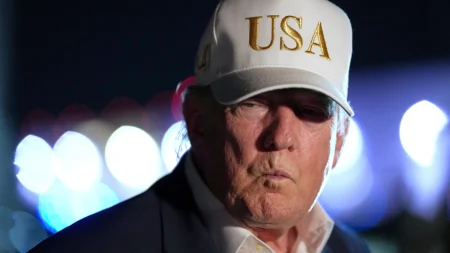
There is a particular kind of vulnerability that settles in when a leader, long known for unwavering bravado, suddenly allows a flicker of doubt to cross the public stage. President Donald Trump’s recent interview with 60 Minutes offered one of those rare, almost jarring moments of reflection. Days after a bruising midterm election that stripped his party of control in Congress, Trump sat down and acknowledged that his administration’s immigration crackdown—one of the defining pillars of his political identity—may have been too severe. “I think it was too tough,” he said, repeating the thought as if to test its weight. “I think it might be too tough. And a lot of people would say that it’s great, but a lot of people think it’s too tough. I think, ultimately, that hurt me.” It was a striking admission from a president who had spent years casting the border as a battlefield and immigrants as an invading force. Yet even in this softer moment, he clung to the narrative that had carried him so far: he gave himself an A+ for closing the border and high marks for “getting the bad ones out.” The human nuance, however, crept through in his description of those caught in the dragnet—people with good jobs, working in landscaping and hotels, sometimes paying taxes, whose only transgression was entering the country without legal permission. These are not abstract statistics or political symbols; they are neighbors, coworkers, and people who contribute to the quiet machinery of American daily life. By acknowledging their humanity, Trump seemed to hint at a deeper political truth: that absolute enforcement, untempered by mercy or common sense, can become politically unsustainable and personally costly. But whether this reflection signals a genuine shift in policy or merely the calculation of a wounded politician remains an open, painful question for the millions of families living in the shadows of his administration’s policies.
Paragraph 2
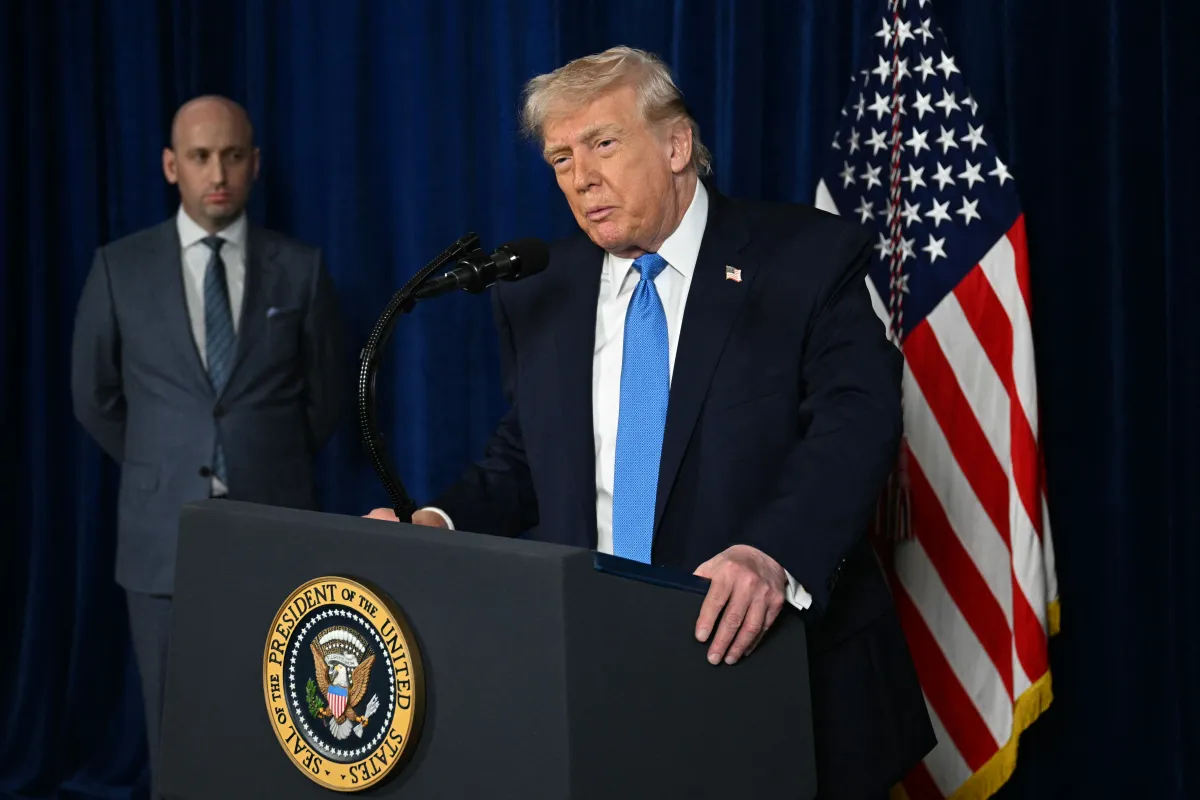
The backdrop to this admission makes it all the more complicated and, in many ways, more tragic. Just days before Trump’s moment of introspection, he elevated Stephen Miller—the man who has been the intellectual and ideological engine of the administration’s harshest immigration measures—to the role of White House chief of staff. This is the very same Miller who championed the zero-tolerance policy that tore thousands of children from their parents’ arms, who advocated for travel bans on predominantly Muslim countries, and who has consistently pushed for ever-wider nets of arrest and deportation. The irony is almost unbearable: even as the president mused aloud that his approach might have alienated voters, he handed more power to the person most responsible for that approach. Miller, who served as deputy chief of staff and homeland security adviser in the second Trump term, now steps into a position that gives him sweeping authority across the entire federal government. He replaces Susie Wiles, who had been seen as a moderating influence. With Miller at the helm, there is little reason to believe the administration’s enforcement machinery will slow down. In fact, the opposite seems more likely. The incoming Democratic-controlled Congress has already signaled that Miller will face intense scrutiny, with Representative Robert Garcia of California—set to lead the House Oversight Committee—explicitly naming Miller’s role in immigration enforcement as a subject warranting investigation. But investigations take time, and policies can cause irrevocable damage in the meantime. For immigrant communities, the elevation of Miller feels less like a political maneuver and more like a declaration of war. It suggests that despite the president’s televised second thoughts, the machinery of cruelty will continue to operate—perhaps even more efficiently now that its architect has been given the keys to the entire executive branch.
Paragraph 3
To understand the gravity of Miller’s elevation, one must revisit the trail of policies he has left behind. During Trump’s first term, Miller was the driving force behind the travel restrictions affecting several Muslim-majority countries, a policy so controversial that it sparked protests at airports across the nation. He championed the zero-tolerance policy that led to thousands of family separations at the southern border, creating images of children in cages that horrified the world. He worked to slash refugee admissions and tightened rules for legal immigrants who relied on public benefits, effectively punishing those who sought to build better lives for their families through lawful means. These were not abstract bureaucratic decisions; they were deliberate choices to inflict suffering as a deterrent. And when Trump returned to office in 2025, Miller picked up where he left off with renewed vigor. He pushed for at least 3,000 immigration arrests per day, an astonishing number that would strain every resource and destroy countless livelihoods. He backed the use of the Alien Enemies Act of 1798—a dusty, wartime statute—to deport alleged Venezuelan gang members, raising serious legal and ethical questions. He supported third-country deportations, shipping people to nations they may never have set foot in, and floated the use of the National Guard to support mass removals, a militarization of immigration enforcement that has long been a nightmare of civil rights advocates. Perhaps most significantly, he championed the immigration provisions of Trump’s One Big Beautiful Bill Act, which funneled roughly $170 billion into immigration enforcement and border security. For Miller, this was not merely a policy victory; it was a defining achievement. He described the bill as containing “the most significant border security and deportation effort in history.” Behind these grand statements are real human beings: mothers, fathers, children, and workers who have woven themselves into the fabric of American communities. Every statistic represents a life interrupted, a family shattered, a dream extinguished.
Paragraph 4
Miller’s own words reveal a worldview that is unsettling in its single-mindedness. In a CNN interview in late January 2025, he made clear that while ICE would prioritize terrorists and public safety threats, the agency’s efforts would not be limited to those categories. When asked whether immigration officials would go after anyone living in the country illegally, Miller said, “Yes, but we’re not going to immunize everybody that Joe Biden let in.” He described an early target of 75 arrests per day for each ICE field office as a “floor, not a ceiling,” emphasizing that the goal was to arrest far more. By May, that target had escalated to 3,000 arrests daily, and Miller publicly pressed ICE officials to hit the number. His rhetoric often dehumanized the people caught in the system. He called a nurse named Alex Pretti, who was fatally shot by immigration agents, a “domestic terrorist” and an “assassin.” He described protests in Los Angeles against enforcement operations as an “organized insurrection” and accused California’s government of “aiding and abetting” illegal immigration. He even suggested that restricting migrants’ access to financial services—credit cards, bank accounts, direct deposit—would serve as a “massive engine for deportation.” The cruelty is not incidental; it is the point. Miller believes that making life unbearable for undocumented immigrants will force them to leave on their own, saving the government the trouble of hunting them down. This is not policy; it is punishment. And now, with his promotion to chief of staff, Miller has been given a platform to impose this vision on every corner of the federal government. When he appeared alongside Trump after the announcement, he pledged “absolute loyalty” and “unwavering commitment” to the president’s success. There was no hint of softening, no acknowledgment of the human toll. Instead, he praised Trump for having “saved our border from annihilation.” For those who have watched Miller’s career, the message is clear: the administration’s hard line is not retreating; it is doubling down.
Paragraph 5
Trump’s admission of political damage, however, reflects a broader reality that even the president could not ignore. Exit polls from the midterm elections showed that more than half of voters believed the administration’s immigration enforcement had gone too far, and six in ten disapproved of Immigration and Customs Enforcement’s performance. Yet immigration itself ranked well behind the economy and concerns about democracy, with only 14 percent of voters calling it the country’s most important issue. This is a deeply human paradox. Many Americans are uncomfortable with cruelty, but they are also tired, worried about their pocketbooks, and uncertain about the future. The issue that once animated rallies and dominated headlines had, by election day, become one concern among many—important, but not always decisive. Still, the shift is notable. A president who built his political career on the promise of a wall and mass deportations now acknowledges that his approach may have cost him support. Perhaps he saw the faces of voters who were not persuaded by fear, who recognized that the person fixing their hotel room or tending their garden might not have legal papers but is still entitled to dignity. Perhaps he realized that the ferocity of his enforcement campaign created a backlash not only among immigrant communities but among the broader public, which values fairness and restraint even when it supports border security. For Democrats, the election results were a vindication of their criticism, and they are preparing to act. In January, when they take control of Congress, they have promised to investigate the administration’s enforcement policies, with Miller as a primary target. Representative Garcia’s commitment to oversight suggests that the next session will be marked by painful, necessary confrontations over what has been done in the name of the American people.
Paragraph 6
Outside the halls of power, the reactions to Miller’s promotion are both fearful and resolute. Adam Klein, a former senior Department of Homeland Security official and co-founder of Globali.ai, expressed concern about what the new chief of staff could do across the government. “Immigration law doesn’t have to change for the experience of immigrants and employers to change dramatically,” Klein warned, pointing to agencies like U.S. Citizenship and Immigration Services that could make benefits harder to obtain through narrower interpretations, additional evidence requirements, and increased scrutiny. The law may remain on the books, but the process of accessing it can become an obstacle course designed to exhaust even the most determined applicants. Meanwhile, United We Dream Action, an immigrant advocacy group, issued a statement that captured the moment’s weight: “Stephen Miller’s appointment is both a reminder and a warning to Democrats that the stakes working people are up against have not disappeared simply because of their recent victories. What’s ahead will be a deliberate effort from the Trump Administration to double down on their brutal agenda and test the Democratic Party’s resolve to deliver real results for working families.” This is the heart of the matter. The political maneuvering, the elections, the appointments, the investigations—all of it ultimately revolves around the lives of ordinary people. There are the landscapers and hotel workers Trump mentioned, people whose labor keeps the economy running but whose presence in the country is a crime in the eyes of the administration. There are the children who have grown up in the United States, who speak English with American accents, who dream of the same futures as their classmates, yet who live in constant fear of a knock on the door. There are the legal immigrants who followed every rule, only to find the rules changed beneath them. And there are the American citizens who simply want their government to be humane, efficient, and fair. Trump’s admission that he was “too tough” is a tiny crack in a wall of ideology—a moment of human recognition that may or may not lead to change. But for now, with Miller sitting in the chief of staff’s office, the wall appears stronger than ever. The coming months will reveal whether the country’s conscience can overcome the machinery of its fears, or whether the human cost of enforcement will continue to rise in silence and sorrow.