


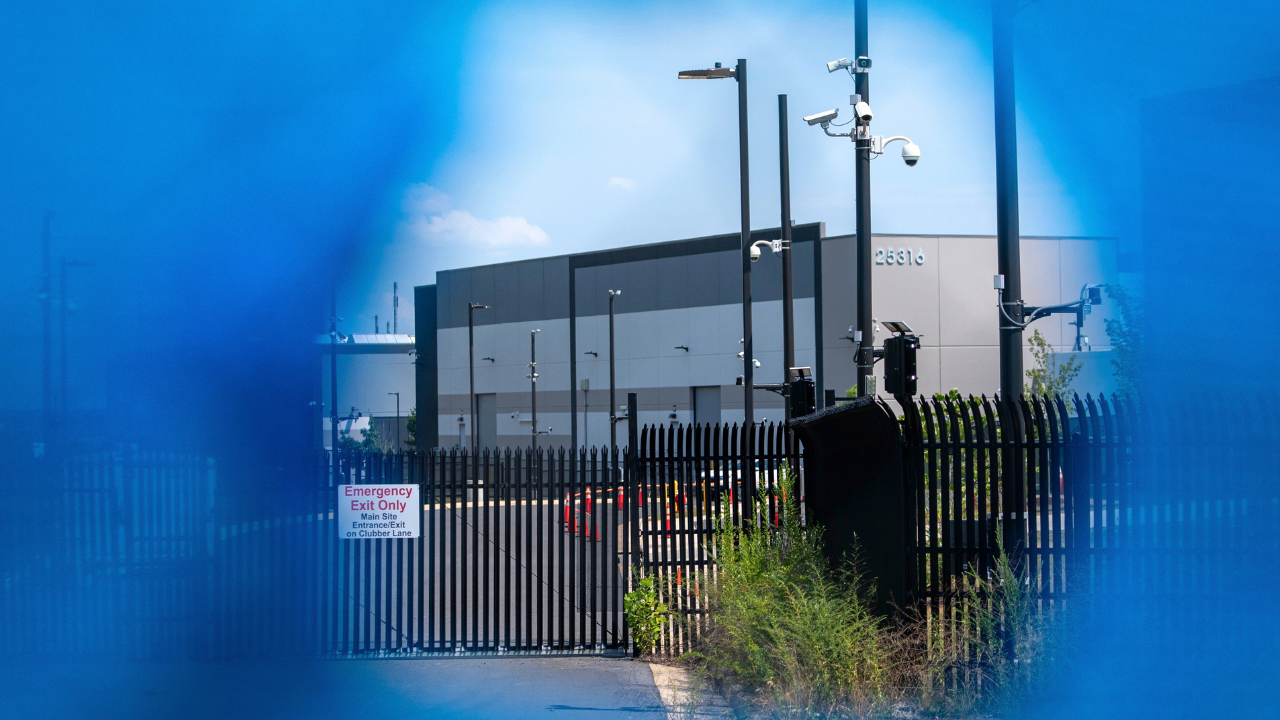
There was a moment, not long ago, when a strip of rural land with one stoplight and a whole lot of open sky would have been the last place you’d expect to find a political earthquake. But that’s exactly what an important new analysis from Humans First, a conservative AI safety group, says it found in communities across the country. The report, first obtained by Fox News Digital, looked at public election returns and data-center project records in 1,540 counties across 16 states. The group’s researchers were trying to understand a pattern that had been building quietly for years: in deep-red counties, the kind that used to be reliably safe for Republicans, something strange happened on Election Night. Counties with large data centers, or with proposed data centers looming on the horizon, shifted toward Democrats at a noticeably higher rate than comparable counties without such projects. The memo refers to this as a “data center penalty.” Across all the counties studied, those hosting large data centers moved an additional 2.2 percentage points toward Democrats compared with non-host counties in the same states. That pattern appeared in 14 of the 16 states and in 25 of the 27 governor and Senate races examined. Even when the analysis was restricted to deep-red counties—places President Donald Trump won by at least 20 points in 2024—the raw gap was still 2.1 points between counties with large data centers and comparable counties without them. This isn’t a story about blue waves crashing over red states. It’s a story about a very particular, very local grievance that has started to change the way people vote.
The analysis did more than just compare raw numbers. It dug into the demographic and political characteristics of each county, trying to isolate the effect of data centers from other factors that might explain why a county would shift left. The researchers controlled for past voting patterns, whether the county was rural or urban, population size, racial and ethnic makeup, and recent voting trends. After all those controls, the pattern held. Among deep-red counties with projects still in the proposal stage, the gap was 1.1 percentage points after accounting for all those variables. That might not sound like a huge number, but in a political environment where close elections are decided by razor-thin margins, a one-point shift in counties that were supposed to be safe can be enough to change the entire arithmetic of a statewide race. Perhaps more tellingly, the memo found that Republican vote totals fell an additional 1.1% in deep-red host counties compared with similar counties without large data centers, while Democratic vote totals showed no significant change. In other words, this doesn’t look like Democrats suddenly becoming more enthusiastic. It looks like Republican-leaning voters either staying home, or holding their noses and refusing to vote for candidates they see as complicit in the data center buildout. Humans First was careful to note that its findings are associations, not proof that data centers caused anyone to change their behavior. County-level results can’t reveal whether Republicans switched their votes or simply didn’t show up. But the sheer scale of the pattern is hard to dismiss. The group identified 114 proposed large data center projects across 92 deep-red counties, and those projects are not going to build themselves. As more proposals come forward, more communities are going to be forced to choose sides, which means more political battles are likely coming.
For Amy Kremer, chairwoman of Humans First, none of this is a surprise. She has been traveling the country warning conservatives and Republicans about exactly this kind of backlash. “I think this happened for the reason I’ve been warning conservatives and Republicans about for some time: People engage politically when issues affect them personally,” she told Fox News Digital. “There’s nothing more personal than your pocketbook, your health care, your kids and family, your home and your community. A data center involves all of those things, which is why I believe these counties moved away from Republicans.” Her group’s September “Data Center Revolt” bus tour made 35 stops in 27 states, including 14 stops in the states covered by the analysis. Nine of those stops were in deep-red counties, and all nine hosted a large data center project. The voting data from those nine counties was striking: after accounting for the same controls, they shifted 2.2 points further toward Democrats, compared with a 0.75-point shift among deep-red host counties overall. Those same nine counties showed no comparable gap from 2020 to 2024, which suggests the movement isn’t just part of a long-term political trend. It’s tied to the current fight over data centers. Kremer is the first to admit that the bus tour can’t take credit for changing those votes, and it’s possible the group chose counties where opposition was already strong. But what she hears from residents over and over is a sense of betrayal and powerlessness. Developers, she says, often operate behind shell companies and nondisclosure agreements, cutting deals in secret with local officials and leaving the people who actually live there to discover what’s happening only after it’s too late to stop it.
The election results align with another striking measure of public sentiment: direct democracy. According to Ballotpedia, voters favored restrictions on data center development or rejected measures supporting such projects in 46 of 47 local data center ballot measures in the latest cycle. Those measures took different forms—some were restrictions on development, others were advisory questions, still others were approvals for specific projects—but the message was consistent and unambiguous. When people are given a direct vote on data centers, they almost always say no. That is a remarkable rebuke to the idea that data centers are universally welcomed as engines of prosperity. Kremer says this is fundamentally an issue of local control. “Whether you’re talking about AI technology or the infrastructure needed to build AI data centers, the American people have not had a seat at the table,” she said. “They haven’t had a say in how the technology affects them or how the data center buildout affects their communities. In many places across the country, developers and companies have gone in and cut deals behind closed doors, under a cloak of darkness, using nondisclosure agreements and shell companies. By the time people in the community find out about the project, it’s too late to stop it.” The result is a quiet, simmering anger that shows up at the ballot box. People who feel ignored by their own leaders tend to take it out on the party they blame for the situation, and in these deep-red counties, that party is the Republican Party. The fact that Democratic vote totals didn’t spike makes it clear this isn’t a sudden conversion to progressive politics. It’s a negative verdict on the way data centers have been shoved into communities without consent.
Underneath all the political drama is a very practical, very personal concern: money. Data centers consume enormous amounts of electricity and water, and they place immense strain on the grid and local infrastructure. The Energy Department estimates that data centers used 4.7% of U.S. electricity in 2024, and in its reference case, that figure could rise to 11.8% by 2030. That kind of growth creates enormous pressure on utilities, and there is a real fear that ratepayers will end up footing the bill for the massive grid upgrades needed to serve these facilities. The Federal Energy Regulatory Commission has directed regional grid operators to address safeguards against shifting the costs of serving large electricity users onto other customers, but that federal effort doesn’t mean household bills are protected. When transmission lines need to be upgraded or new power plants need to be built to serve a data center, the costs can ripple through the entire system. Tax incentives add another layer to the frustration. The National Conference of State Legislatures reports that at least 38 states offer incentives specifically for data centers, including equipment-tax exemptions and, in some states, exemptions involving electricity or property taxes. To industry defenders, these incentives are no different from the tax breaks offered to any capital-intensive business, and they point out that data centers create jobs, attract investment, and expand the local tax base. But to critics like Kremer, giving tax abatements to some of the wealthiest companies in the world while residents worry about their own bills is a raw deal. “These projects affect the quality of life and how much money people have,” she said. “They can increase the cost of electricity and water, while tax abatements are given to trillion-dollar companies—some of the wealthiest companies in the world. That is money coming out of the pockets of the American people.”
Kremer is careful to say that Humans First is not calling for a nationwide or statewide moratorium on data centers. She understands that some communities genuinely want the jobs and investment, and she insists they should have the right to say yes. “If a community comes together and votes for a moratorium, that is its prerogative,” she said. “If a community wants a data center, that is its prerogative as well. It is all about local control.” What she wants is for the decision to be made by the people who have to live with the consequences, not by developers and politicians who profit from the deal. She draws a connection between the data center fight and a broader political awakening. “When you talk about Iran and gas prices, tariffs and now the AI data center buildout, all of these costs are coming out of people’s pockets,” she said. “That’s when people engage politically, and I think that’s what we saw last Tuesday.” For conservatives, the lesson is uncomfortable but clear: a voting base that feels taken for granted is not a base that will remain loyal forever. Data centers may be the physical manifestation of a deeper anxiety about AI, technology, and the feeling that ordinary people no longer control their own communities. “Whether you’re talking about pocketbook issues, health care, kids and family, or your home and community, the data center battle is a physical manifestation of all those concerns,” Kremer said. “When it comes to the economic impact on their communities, I think data centers absolutely played a role in the election.” Her hope is that both parties will start listening before more counties reach the point of no return. “I hope we can get on the right page and give local control back to communities,” she said. “People should have a say in how they live and what goes into their communities. That is very personal, and I hope we can move in that direction.” The data center revolt is not just about infrastructure. It’s about whether people still have a voice in the places they call home.