


For more than four decades, Condé Nast Johansens has held a special place in the world of luxury travel. It is not the kind of guide that simply throws together a list of glamorous addresses; rather, it is a carefully curated companion for people who care deeply about where they stay, how they feel when they walk into a lobby, and what a hotel says about the city or countryside that surrounds it. This year, the guide has unveiled its Annual Awards for Excellence 2027, a celebration of the very best properties across Europe and the Mediterranean, and the results are as inspiring as the destinations themselves. With 44 winners in total, the awards span the UK and Ireland as well as continental Europe and the Mediterranean, and they cover categories that speak to every kind of traveller — from lovers of bold contemporary design to those who dream of waking up beside the sea, from city break addicts to devoted resort loungers. What makes these awards particularly meaningful is the way they are compiled. Local experts visit every single property each year, inspecting everything from the quality of the bed linen to the warmth of the welcome, and their findings are combined with guest reviews and reader votes. That means the winners are not just beautiful in photographs; they are beautiful in practice, tested by people who understand that a hotel is an experience, not just a destination. For anyone planning their next European escape, this list is a goldmine of ideas, and while there are far too many winners to mention in one place, a handful of categories stand out for the imagination, character, and sheer ambition of the properties involved.
The question of which new hotel deserves the title of best in Europe has become something of a sport among travel publications, with Forbes, Esquire, and the Michelin Guide all weighing in with their own favourites. Condé Nast Johansens has now joined the conversation, and its two choices for the best new hotels are wonderfully different in mood, yet equally compelling. In Portugal, the Andaz Lisbon has been singled out for its perfect positioning, just a short stroll from some of the city’s most beloved sights. But location alone would not have earned it this honour. The guide praised the hotel’s design, which manages to feel both playful and respectful, with what they called a funky, retro sensibility and a genuine respect for the building’s original architecture. It is the kind of place where modern art, bold colours, and thoughtful lines come together without ever overpowering the character of the old structure. Guests can wander out into the sun-drenched streets of Lisbon, ride the famous trams, and taste pastel de nata at a nearby café, then return to a room that feels fresh, personal, and alive. Across the water in London, the Aethos London Shoreditch offers a completely different kind of excitement. This is a hotel that understands its neighbourhood deeply, with what the judges described as a strong sense of place. Shoreditch is one of the most creative corners of the capital, and the hotel captures that energy with interiors that feel contemporary, confident, and never generic. Add in a superb gym and wellness area that stays open around the clock, and you have a hotel that is not only a beautiful place to sleep but also a partner in your own rhythm, ready for an early workout or a late-night stretch after a long day of exploring. Both of these new hotels prove that novelty is not the same as shallowness; they are new, yes, but they already feel like they belong.
For those who travel with a keen eye for interiors, the awards for best design are especially exciting. Here, two very different properties share the spotlight, and both are stunning in their own right. The Lince Santa Clara Historic Hotel, located in the charming Portuguese town of Vila do Conde, occupies a building that has seen centuries of history: a 14th-century Santa Clara Monastery. Rather than smother that history under layers of decoration, the designers chose a minimalist aesthetic, allowing the original architecture to breathe and speak for itself. The result is a hotel that feels like a meditation, where ancient stone walls, quiet courtyards, and soft contemporary furniture coexist in perfect harmony. It is a rare gift to be able to sleep inside a place with such a long and storied past, and yet the hotel manages to feel far from old-fashioned. There is a calmness to the spaces, a deliberate simplicity that helps guests focus on what matters: the textures of the past, the light coming through the windows, and the sense of being somewhere genuinely unique. Meanwhile, in Scotland’s capital, Virgin Hotels Edinburgh has taken a bolder, more playful route to the same goal. Having already been named the best new hotel in the UK last year, it has now won the design award for its elegant yet quirky interiors. This is a hotel that refuses to be boring, mixing smooth sophistication with unexpected moments of wit and colour. It feels like a love letter to Edinburgh, a city that is itself a beautiful blend of tradition and rebellion, with its ancient castle, winding streets, and vibrant modern life. Walking through the hotel is like turning the pages of a beautifully designed magazine, where every corner is a little surprise. What makes these two design winners so remarkable is that they understand something fundamental: good design is not about following trends, but about creating spaces that make people feel something. Whether it is the serene minimalism of a converted monastery or the playful elegance of a city hotel, the best interiors stay with you long after you check out.
City breaks have their own magic. They are quick, intense, and full of possibility, and the right hotel can make or break the whole experience. For that reason, the best city hotel awards are always among the most anticipated, and this year’s winners are absolute gems. In the historic heart of Granada, Palacio Gran Vía, A Royal Hideaway Hotel occupies a former bank headquarters, the old Rodríguez-Acosta building, and it stands proudly opposite the city’s magnificent cathedral. There is something wonderfully cinematic about staying in a former bank; the grand proportions, the imposing stone façade, and the sense of history all add to the romance. Yet the hotel does not feel like a museum. It has been transformed with comfort and style in mind, offering guests an elegant base from which to explore the Alhambra, the winding streets of the Albaicín, and the tapas bars for which the city is rightly famous. Granada is a place of breathtaking beauty, with the snow-capped Sierra Nevada looming in the distance and centuries of Moorish, Christian, and Jewish culture layered into its stones, and Palacio Gran Vía sits right at the centre of it all. On the other hand, London’s Middle Eight hotel offers a more theatrical kind of city magic. Tucked into the lively heart of Covent Garden, it is close to Leicester Square, the British Museum, the Thames, and a thousand hidden theatres and restaurants. This is a hotel designed for people who want to step out of the front door and immediately be part of the action, yet it also manages to provide a quiet, comfortable escape from the crowds. The rooms are luxurious without being stuffy, the communal spaces are inviting, and the overall atmosphere is one of warm, understated glamour. Both of these hotels understand that the best city accommodation should do two things at once: ground you in the local story and give you a peaceful sanctuary to return to. They succeed on both counts, and they make the simple act of choosing somewhere to sleep feel like part of the adventure itself.
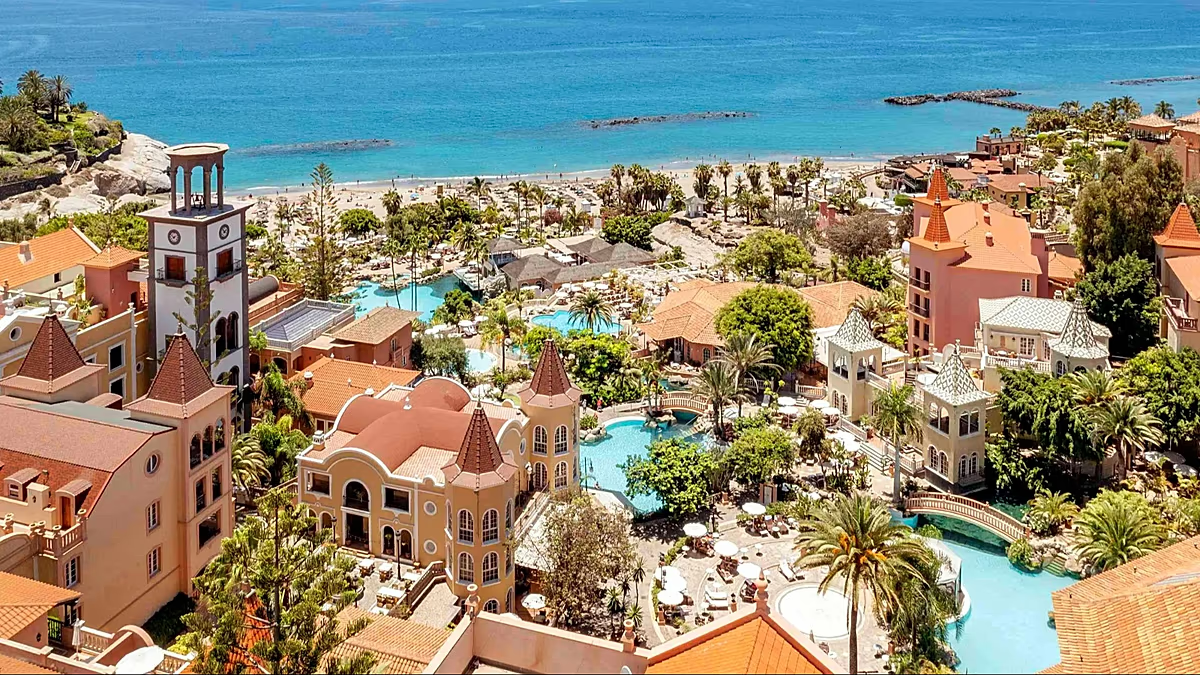
For travellers who prefer to stay put, who dream of a holiday where you never have to leave the grounds, the best resorts awards offer pure escapism. The winners this year are two very different paradises, each offering a world of indulgence in its own way. Bahía del Duque, on the sun-soaked island of Tenerife, is a sprawling resort that feels more like a lush botanical garden than a traditional hotel. With 63,000 square metres of tropical greenery to explore, it is a place where you can lose yourself among palm trees, colourful flowers, and hidden pathways. There are ten restaurants to choose from, including one that has earned a Michelin star, so your only real problem each evening is where to eat. There are two beaches, six swimming pools, and a huge spa with an outdoor thalassotherapy circuit, which is as good for the soul as it is for the body. The Canary Islands are known for their extraordinary light and warm climate, and Bahía del Duque makes the most of both, creating a resort experience that feels abundant, relaxed, and endlessly generous. On the other side of the map, Mount Juliet Estate in Kilkenny, Ireland, offers a different kind of luxury, one rooted in green landscapes, quiet luxury, and the kind of hospitality the Irish are famous for. This historic estate is the stuff of countryside dreams, with acres of parkland, a grand manor house, and an atmosphere of refined calm. It boasts an 18-hole golf course that draws players from around the world, but you do not have to be a golfer to love it. There is also a private cinema with just twelve seats, an experience that feels wonderfully intimate, and the kind of service that makes you feel like an honoured guest rather than just another booking. Whether you prefer the warm breezes of Tenerife or the rolling green hills of Ireland, these resorts have one thing in common: they are destinations in their own right, places where the journey ends and the holiday truly begins.
At the heart of the Condé Nast Johansens Awards for Excellence is a simple but powerful idea: a hotel should be judged by the experience it offers, not just by the promises it makes. This year’s 44 winners were selected through a rigorous process that combines the professional judgment of local experts, who inspect every property annually, with the authentic voices of guests and readers. That blend of expertise and genuine opinion gives the awards a credibility that is all too rare in the world of travel. When a hotel appears on this list, it is not because it has the best marketing campaign or the most celebrities in its guestbook; it is because people who really know what they are doing have walked through the doors, tested the beds, talked to the staff, and decided that this is a place worth celebrating. The categories may change, and the hotels may come and go, but the underlying mission remains the same: to help travellers find the places where they will feel happiest, most comfortable, and most inspired. That is why these awards matter. They remind us that travel is not just about seeing new places, but about the way those places make us feel. They remind us that a room with a view is wonderful, but a room with a sense of welcome is even better. They remind us that the best hotels are not simply buildings; they are hosts, storytellers, and safe havens, all rolled into one. As you plan your own travels for 2027, whether you are drawn to the sun-baked beaches of Tenerife, the historic streets of Granada, the creative buzz of London, or the fairytale landscapes of Ireland, let this list be your guide. The full collection of winners is waiting to be discovered, and with it, a world of unforgettable stays. After all, the right hotel can turn a holiday into a memory, and these are the places that know exactly how to do that.