



Imagine a place where the aromas of garlic, olive oil, soy sauce, and warm sugar drift through the same narrow streets, where a Portuguese colonial past and a deep Chinese soul meet in a single bite. That place is Macao, a coastal special administrative region nestled on the western bank of China’s Pearl River Delta, and for anyone who loves food, it is about to become even more unmissable. In 2027, Macao will celebrate ten years as a UNESCO Creative City of Gastronomy, and the city is planning a year-long festival of flavour to mark the occasion. Maria Helena de Senna Fernandes, Director of the Macao Government Tourism Office, spoke warmly about the milestone at World Travel Market in London, describing 2027 as “a very special year,” the tenth anniversary of the designation and one that will bring “a lot of food events.” For visitors, the message is simple and delicious: come hungry, come curious, and come ready to taste a culinary story that has been simmering for more than four centuries. Macao’s uniqueness lies in its Macanese cuisine, one of the world’s earliest examples of fusion cooking, blending Portuguese techniques and ingredients with Cantonese flavours and local traditions. It is a cuisine born from history—sailors, traders, missionaries, and settlers—and it has been officially recognised by the local government as intangible heritage since 2012. But Macao’s food scene is not frozen in time; it is a living, breathing conversation between the old and the new, the refined and the humble, the familiar and the wonderfully unexpected.
For those who equate Macao with glitz and glamour, the dining landscape is just as dazzling as the city’s famous skyline. Visitors can explore twenty-one restaurants holding between one and three Michelin stars, each one a showcase of technical mastery and creative vision. Another thirteen spots have earned Bib Gourmand distinctions, meaning they deliver exceptional food at more accessible prices. But de Senna Fernandes is quick to remind travellers that the real soul of Macao’s food culture often lives at street level, in bustling stalls, sleepy little bakeries, and family-run shops where recipes are passed down like heirlooms. One charming example is Ng Teng Kei, a quaint establishment that has been making red bean cakes from scratch since 1949. There is something deeply comforting about a place that has held onto its craft for over seven decades, patiently stirring, steaming, and shaping the same beloved treats day after day. Seasonally, from October to May, Ng Teng Kei also offers martabak manis, a regional favourite that sounds simple but tastes like indulgence itself: a fluffy sponge sandwiching a generous layer of melted chocolate. It is the kind of food that doesn’t need a critic’s rating to feel precious. Perhaps that explains why food accounts for as much as a quarter of all visitor receipts in Macao. People do not just come for the casinos, the shows, or the architecture—they come to eat, and they spend accordingly. From Michelin-starred tasting menus to warm paper bags of sweet snacks, Macao offers a spectrum of dining experiences that is almost impossible to find anywhere else in the world.
Yet for all its star power, Macao remains deeply committed to preserving the roots of its gastronomic identity. De Senna Fernandes explains that Macanese food is only one side of the story; Cantonese cuisine is equally important to the city’s rich food scene. The two traditions coexist in a kind of delicious harmony, each informing the other. To ensure that this heritage is not lost, Macao has developed a comprehensive database on Macanese food, created in collaboration with academics, associations, culinary practitioners, young people, and overseas Macanese communities. This ambitious initiative aims to safeguard a cuisine that has been evolving for over four hundred years and to raise awareness of its fascinating history—a history that includes Portuguese seafarers, Chinese farmers, African cooks, and influences from South America and Southeast Asia. A similar database for Cantonese cuisine is already in the pipeline, reflecting Macao’s determination to document and celebrate every layer of its culinary culture. But the community offers much more than just interesting food. De Senna Fernandes emphasises that Macao’s neighbourhoods are full of stories, traditions, and lesser-known treasures waiting to be explored, and the city is eager to share them with a broader audience. It is not enough to simply preserve a recipe; Macao wants to preserve the context in which that recipe was born, the celebrations it accompanies, the families who make it, and the streets where it has been enjoyed for generations.
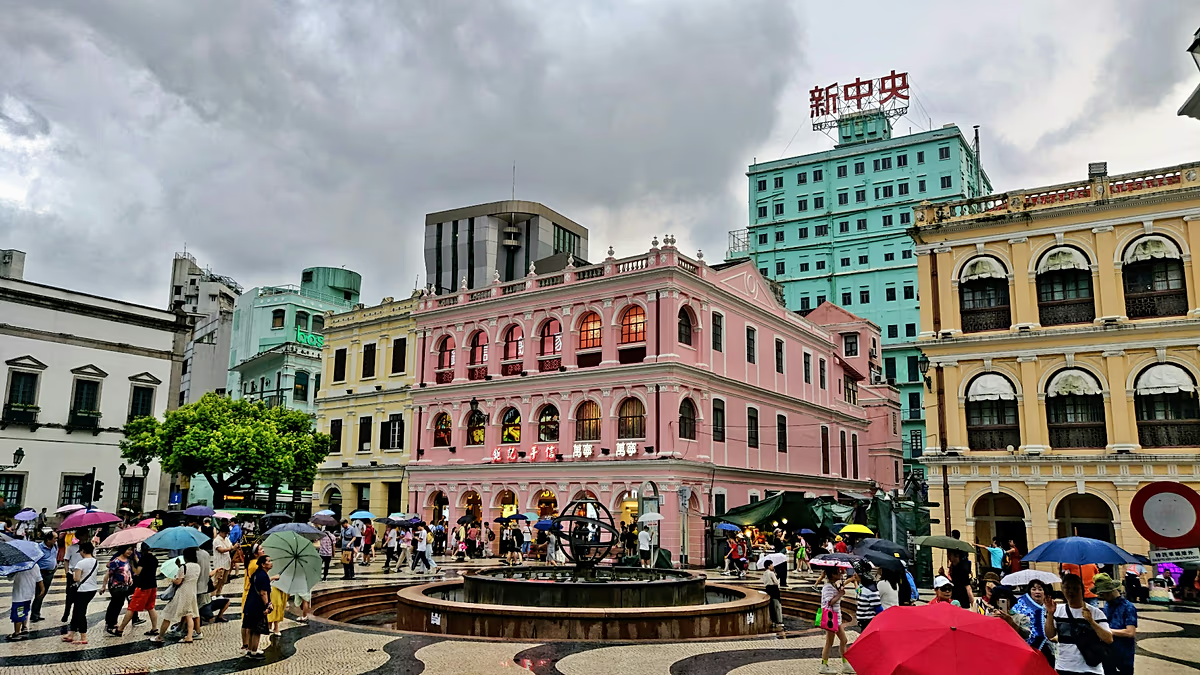
Beyond the kitchen, Macao is a place of stunning contrasts and quiet beauty. One of its most famous landmarks is Senado Square, a bustling public space surrounded by pastel neo-classical buildings that look like they belong in Lisbon or Rio de Janeiro. On any given day, the square hums with life, hosting public events, celebrations, and the unhurried wanderings of tourists soaking in the atmosphere. Just a short walk away, visitors can discover museums filled with art and history, tranquil flower gardens, ancient fortresses, and historic churches, many dating back to the arrival of the Portuguese in the sixteenth century. These structures remain architectural marvels, their facades telling stories of conquest, trade, faith, and resilience. Macao has long been known as a resort and entertainment destination, a place where luxury hotels and dazzling nightlife take centre stage. But the city is now actively encouraging visitors to look beyond the bright lights and find quieter, less crowded spots. De Senna Fernandes explains that Macao is working hard to make community areas easily accessible, offering free buses that take people either from the resorts or from the more crowded, central tourism areas into the more peaceful heart of local neighbourhoods. It is a gentle invitation to slow down, to wander without a plan, and to discover the everyday Macao that exists beyond the postcard images.
This push toward community tourism is not just about moving crowds; it is about creating meaningful connections between visitors and residents. The Macao government is helping small businesses become more visible to potential tourists, offering support in a variety of practical ways. One important element is helping these family-run restaurants, tea houses, and craft shops promote themselves better through social media, giving them the tools to tell their own stories in a modern and engaging way. At the same time, another government department works hand in hand with tourism officials to offer subsidies that help these small businesses upgrade their facilities, improve their kitchens, and welcome guests with renewed confidence. There is something genuinely heartwarming about this approach—it treats local businesses not as tourist attractions to be exploited but as valued members of the community whose success matters deeply. The city is also looking at different festivities to bring into these community areas, turning quiet streets into vibrant scenes of colour, music, and celebration. By making these neighbourhoods more festive and appealing, Macao hopes to attract a broader group of visitors, not just those seeking high-end entertainment but also travellers who are curious about everyday life, local traditions, and authentic experiences. In this way, the city is creating a tourism model that is more balanced, more sustainable, and more human.
As 2027 approaches, Macao stands at a beautiful crossroads, honouring its past while embracing its future. The tenth anniversary of its UNESCO Creative City of Gastronomy designation is more than a milestone; it is a celebration of identity, resilience, and the power of food to bring people together. Visitors who arrive next year will find a city that is proudly showing off its culinary credentials, pulling out all the stops with food events, special dinners, chef collaborations, and community festivals. But they will also find something deeper: a city that truly understands the value of what it has created over centuries. Macao is not a museum where food culture is locked behind glass; it is a living, breathing place where a red bean cake made in 1949 can still be enjoyed in 2027, where a Michelin-starred chef can draw inspiration from a street vendor, and where Portuguese and Chinese histories are woven together so tightly that they can no longer be separated. For the traveller, it is an irresistible invitation—to taste, to wander, to learn, and to celebrate. In Macao, every meal is a story, every street has a memory, and every bite connects you to a civilization that has been perfecting its craft for over four hundred years. So mark the calendar, pack an appetite, and plan to be there for the big celebration. Macao is ready to welcome you with open arms, warm kitchens, and a table full of flavours that are unlike anything else on Earth.