




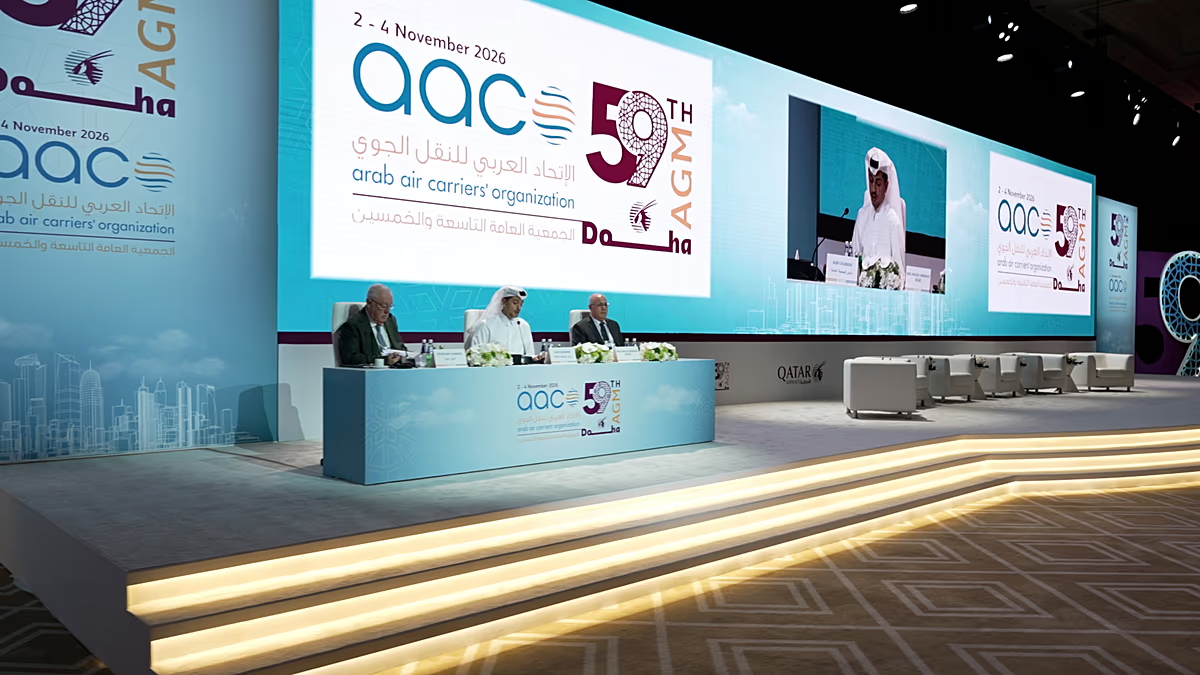
The annual gathering of the Arab Air Carriers’ Organization in Doha has cast a stark spotlight on the industry’s fragile state. After a year marked by intense regional volatility, the collective’s 39 member airlines, which include major global players like Qatar Airways, Emirates, and Etihad, are bracing for a significant financial downturn. Newly released projections for 2026 paint a grim picture, forecasting a combined net loss of $4.3 billion. This sobering figure is accompanied by an anticipated 5.2% decline in air cargo traffic, signaling that the headwinds are not confined to passenger travel but are buffeting the entire logistics chain. While the global aviation industry is also expected to see its profits dip to a twelve-year low of around $23 billion, the challenges facing Middle Eastern carriers are uniquely acute, stemming from their geographical proximity to ongoing conflicts and the persistent uncertainty that has come to define the region’s political landscape.
The report’s findings underscore a deep disparity in performance, with hubs located in or near conflict-affected markets expected to bear the brunt of the losses. This uneven impact highlights how geopolitical instability, rather than pure commercial strategy, has become a dominant force shaping airline balance sheets. Despite these pressures, there is a glimmer of resilience; the organization notes that the industry is still expected to remain profitable overall, albeit at a much slower pace. However, this cautious optimism is tempered by rising operational costs, particularly the price of fuel, which is projected to consume a larger share of operating expenses than in previous years. For AACO members, this burden is even heavier, with fuel costs forecast to jump to 37.3% of operating costs, a significant leap from the previous year. These escalating input costs, combined with constant operational disruptions, are squeezing profit margins and forcing carriers to navigate a precarious financial tightrope.
A major point of contention at the Doha meeting was the European Union’s proposed extension of its Emissions Trading System. The plan, which would apply to flights departing from the European Economic Area and landing in third countries within a certain radius, has been met with fierce opposition from Arab carriers. They argue that this unilateral measure constitutes an infringement on national sovereignty and violates the principles enshrined in the Chicago Convention, which affirms each nation’s “complete and exclusive sovereignty over the airspace above its territory.” AACO’s Secretary General, Abdul Wahab Teffaha, voiced these concerns forcefully, framing the EU’s actions as “extra-territoriality” and a “trespassing on the sovereignty of others.” The core of the dispute lies in the potential for double charging, as airlines already participate in the global Carbon Offsetting and Reduction Scheme for International Aviation (CORSIA). If the EU’s system does not recognize the offsets made under CORSIA, Arab carriers would be forced to pay twice for the same emissions reductions, placing them at a distinct competitive disadvantage on European routes.
Beyond the financial and regulatory battles, the AGM served as a platform to underscore the industry’s broader economic significance and its unyielding commitment to growth. Hamad Al-Khater, the CEO of Qatar Airways, highlighted that the sector supports approximately four million jobs across the Middle East and injects a staggering $290 billion into the regional economy—a figure projected to more than double by 2043. This data point serves as a powerful reminder that the aviation industry is not just a collection of airlines but a vital economic engine. In a spirit of regional cooperation, the event also saw the signing of a new agreement between AACO and the technology company SITA, aimed at enhancing baggage handling services for member airlines. These initiatives demonstrate that while the industry is contending with immediate crises, it is also actively investing in infrastructure and collaborative partnerships to solidify its long-term future.
Amidst the turbulence, Europe remains an indispensable market for Arab carriers, and they are responding with strategic expansions and a focus on enhancing passenger connectivity. Qatar Airways, for example, is increasing flight frequencies to key European hubs like London Heathrow and Frankfurt, offering passengers more flexibility and better links through its Doha base to destinations across Asia, Africa, and Australia. Similarly, Emirates has launched its first-ever daily service to Helsinki, expanding its Nordic network. Executives from both airlines emphasized that Europe is central to their core strategies and that they see significant untapped potential for growth. This expansion is not despite the uncertainty but rather a calculated bet on the enduring demand for international travel. Emirates, in particular, is supporting its ambitions with a massive $7 billion investment in retrofitting its existing fleet, a clear signal of its long-term confidence in the market, with its leadership noting that their forward-looking DNA means they “never stopped any projects” even during challenging times.
The practical realities of operating in a volatile region were a key theme in discussions, with a focus on the increasing importance of security intelligence and risk management. Security experts working with airlines note that the current environment has been “very volatile,” with direct threats impacting operational planning. They stressed that security assessments and real-time intelligence have become critical tools for carriers making decisions about routes and operations. While many events are beyond the control of airlines, these companies are building remarkable resilience to ensure they can continue to safely transport passengers. For the traveling public, the advice is to maintain situational awareness and trust in the robust risk management frameworks that airlines have developed. Despite the complexity and danger, the industry’s commitment to its fundamental mission of “getting people from A to B safely” remains steadfast. Ultimately, the message from Doha is one of cautious endurance, where growth and resilience are pursued in tandem, acknowledging significant challenges while refusing to be defined by them. The future, for these airlines, will depend on navigating geopolitical currents with the same skill and precision they bring to navigating the skies.